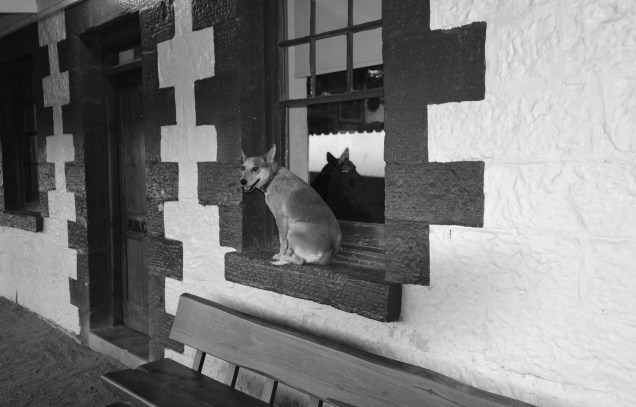
 Pud waits patiently for his master…
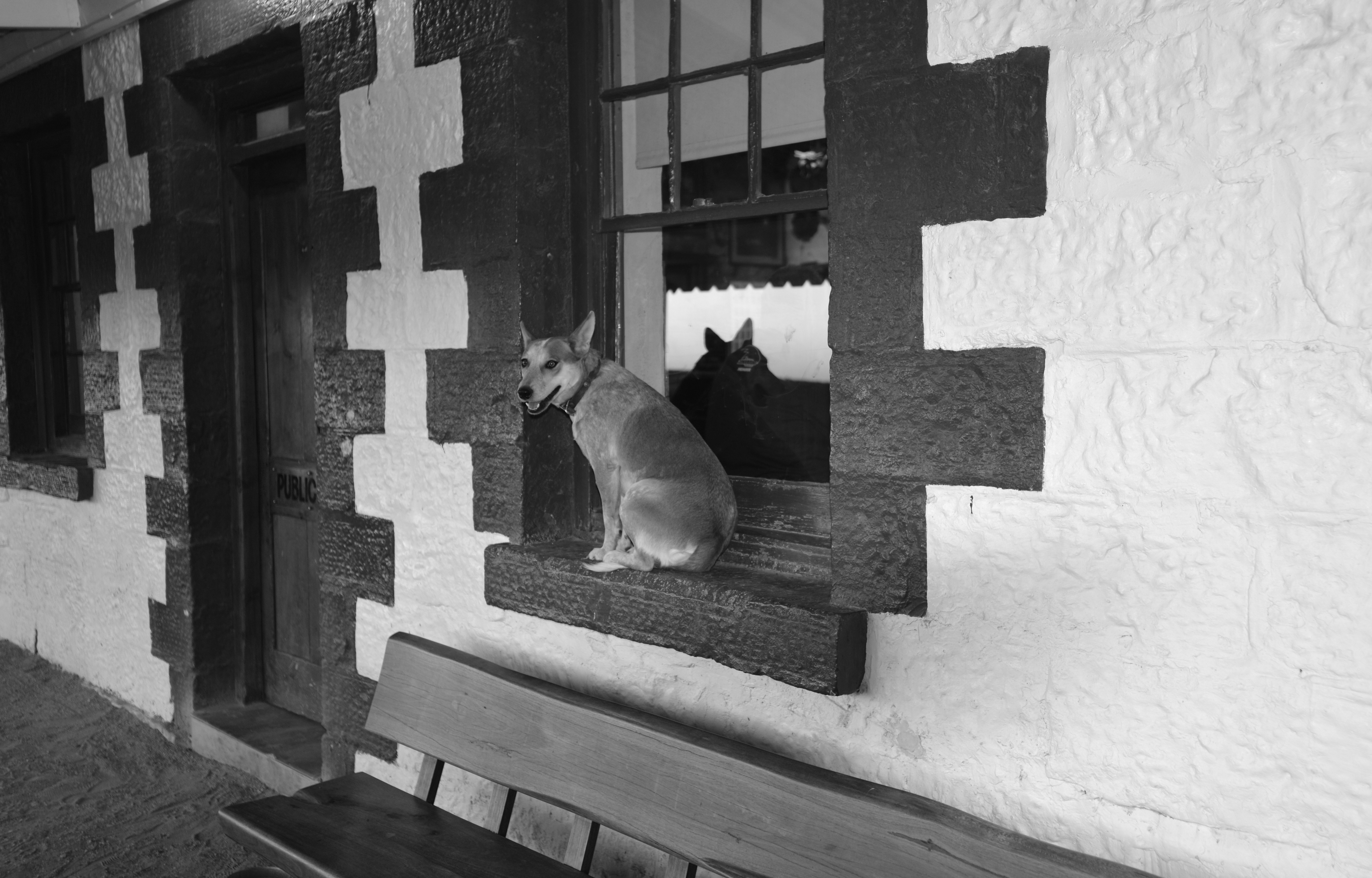 Pud waits patiently for his master…

 Mannahill, South Australia…

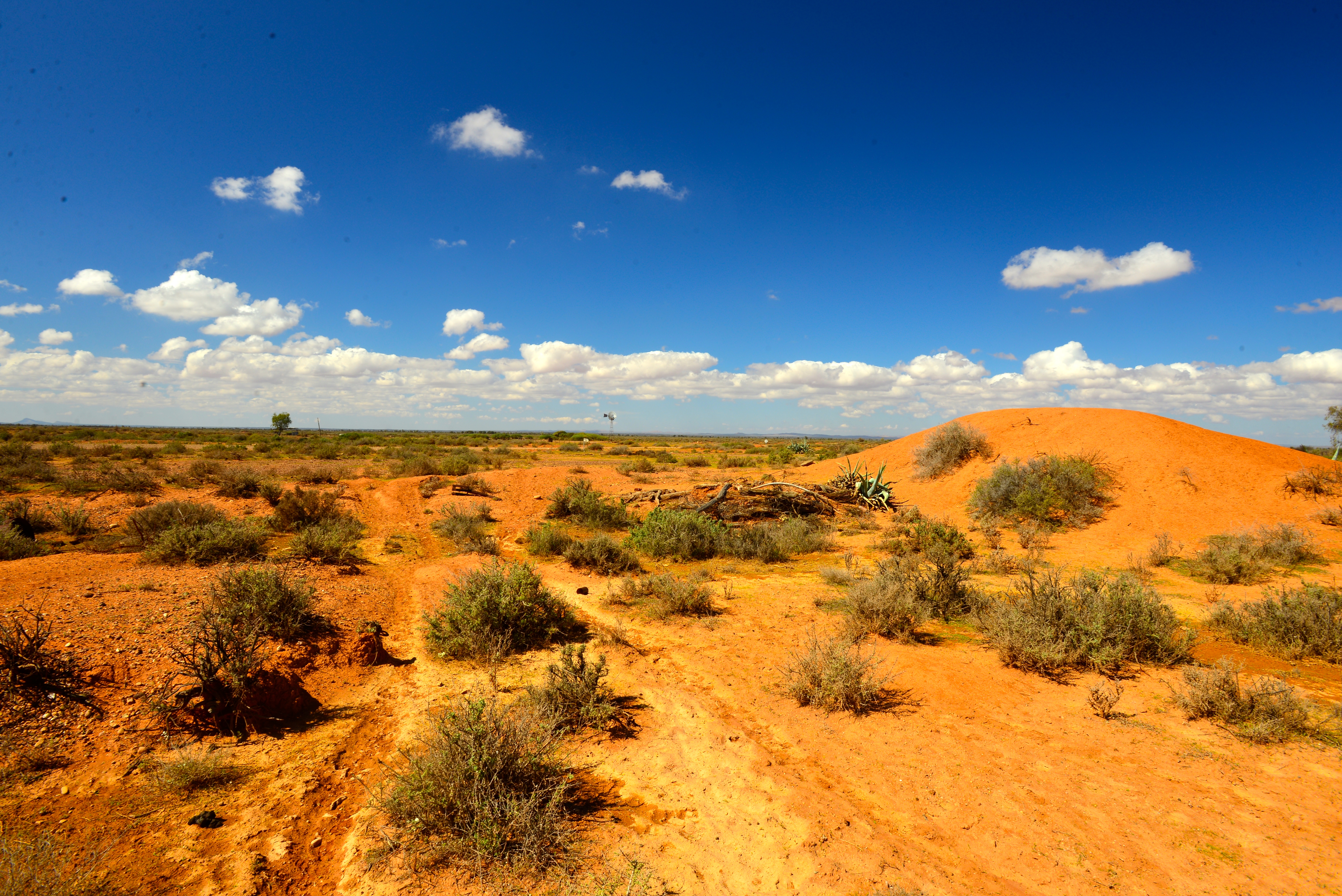
Maralinga was developed as the permanent proving ground site and was the location of all trials conducted in Australia and yes, we will stand on the actual site where the Atom Bombs were detonated!
The area also holds significance for Janet as her aunt worked for the Australian Weapons Research Establishment and spent time at Woomera in her role as a scientist.
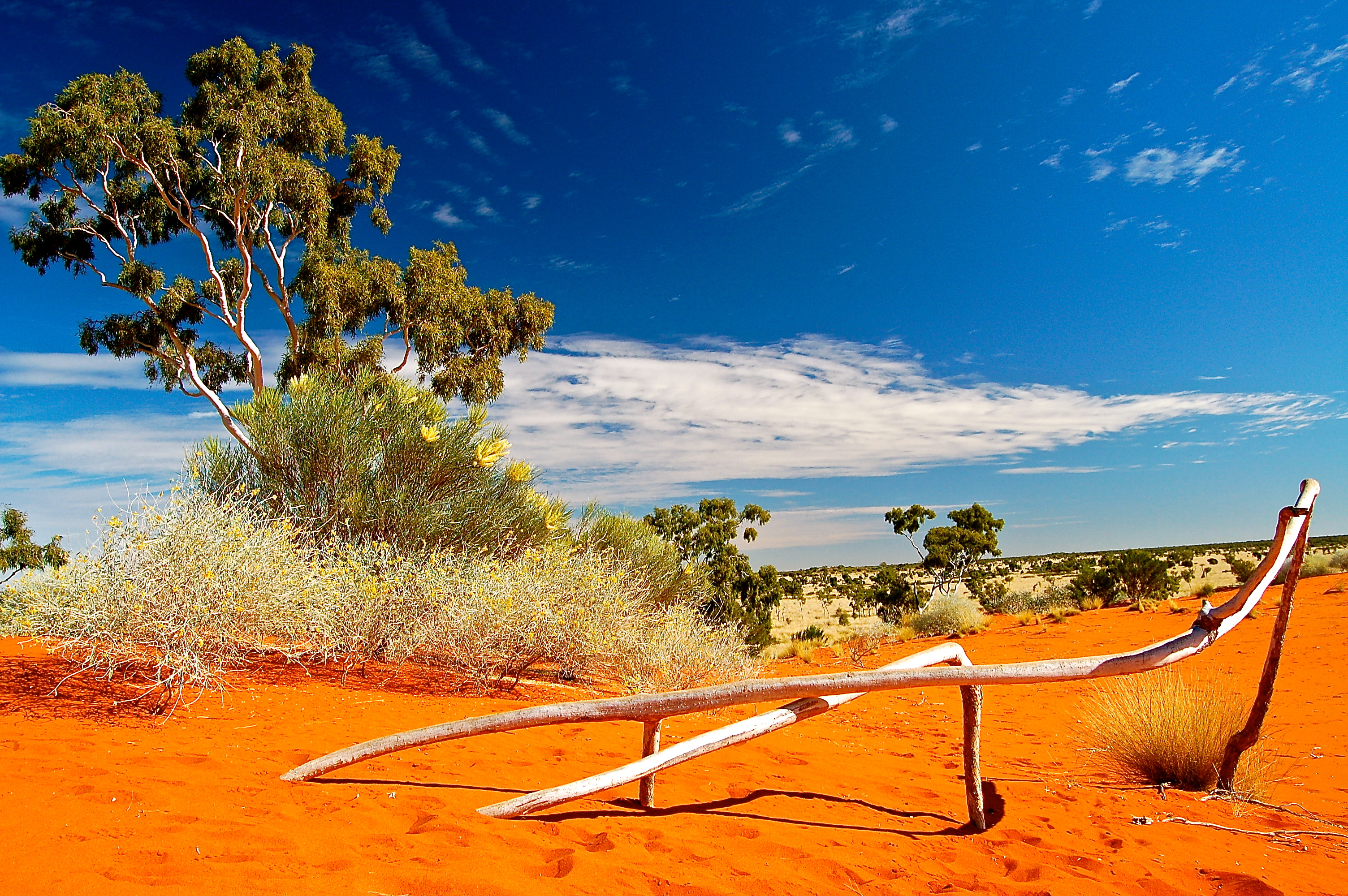
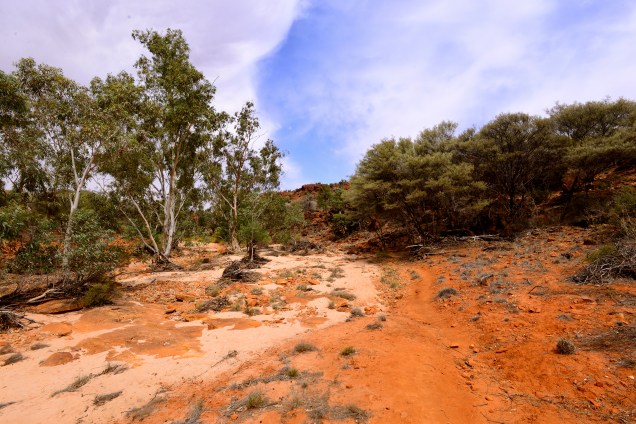
The expedition will take us across some of Australia’s remotest country, covering arid desert lands to gorges flowing with life giving water.
The primary aim of our expedition is to visit the “bomb tracks” that were made by the legendary Australian Surveyor, Len Beadell and his team during the 1950s and 1960s in preparation for the nuclear testing program.
The Anne Beadell Highway, the first of Len’s tracks that we will travel covers a distance of 1,350 kilometres and traverses the Great Victoria Desert, from Coober Pedy in South Australia to Laverton in Western Australia.
And it is anything but a highway.
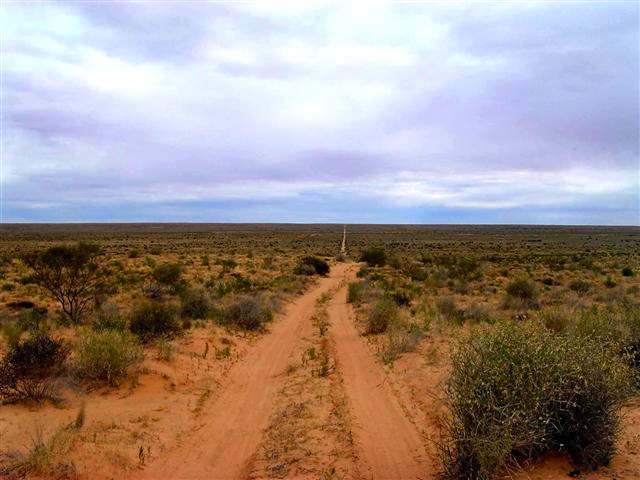
At best, it is little more than two-wheel tracks passing through arid desert and scrub country and punctuated by many sand dunes.

On reaching Laverton we will travel along the Great Central Road to the aboriginal community of Warakurna before heading along the Sandy Blight Junction Track. This will be a highlight of our western deserts trip and is another track built by Len. Completed in 1960 the track takes its name from the eye disease that affects many of Australia’s indigenous population and now referred to as Trachoma.
Len contracted the ailment and is most likely the reason the track took this name.
After a brief stop in the West MacDonnell Ranges, we will travel to Alice Springs and bid farewell to Janet and TomO before heading eastwards across the Plenty Highway and eventually down through the channel country to the well-known outback town of Birdsville.

Our departure from Birdsville will mark our arrival into the Corner Country which is situated in the north-east corner of South Australia and extending to the north-west of New South Wales.
And after four weeks of travel on corrugated roads perhaps the bitumen will be a welcome relief as we pass through the central west of New South Wales making our way home to Sydney!
So who said it is all work and no play?
And don’t worry, I’ll let you know before we go, and you’ll be able to track our progress across this remote and arid wilderness…
Strewth, Australia, you just got to love the place, hey?

 Today we are making our way home and will pass through the major townships of Dubbo, Orange, and Bathurst.
But he was with us in spirit.
And as the years pass by we will recall this trip like it was only yesterday that we packed ourselves in “The Landy” and made the journey west…into the Outback!
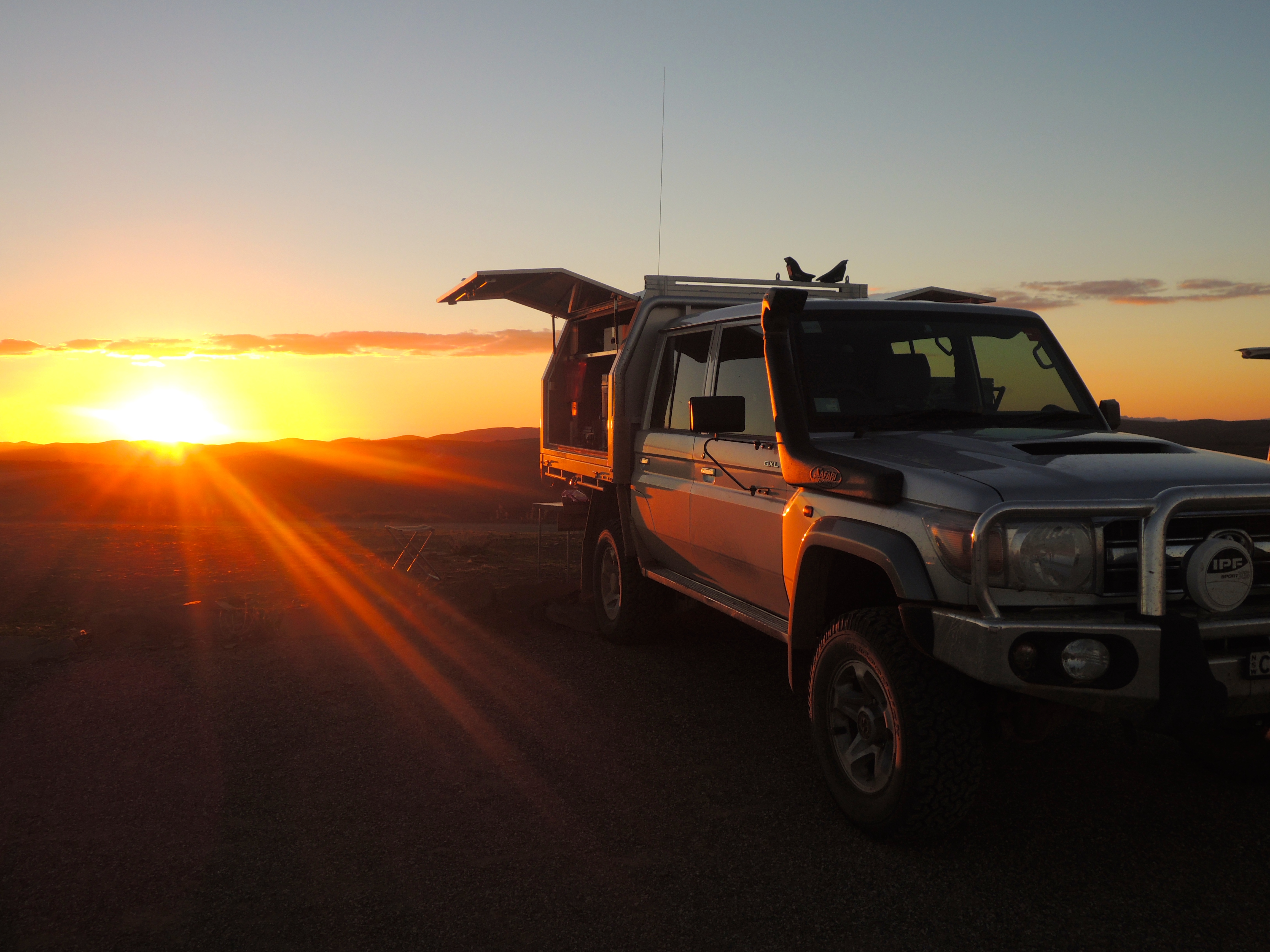

 Yesterday we bid Liz and Gary farewell and headed to Narromine, passing through the townships of Cobar and Nyngan along the way.
Our camp was on the airfield at the Narromine Holiday Park.
The airfield was established after World War 1 and is home to the oldest rural aero club in Australia and was used as a training ground for RAAF pilots in World War 2. Over the years it has counted Charles Kingsford-Smith, Charles Ulm, Chuck Yeager, Nancy Bird Walton, and Baz, The Landy as visiting aviators.

 A remarkable structure that stretches across Australia’s Southern Region is the Dingo Fence.
The fence is the longest in the world stretching a whopping 5,600 kilometres from the Darling Downs in Queensland to the Great Australian Bight in South Australia.
On our journey into the outback we have passed through the fence on a couple of occasions, and we have gate boy, TomO, to open and close the gate…

 Once a part of the million acre Dunlop property, the first in the world to undertake sheep shearing by mechanical means in 1888, Trilby Station today comprises 320,000 acres and runs up to 24,000 merino sheep and has an extensive goat enterprise.
The area is rich in aboriginal history and more contemporary Australian history. They say that time spent atop Mt Oxley nearby to Bourke, looking across the great expanse to the west rekindles the experience of explorers’ Stuart and Hume in 1829 where they felt that “this would never be the haunt of civilised man”.
Our hosts are Liz and Gary and the Murray family can trace their settlement on the Darling River near Louth back six generations to 1860.
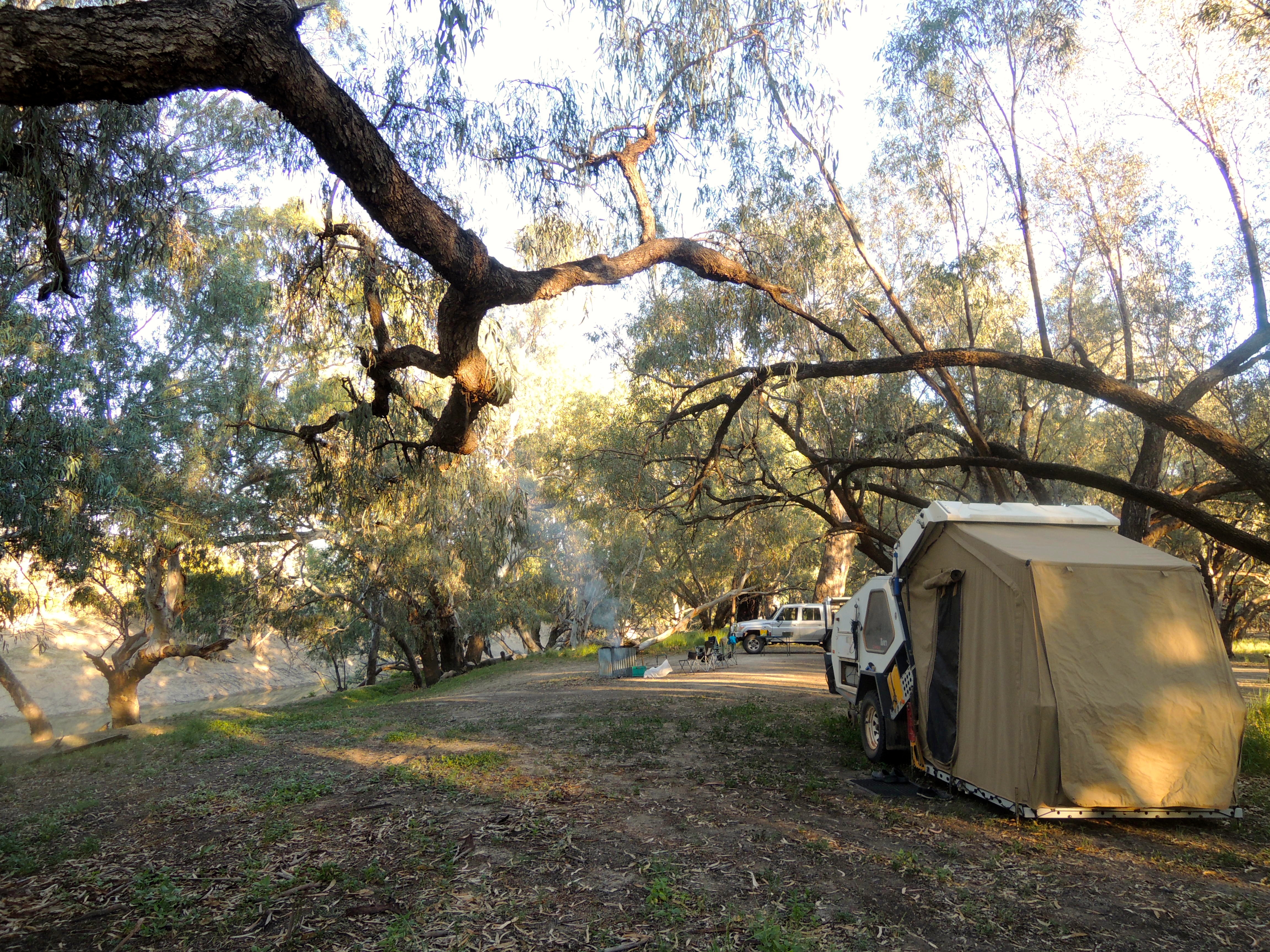
We have a camp looking down onto the mighty Darling River, which is still flowing strongly despite being much lower than in September last year.
And being ANZAC Day we are heading off to a memorial service to honour our fallen at the small township of Louth, and of course, a few beers in the pub afterwards.
Lest We Forget…

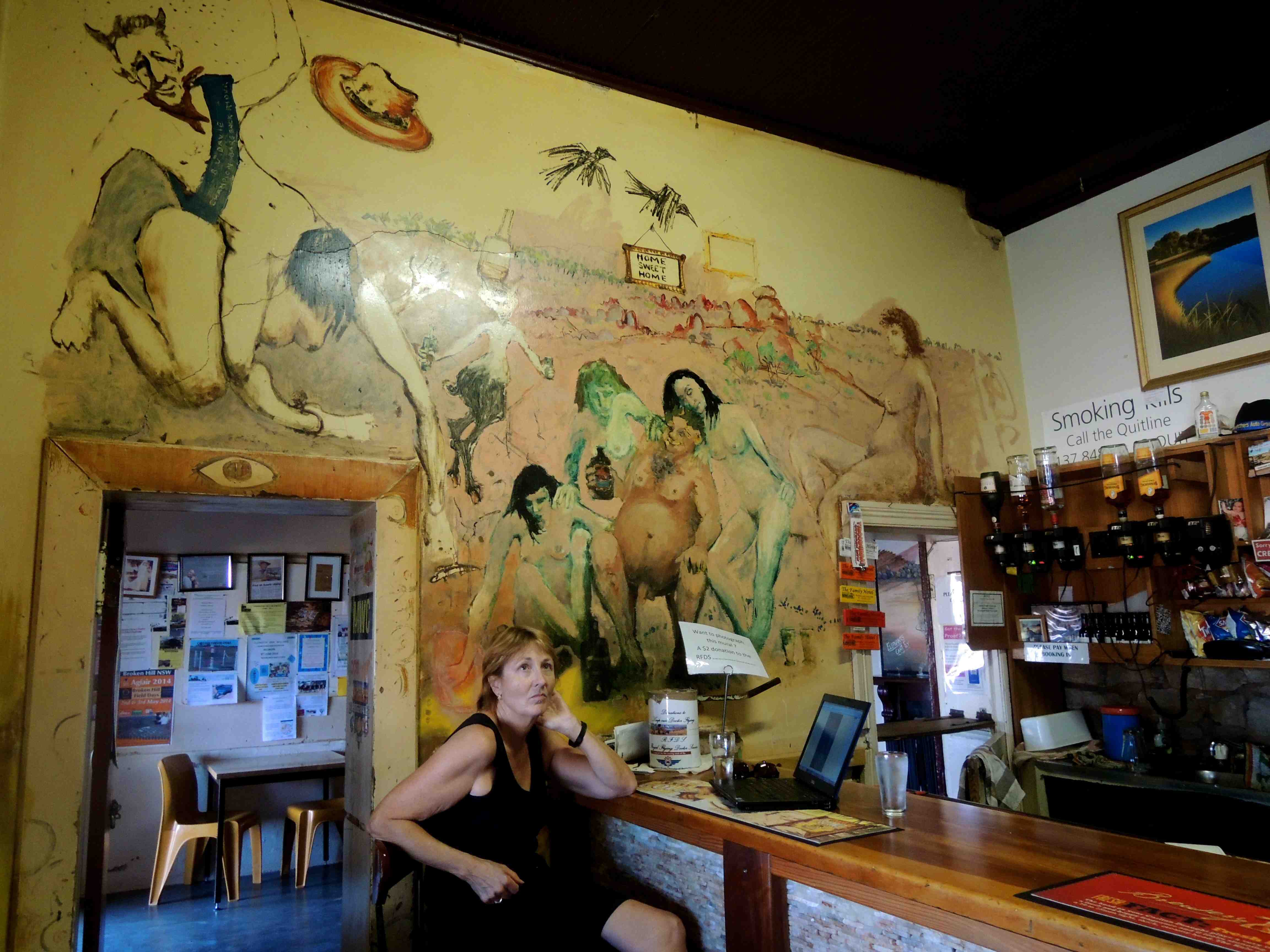
Numerous explorers’ have visited the Tibooburra region over the years, most notably Charles Sturt as he went in search of an inland sea.
And it has had its fair share of modern day visitors, including Clifton Pugh, a famous Australian artist, who actually painted a mural on the walls of he Family Hotel; in fact he even owned it at one time.
We are staying nearby to the hotel and will spend some time visiting the museum in town that has a wealth of information on Australia’s original inhabitants.

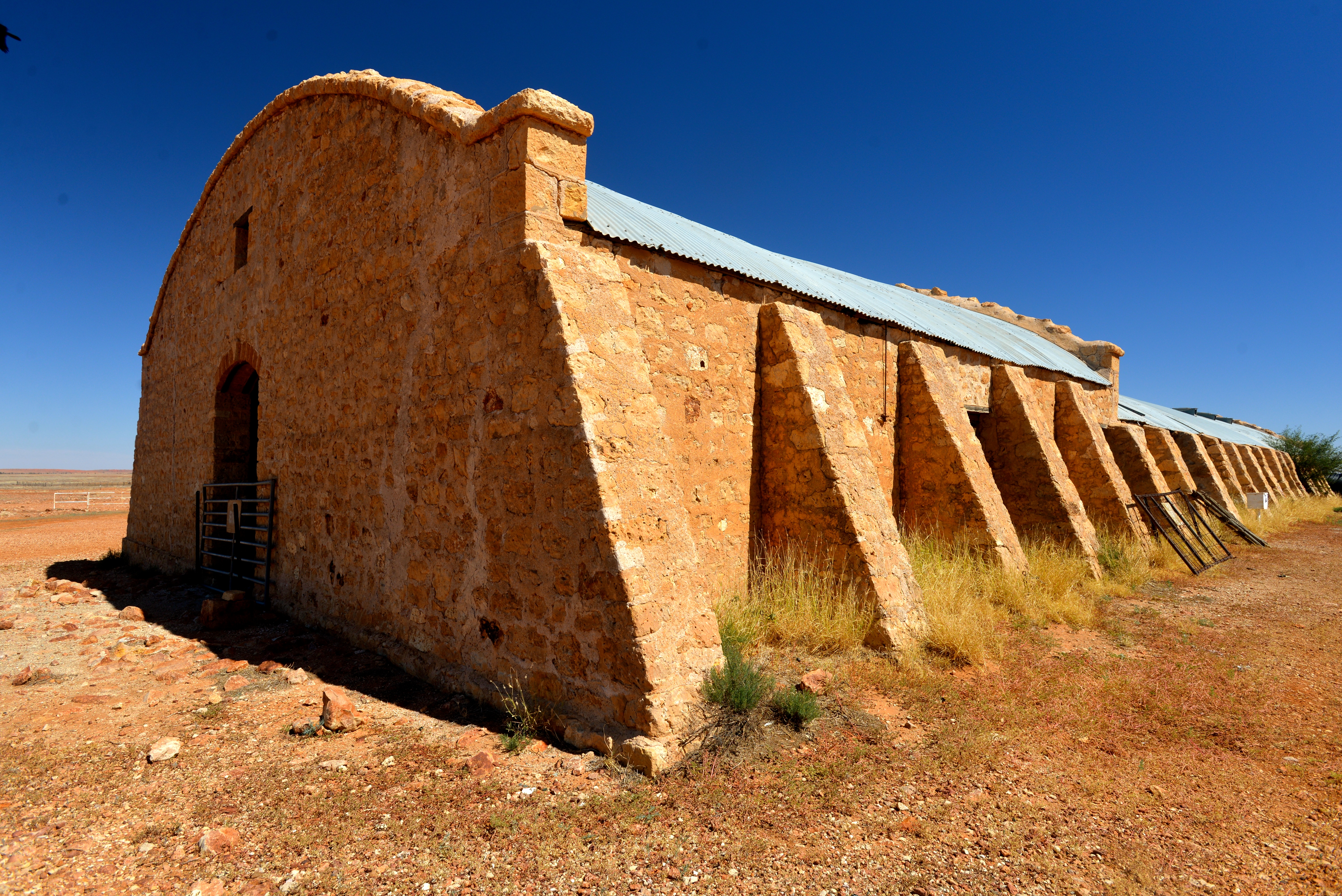 This is one of my favourite outback drives, a road that weaves its way down past Cordillo Downs and the Cordillo Downs Woolshed.
Today, Cordillo Downs still runs around 7,000 head of cattle in a good season, although when you view the landscape it is hard to imagine.
We’ve set up camp by the Cooper Creek!
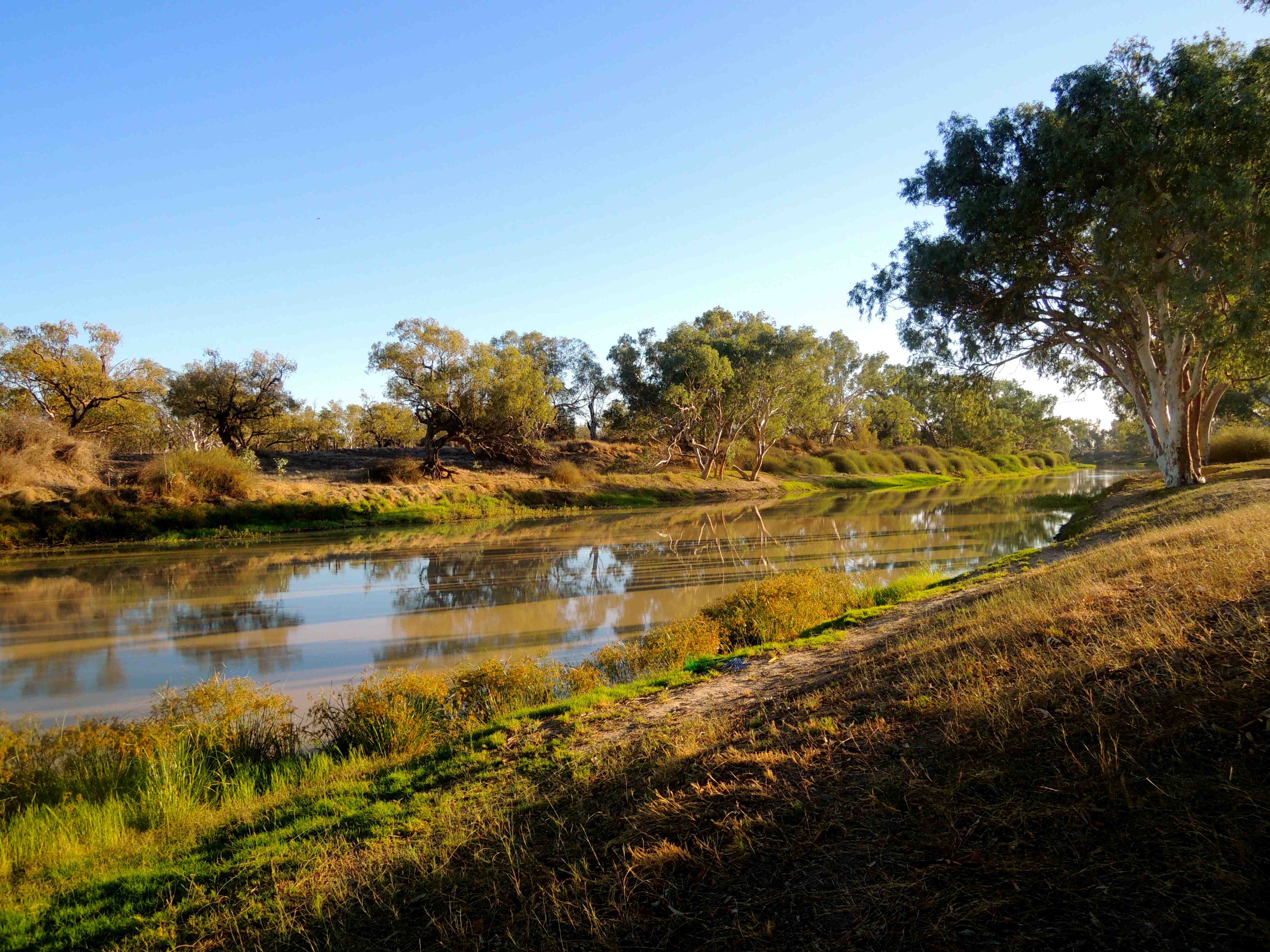


After bidding farewell to Mungerannie we continued along the dusty road towards Clifton Hills Station, and Pandie Pandie. Not too far south of Birsdville we crossed the border into Queensland and made our way to the caravan park on the banks of the Diamantina River.
Until 1882, Birdsville was known as Diamantina Crossing and was set up to collect tariffs on goods passing between South Australia and Queensland. A man by the name of Burt opened a store and it was given the name Burtsville, which was subsequently changed to Birdsville.
Of course the town is most famous for its annual race day and the running of the Birdsville Cup in the first week of September, a race that was first run in 1882!


And at the post office and refueling stop, we were asked to deliver some items along the Track.
So we had our own Tom, the Outback Mailman delivering mail to the Mungerannie Hotel.
Good work TomO, I reckon Tom would be pleased!

 Heading north along the Birdsville Track we passed a number of stations that up until now have only been places on a map. These included Dulkaninna and Etaduna.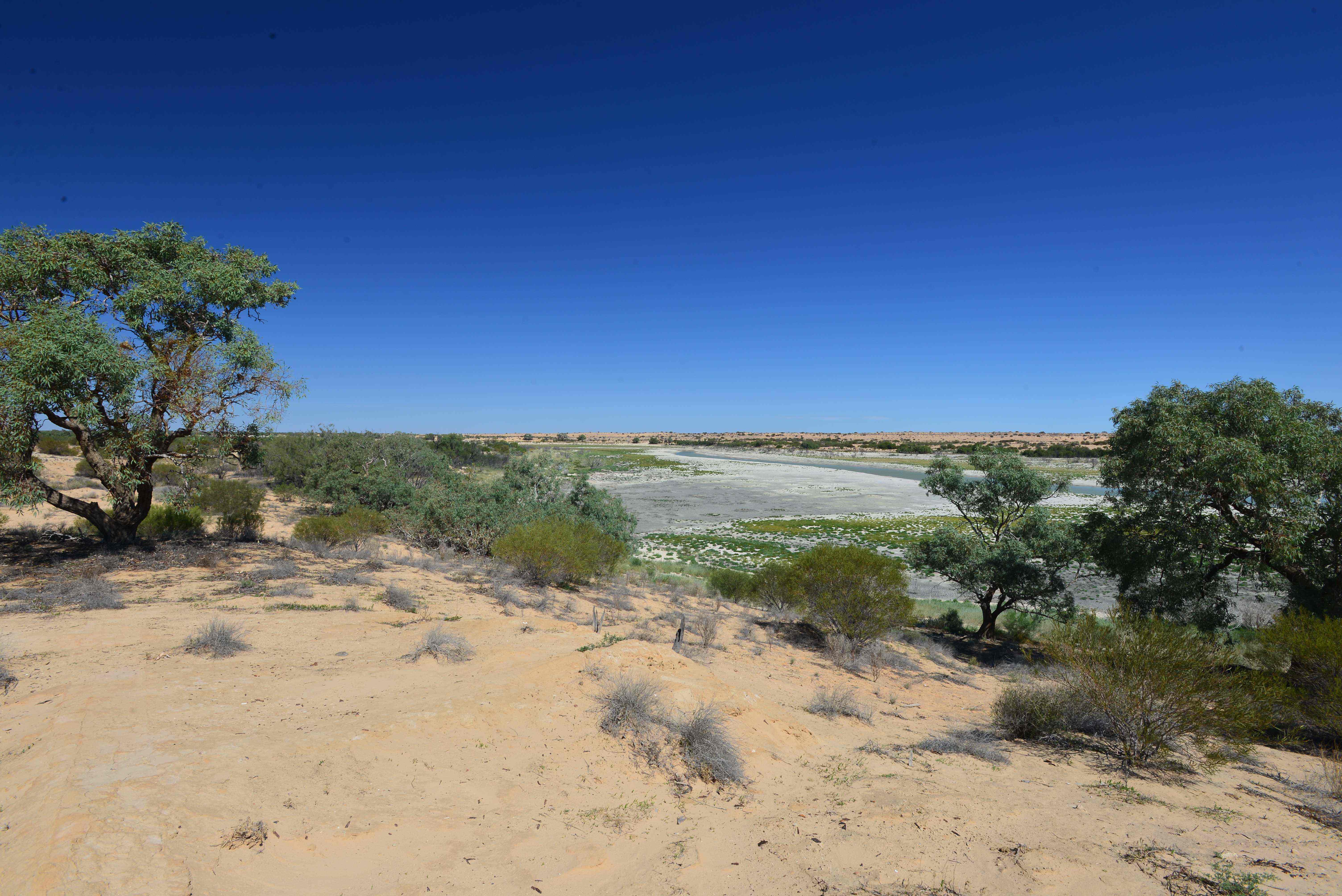
Continuing our journey north we arrived at the Mungerannie Pub where one of the first things we did was to have a thirst quenching beer! The pub and store where established by Richard Sullivan and his wife in 1886 and they remained until 1889. We enjoyed another few beers before the night was out and and we drank a toast to those who have passed this way in days long gone, and a toast to those who are absent…
Here’s to you, Dad!


 Brachina Gorge has an amazing array of flora and fauna and today we took a scenic drive through this stunningly beautiful and ancient landscape..
 Hans Heysen, later Sir Hans, the German-born Australian artist spent a great deal of his life in the Flinders Ranges, capturing the beauty of the area in water-colours. He summed up the Flinders Ranges landscape when he said it is “the bones of the earth laid bare”.
It was great to see first-hand the landscape that inspired so many of his paintings prior to his passing in 1968.
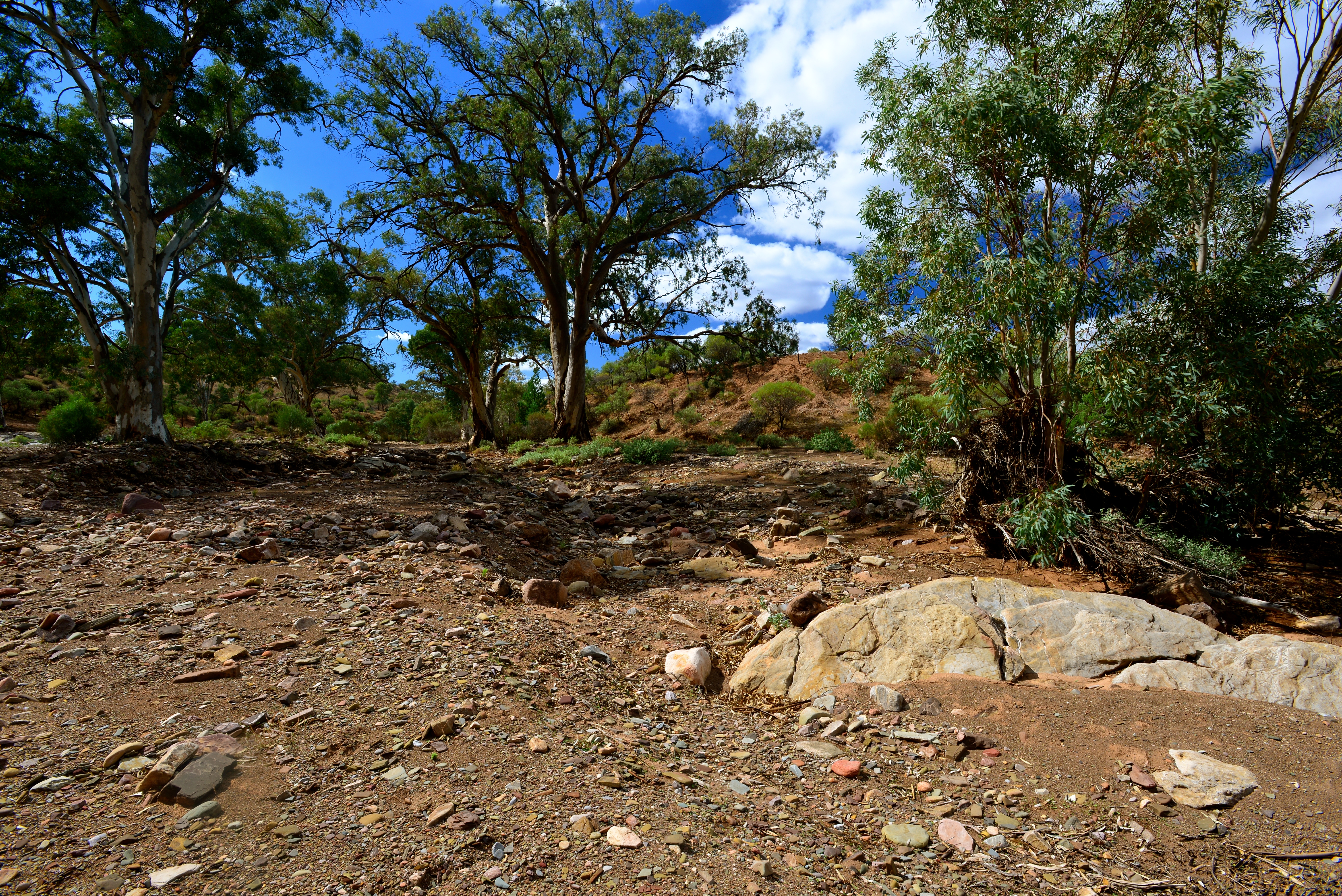
This evening we are going to take time to watch the lunar eclipse as the full moon rises over the rugged Flinders Ranges landscape.
 Wilpena Pound, set in the Flinders Ranges is approximately 430-kilometres to the north of Adelaide.
There are a number of aboriginal art sites within the region, and the country is home to the Adnyamathanha people of the Northern Flinders Ranges. Adnyamathanha meaning “hills” or “rock people” is a term now used to describe the Kuyani, Wailpi, Yadliaura, Pilatapa and Pangkala, the traditional groups in the Flinders Ranges.
Today many Adnyamathanha people live and work in the area. Nepabunna in the Vulkathunha-Gammon Ranges, Leigh Creek and Port Augusta are central settlements for the Adnyamathanha people. Rock art, stone arrangements, occupation sites, graves and ochre quarries are reminders of the area’s cultural heritage and are of significance to the Adnyamathanha peoples’ connection to country.
Our camp for the next three nights will be at the Wilpena Pound Campground.
For certain, we will find a vantage point that will afford us a view of the sun setting on Wilpena Pound, the colours should be spectacular!
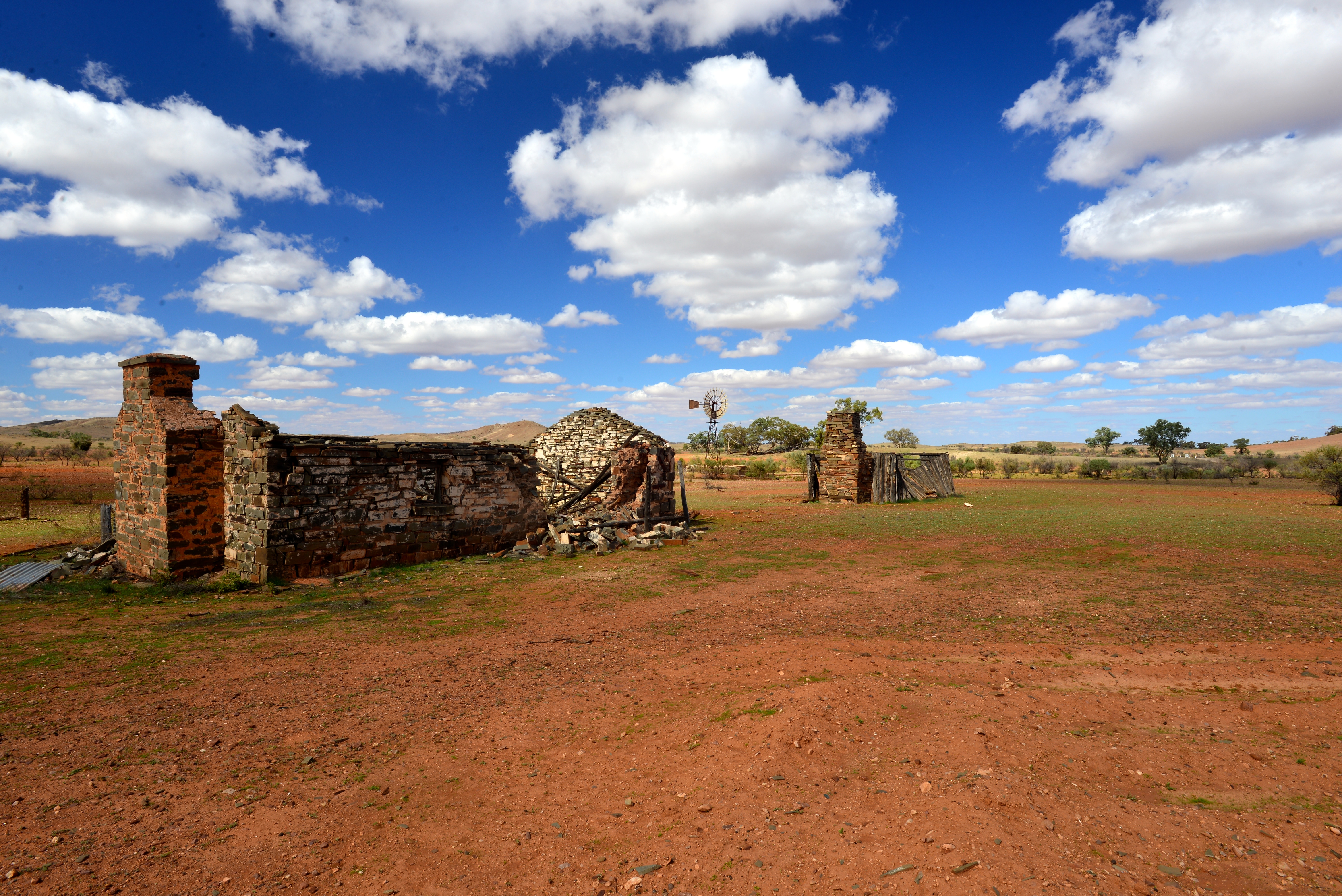
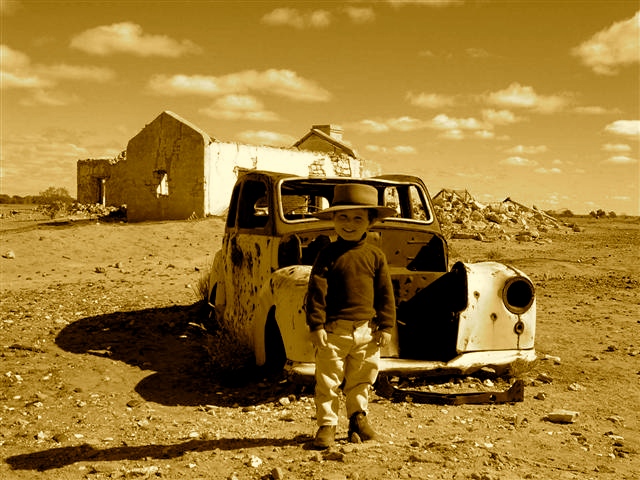
Speaking of spectacular, the drive from Broken Hill was just that, and we passed many ruins of an era long gone gone, along the way.

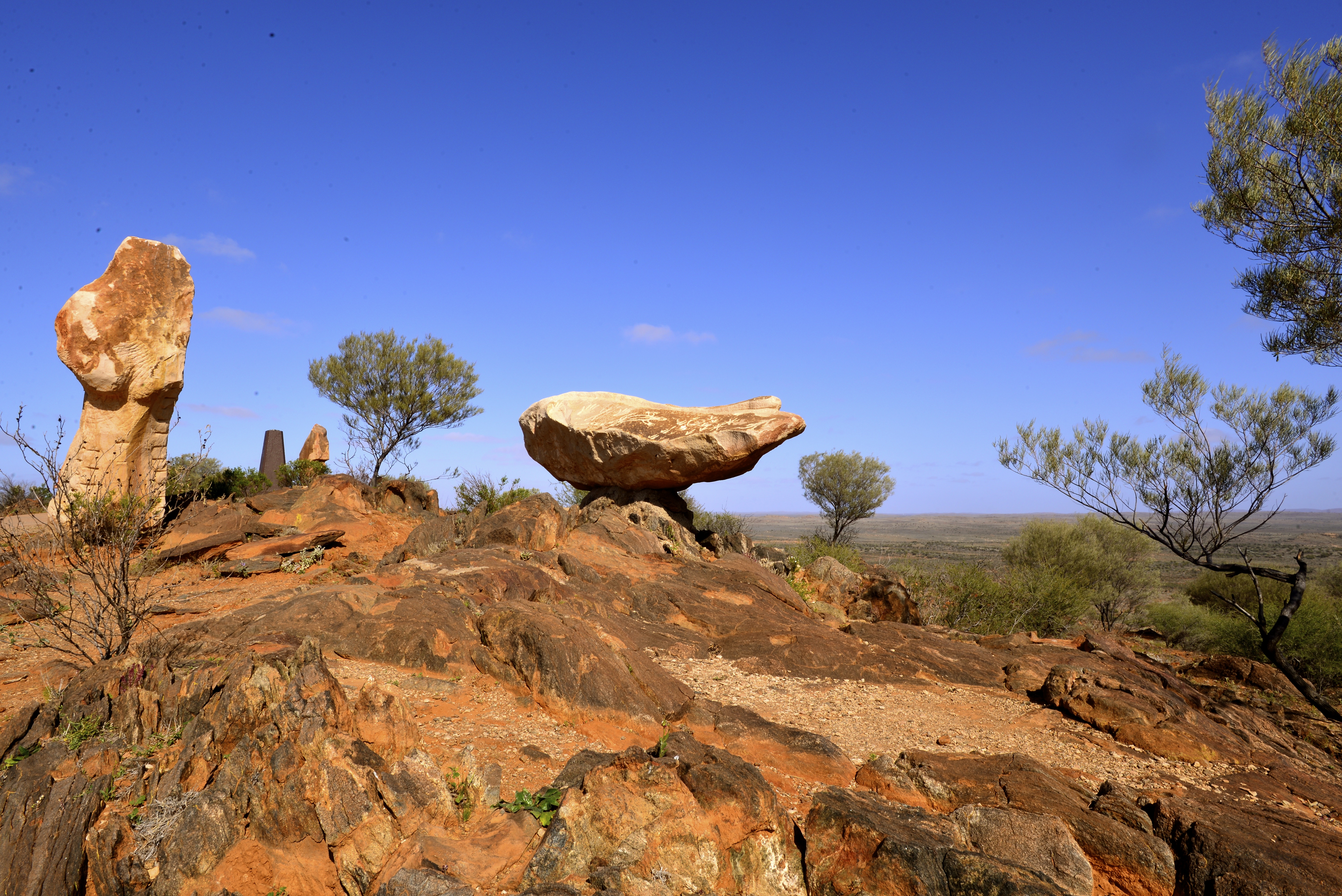
Our overnight stay has not provided us with much of an opportunity to truly explore the town or the nearby town of Silverton on this visit, but there are a couple of things worth knowing that puts some further perspective on the town.
The Great War visited Broken Hill on New Year’s Day, 1915, when two camel drivers loyal to the Ottoman Empire opened fire on a picnic train, killing five men, women, and children in what remains the only act of war to be committed on Australian soil. You can view where this occurred on a small lane not too far from the Broken Hill caravan park.
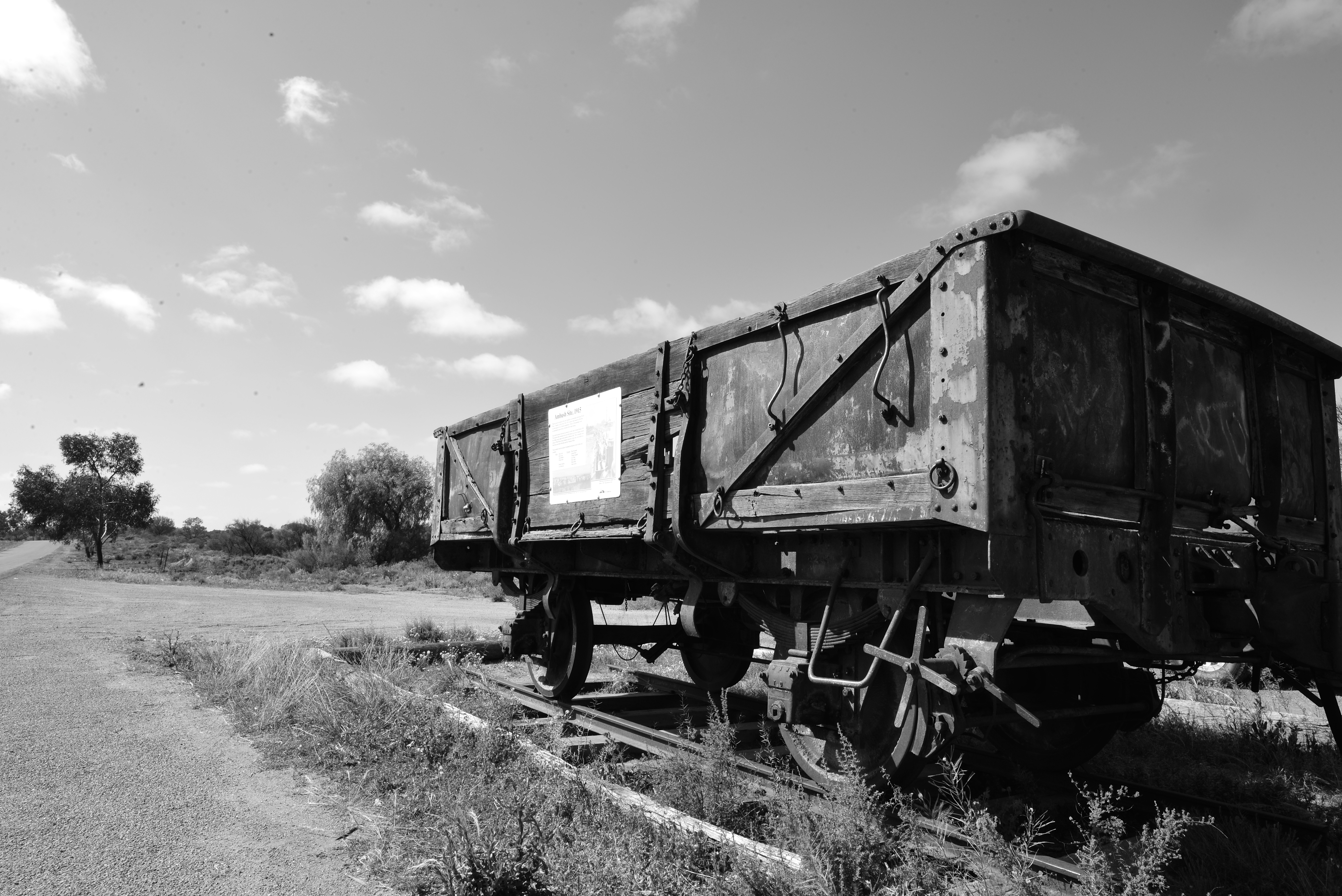
During the second-world war a large part of Australia’s gold reserves were transferred to the town and away from the coastal capital cities to protect it from the possibility of a Japanese invasion.
And surprisingly, in Sturt Park there stands a monument to the musicians of the ill-fated Titanic that was erected in 1913. It would seem extraordinary that an inland community in Australia has a monument to the tragedy that occurred in the icy-waters of the Atlantic Ocean on the other side of the world…
Standing on the urban boundary we looked westward as the sun drifted low onto the horizon, the town at our back and nothing but the red desert ahead of us, as far as the eye can see.

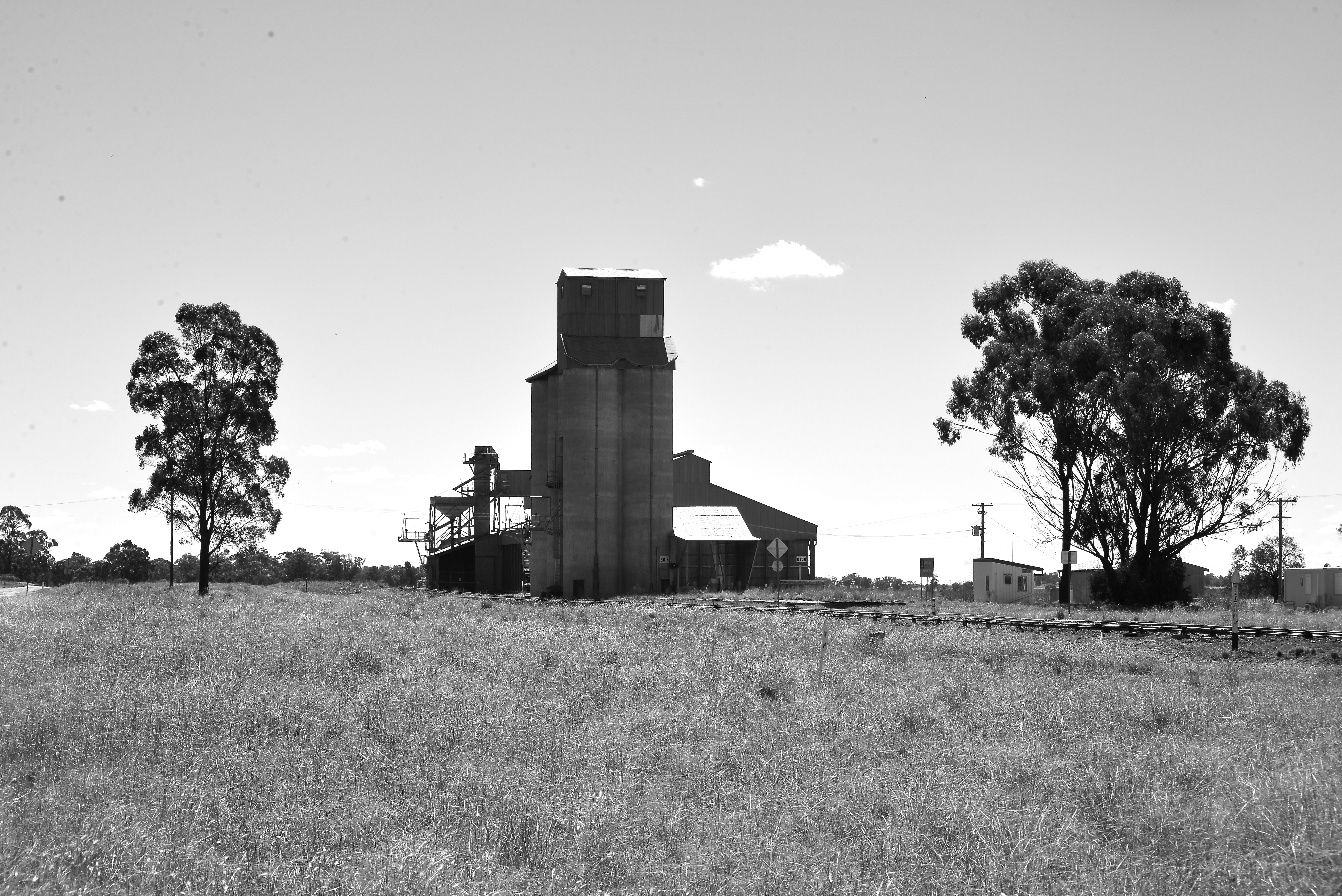
Our drive took us through the larger rural towns of Bathurst and Orange before diverting from the usual route west, the Great Western Highway, to travel through the township of Parkes and the smaller rural towns of Trundle and Tottenham.

Situated 55-kilometres north of Parkes, Trundle is at the centre of a wheat, sheep and cattle farming area. Of interest is the Trundle Hotel, a majestic building in the town’s main street, which is National Estate, listed and has the longest verandah in New South Wales, coming in at a long 87.6 metres. The town’s main street is also the widest in New South Wales measuring 60 metres.
Leaving Trundle behind we passed through the closest town to the geographical centre in New South Wales, Tottenham. We varied our route to visit the geographical centre, which is located 34 kilometres west of the town along the Cockies Road.
Tottenham is also at the centre of large scale agriculture cropping and sheep grazing and boosts a large hotel, The Tottenham Hotel, which overlooks the main street.
We arrived at Nyngan to a tranquil camp next to the Bogan River at the Riverside Van Park.

In 1835, explorer, Major Mitchell was the first European to document a journey along the Bogan River, describing the area around Nyngan as ‘a long pond, with many birds, ducks, and brolgas’. The local aboriginal word ‘Nyingan’ is said to mean ‘long pond of water’. In 1882 the town’s site was surveyed and buildings from an earlier settlement at Canonba 30- kilometres away were moved to the present Nyngan Township.


The Landy is packed full of Janet’s wine, TomO has claimed a seat in the front, Janet and Fay (me mum!) are strapped into the back.
And don’t forget to check in over the next couple of weeks to see what we are up to.
Bearing in mind, one of the attractions of the Outback is the inability to communicate, at times. Shoosh, that is the story I run with my boss at work, so we might be out of range every so often 😉


TomO is very accustomed to the Birdsville Pub.
Oh, but don’t worry, he is yet to quench his thirst with a beer, perhaps that will come in time, but he has made many friends over the years in the front bar. Plotting adventures with a local boy, playing snooker with the many visiting pilots, and even fallen in love with the policeman’s daughter, at the tender age of three!
And he tells me he is looking forward to this visit…
What do you think he will find this time?


 Whilst it may seem I have disappeared from the face of the earth, rest assure, I am alive and kicking, still larger than life, head-down and exercising…
Many may recall that Brian passed away last year and so as a tribute to him we are making the journey accompanied by my mother, Fay, the love of Dad’s life for near on 60 years! But he’ll be with us….for sure!
Our trip along the Birdsville Track will take us in the footsteps of the famous Australian Outback Mailman, Tom Kruse.
Tom delivered mail to the many cattle stations along the track in a “Blitz Truck” arriving at Birdsville, in far Western Queensland, before loading up for the return trip to Marree. His story is one of human endurance, courage, and perseverance. Despite facing considerable challenges each and every day out on the Track, Tom got the mail through, a lifeline to those who lived and worked in the area…
Before arriving in Birdsville, we will pass through one our most well-known outback towns, Broken Hill, and visit Wilpena Pound in the Flinders Ranges.
Wilpena Pound is an ancient landscape over 800 million years old, a mountain range rising out of the landscape that has the appearance of being an old volcano. It is also home to the Adnyamathanha people.
After a couple of days resting in Birdsville following our trip up the “Track” we will head towards Innamincka, a small locality that is infamous for being the end of the ill-fated Burke and Wills Exploration.
Passing back down into New South Wales though Wari Gate, we will overnight in Tibooburra and visit the family hotel where the famous Australian artist Clifton Pugh, who once painted a mural on the hotel walls. In fact, he even owned it at one time.

A favourite place we like to visit is Trilby Station. Trilby is a working sheep and cattle property on the banks of the famous inland river, the Darling River, and as usual, we will camp by the Billabong. And whilst in the area we will take the time to revisit Toorale National Park to further our knowledge of Australia’s first people.
And as we make our way back to Sydney via Narromine, Orange, and Bathurst I’m sure there will be plenty of stories to recount from our couple of weeks “Out and About with – The Landy”.
As we tour I will put up some photographs of the Australian Outback, perhaps just to whet your appetite for a visit, Downunder!
So keep you eye out for those…





These words summed me up perfectly, I thought.
I’m sure many will be able to relate to them equally, regardless of what your pursuits are…
Over the years I have pursued a whole range of activities, some adventurous, others less so – but I have always been driven by a desire to simply embrace life…
And I have never considered myself an expert in any of them, but it has always been a fierce determination that has seen me through; a strong faith in my ability to grasp the key things, to put them into practice.
I’ve never considered anything I’ve done as a failure, but I’ve had plenty of learning experiences, set-backs that have helped me to learn, to grow, and to develop. I’m thankful for those set-backs, as they have made me stronger.
Eccentric; mad; yes, I’ve been referred in that way many times.
Today, I wear those comments proudly, like a badge.
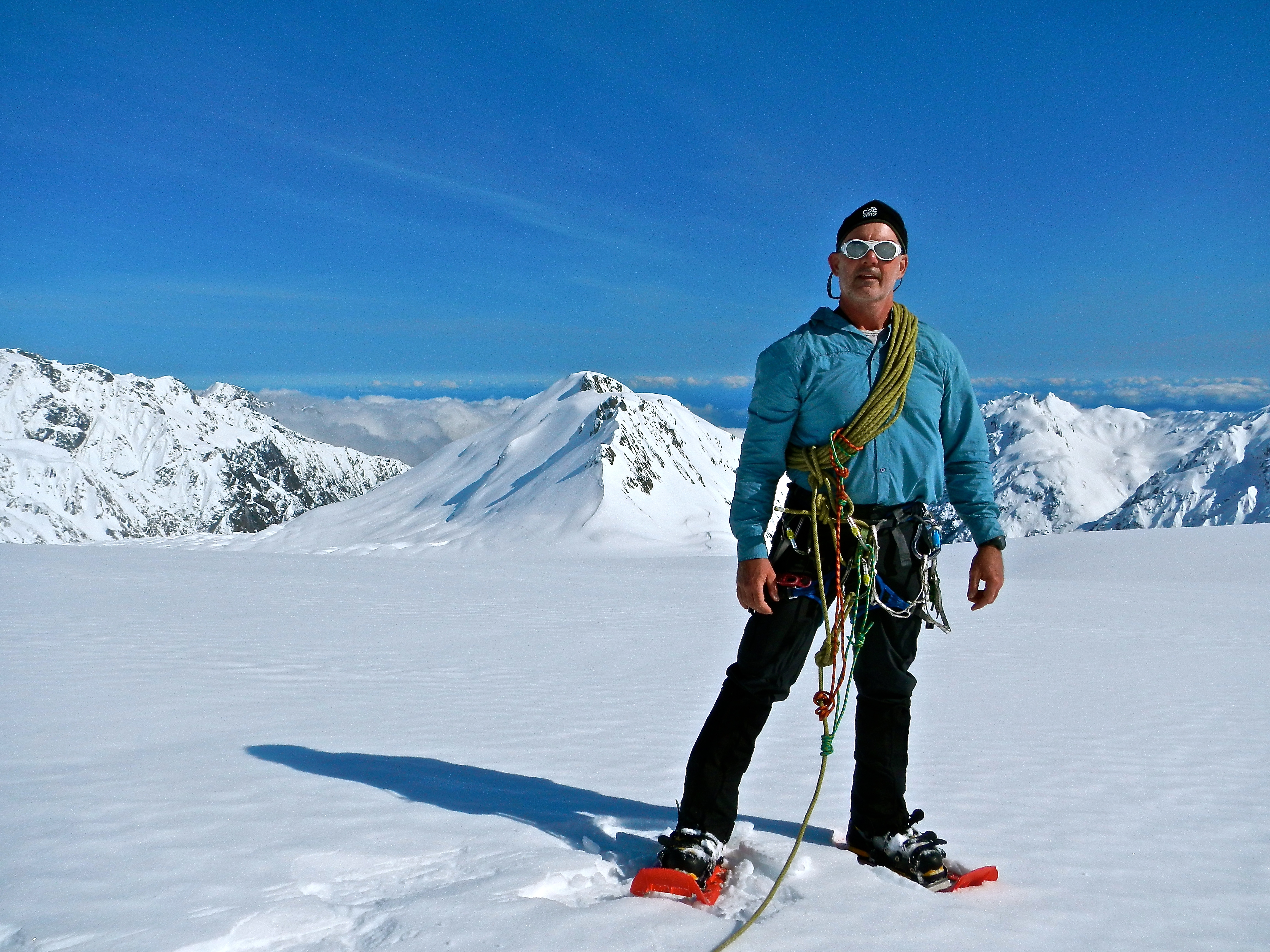
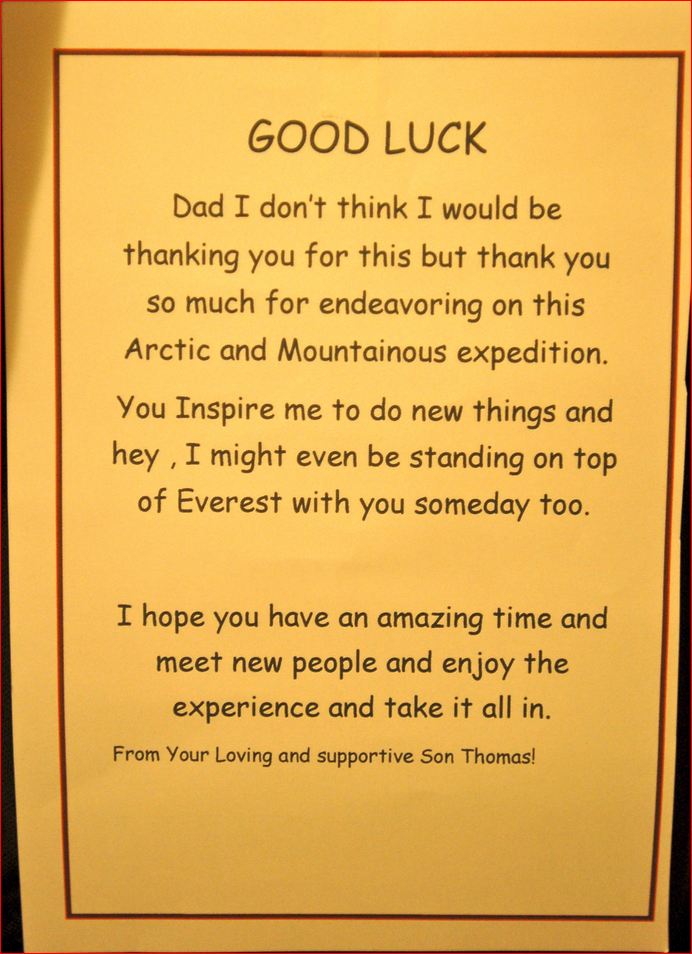
Walt’s words have encouraged me to have the confidence to pursue my dream of climbing large mountains, to consider making an attempt on the summit of Mt Everest, in the least, to have the courage to admit that I want to climb it.
Every day on Wordspress, millions of words are written by ordinary people, stories about the challenges life has thrown at them, what they have done, and continue to do to overcome them.
About their dreams and aspirations; their highs and their lows…
Ordinary people who want to improve their fitness, to lose weight, to cycle across a city, or across the world.
Many have their sights set on a fun run, and others having completed one, setting their sights towards running a marathon.
For others, it is their challenge to become stronger, to be able to lift more, or about capturing that once in a life-time photograph, perhaps testing a new recipe to share with friends, or with people they have never met.
Others talk about health and lifestyle challenges they struggle with, that they have overcome.
I read as many of them as I can, they motivate me and they provide me with much needed inspiration…
Seemingly, there is always someone in this cyberspace community ready to reach out, to congratulate, to console…
Usually these people aren’t super-elite athletes, or neither five-star chefs, nor are they fitness gurus.
They have a much greater status than that, for they are simply ordinary people, the same people that Walt Unsworth wrote about when he penned those words…
To those who aspire to do their best, to challenge themselves, I say never give in, you’re not alone out there, dream big, and pursue your dreams…
But on ordinary people, yes I’ve referred to people as ordinary, but in reality, there is no such thing as ordinary people, we are all unique, we all contribute to the mosaic that makes up the world we live in…
It would be a boring place if we were all the same…
We’d never learn, grow, or develop as people.
Take the time to read over Walt’s musings a couple of times, because he was speaking about you…
Draw on the strength of his writing, it is powerful…
Above all else remember,





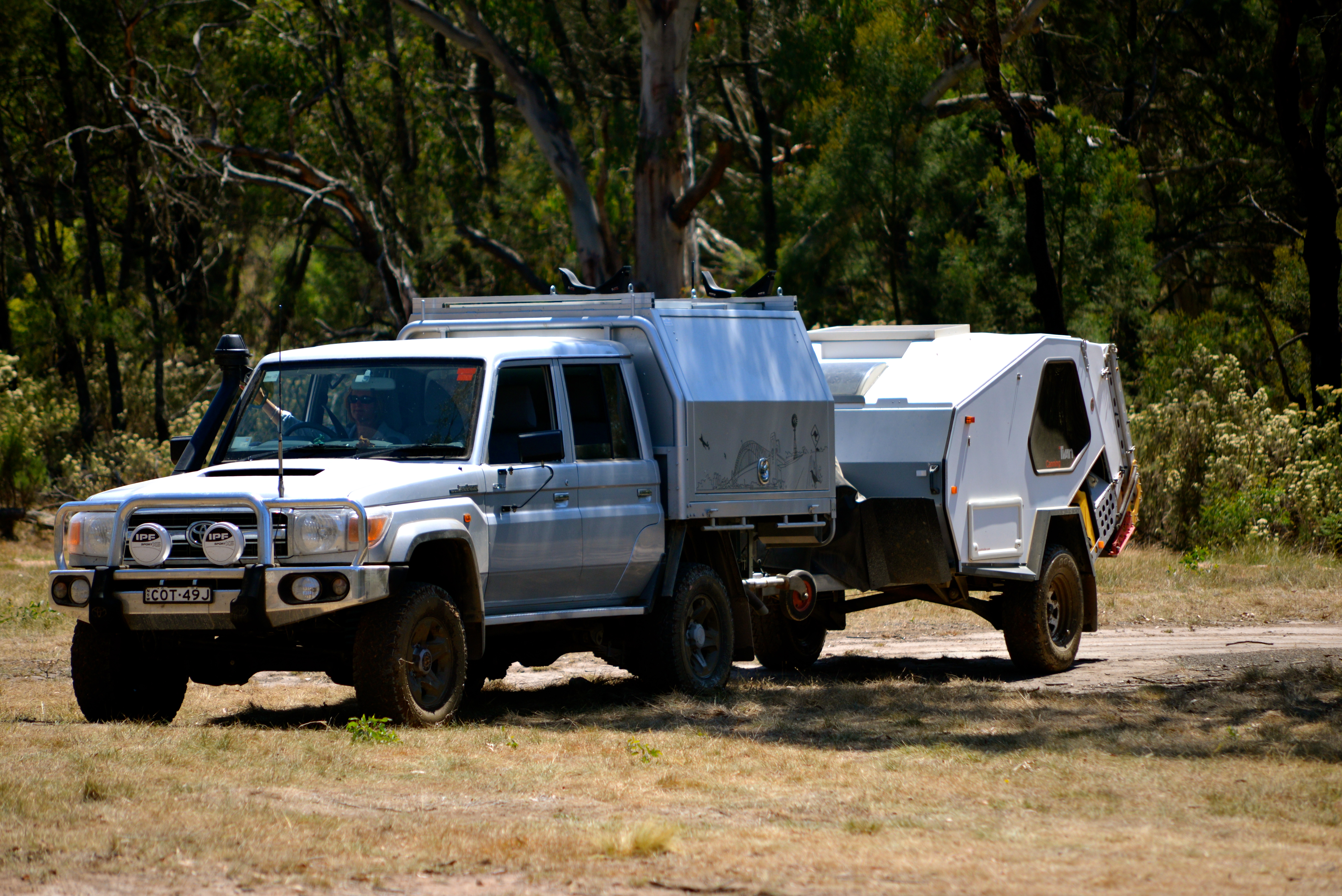
The TVAN is the go anywhere camper trailer with suspension built to military specifications.
Depending on conditions, the vehicle has a range of approximately 1,700-kilometres and all electrical equipment we require is powered by two 120-watt solar panels on the roof charging a 150-amp battery.
It is also equipped with a High Frequency radio for long-range communications. For those not familiar a HF Radio is capable of transmitting over large distances and with the right atmospheric conditions we can speak with someone thousands of kilometres away.
Now I’m not going to “rabbit” on too much here and I’ll let the photographs do the talking, but a little while back I asked for you to submit some designs for a mural to go on the vehicle and I’m pleased to showcase the final product that was inspired by a design suggested by Sassy, who writes a blog titled Sasieology…
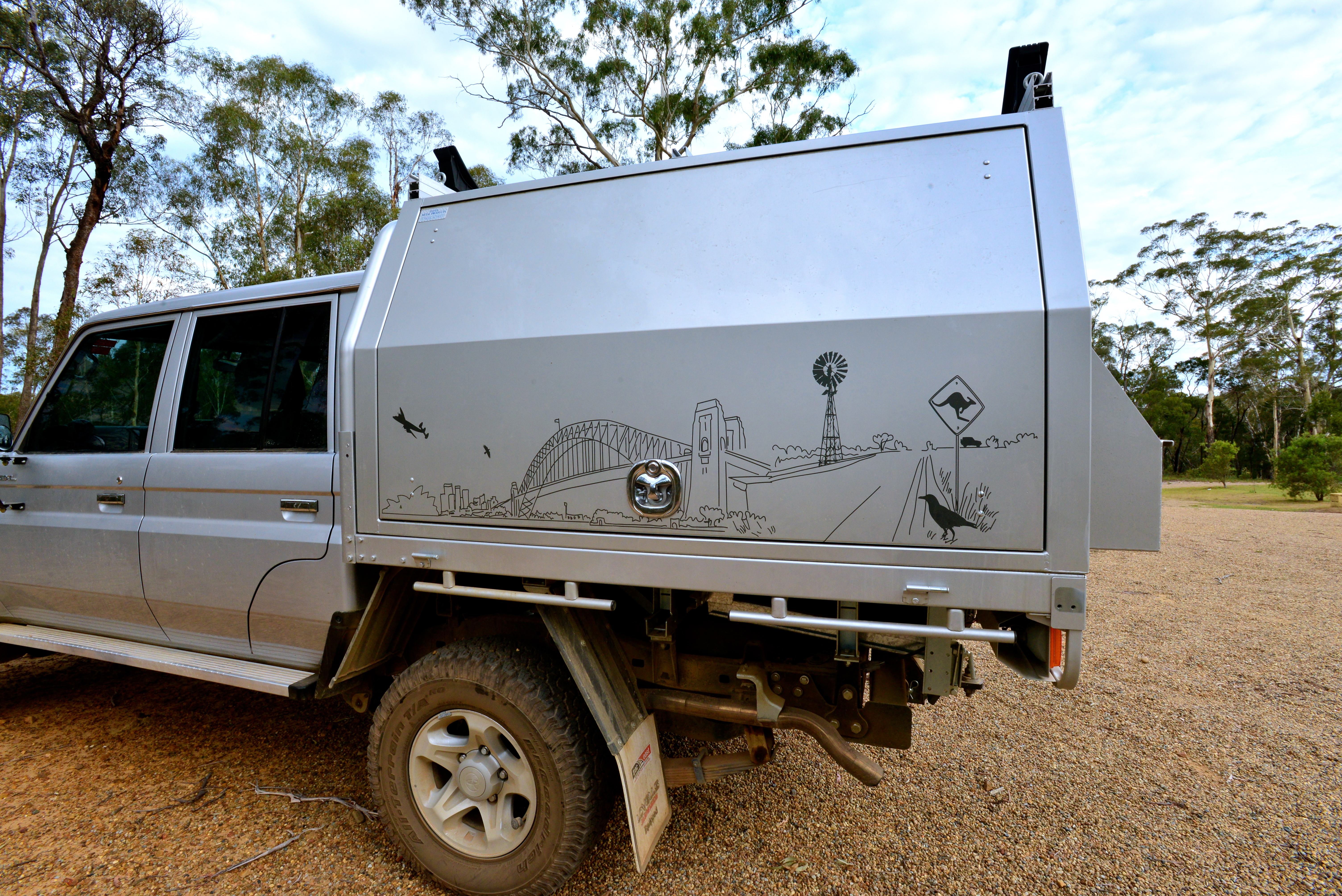
The mural reflects the travel the vehicle will do, across the Sydney Harbour Bridge from the Sydney Opera House and into the Australian Outback.
And I hear you ask what about the Crow?
Well Charlie, he travels with us everywhere!
We captured the photographs as we put the vehicle through its paces with the TVAN in tow in the Australian Bush last weekend.
It passed with flying colours, but I’m still trying to wrest the keys back from Janet who is a rev-head at heart, especially behind the big gutsy V8 engine!


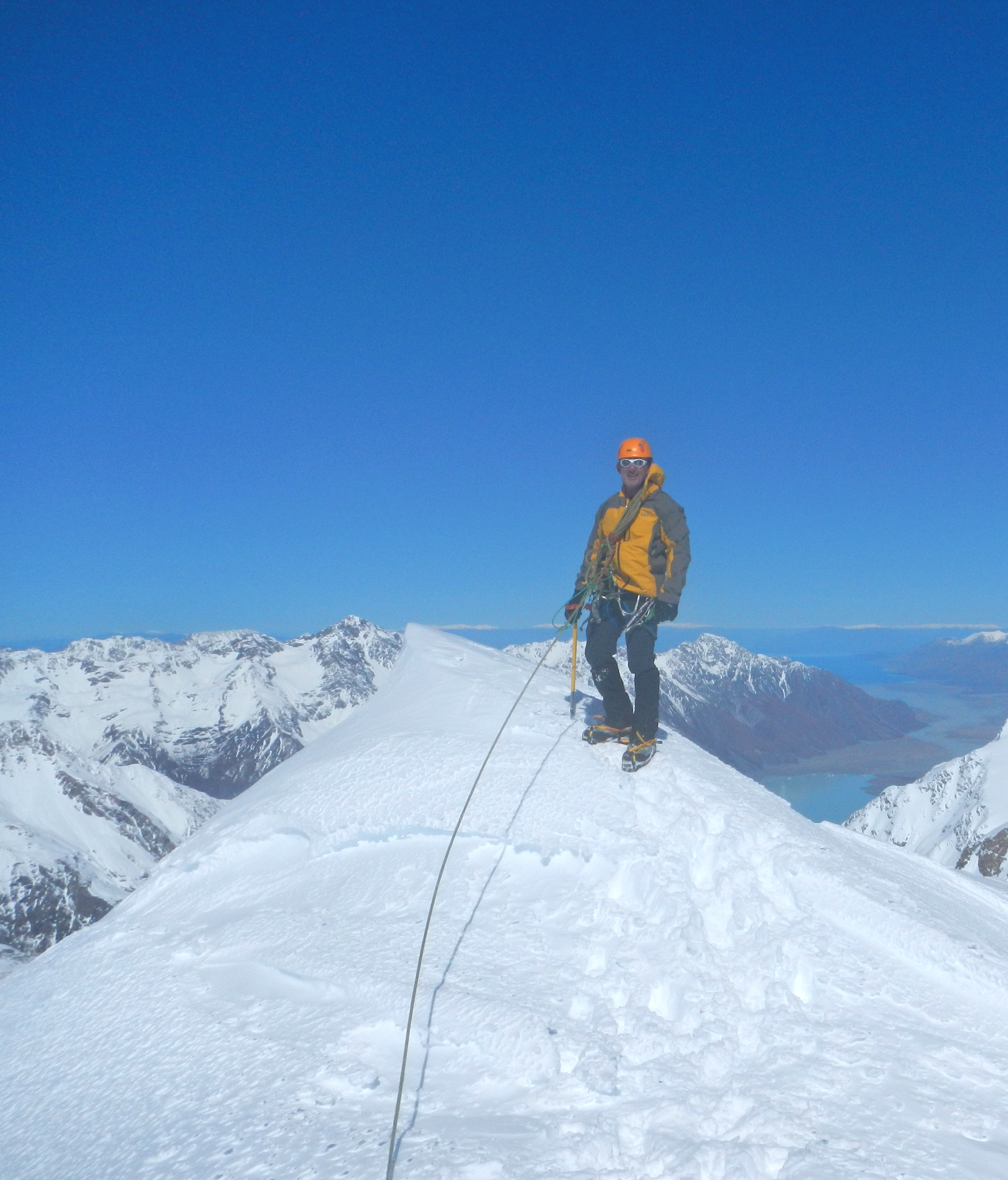


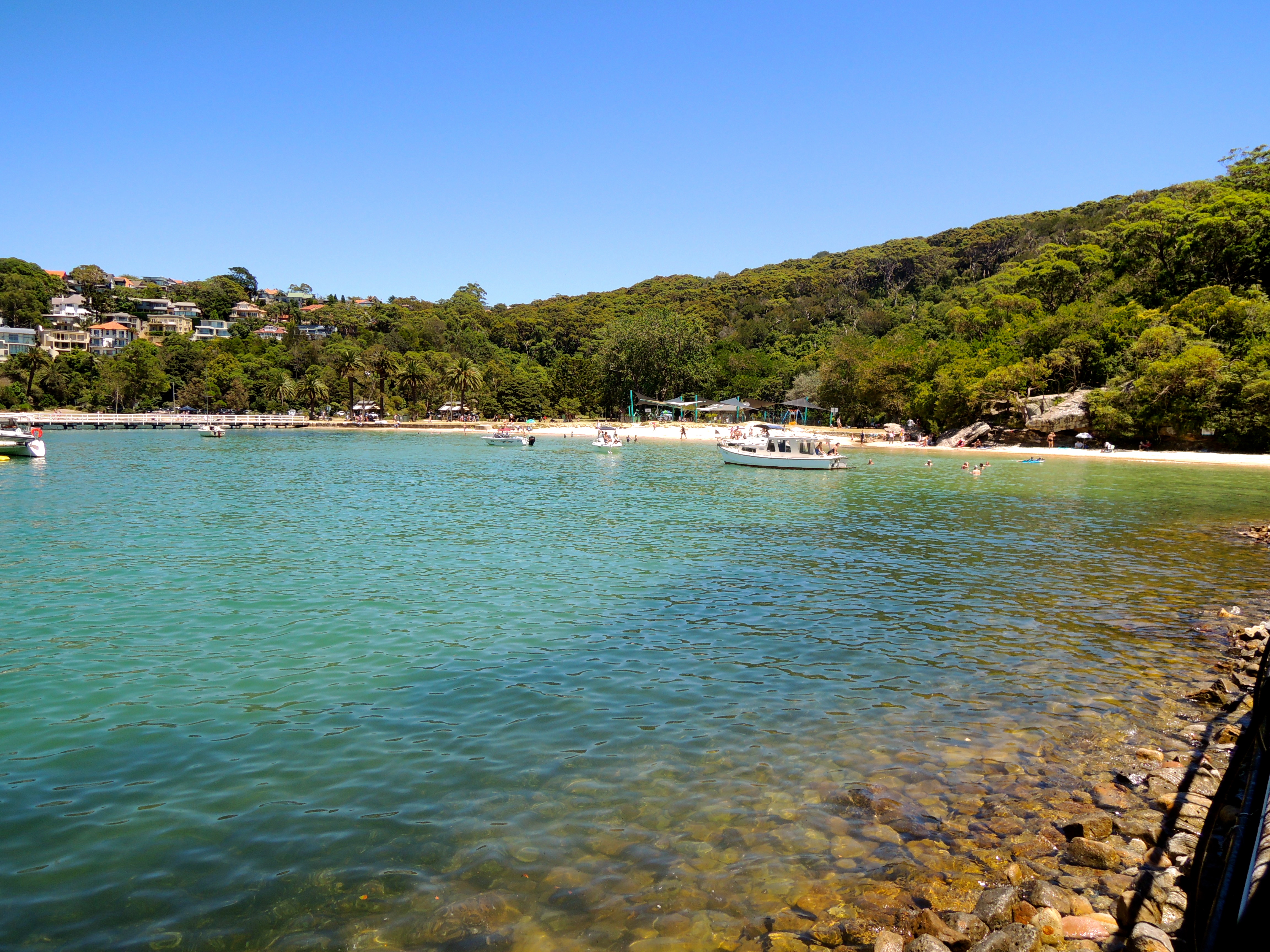

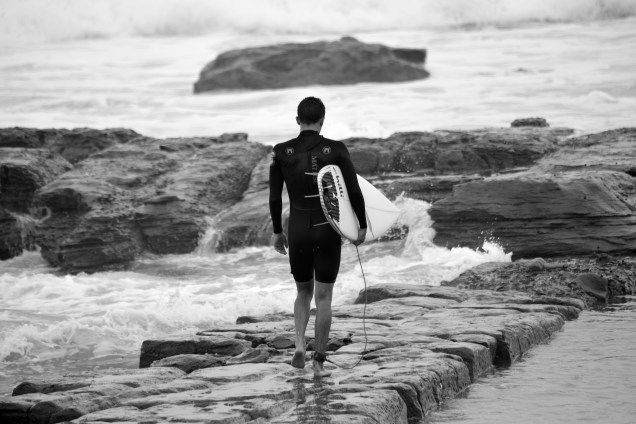

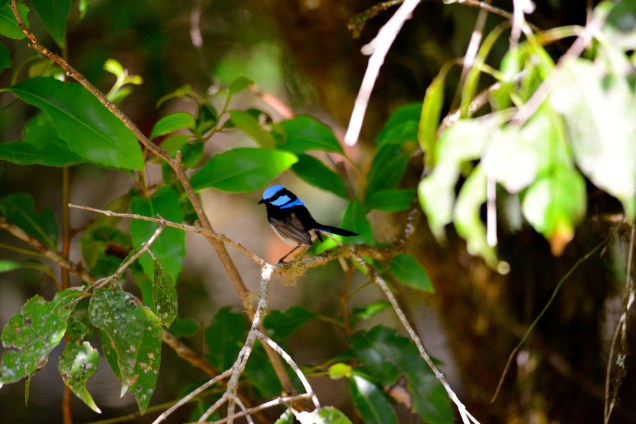
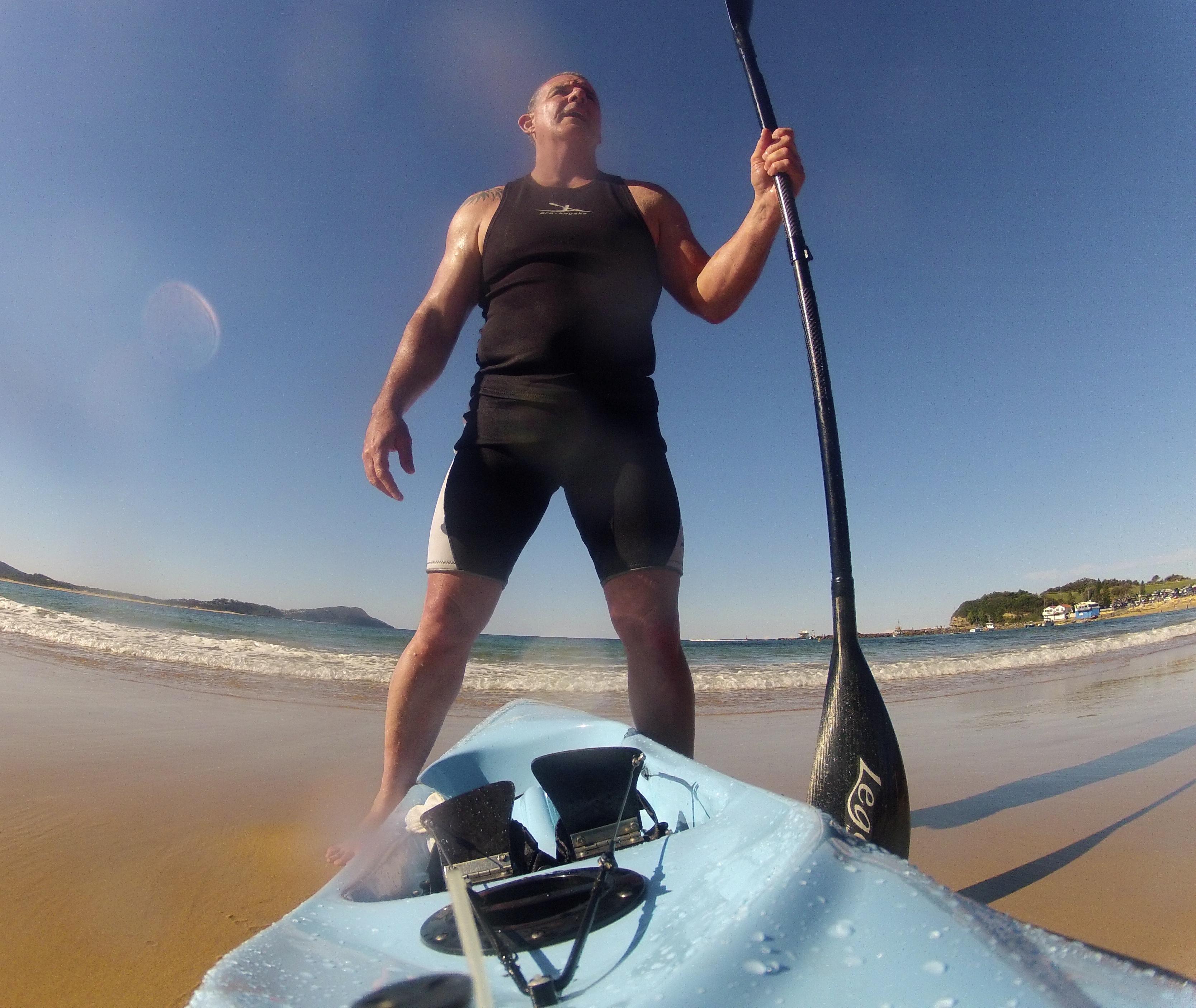 Another glorious start to the day on Australia’s eastern seaboard.
Photo: TomO




Meniere’s disease led to the premature death of Marion, Janet and Leah’s sister a few years ago. She was much loved and had many friend’s in the art world…
Marion’s Artree Stall was the most popular of all the stalls on the day and they raised a substantial amount of money that will now be donated to the Research Foundation that is working towards a cure for this disease.
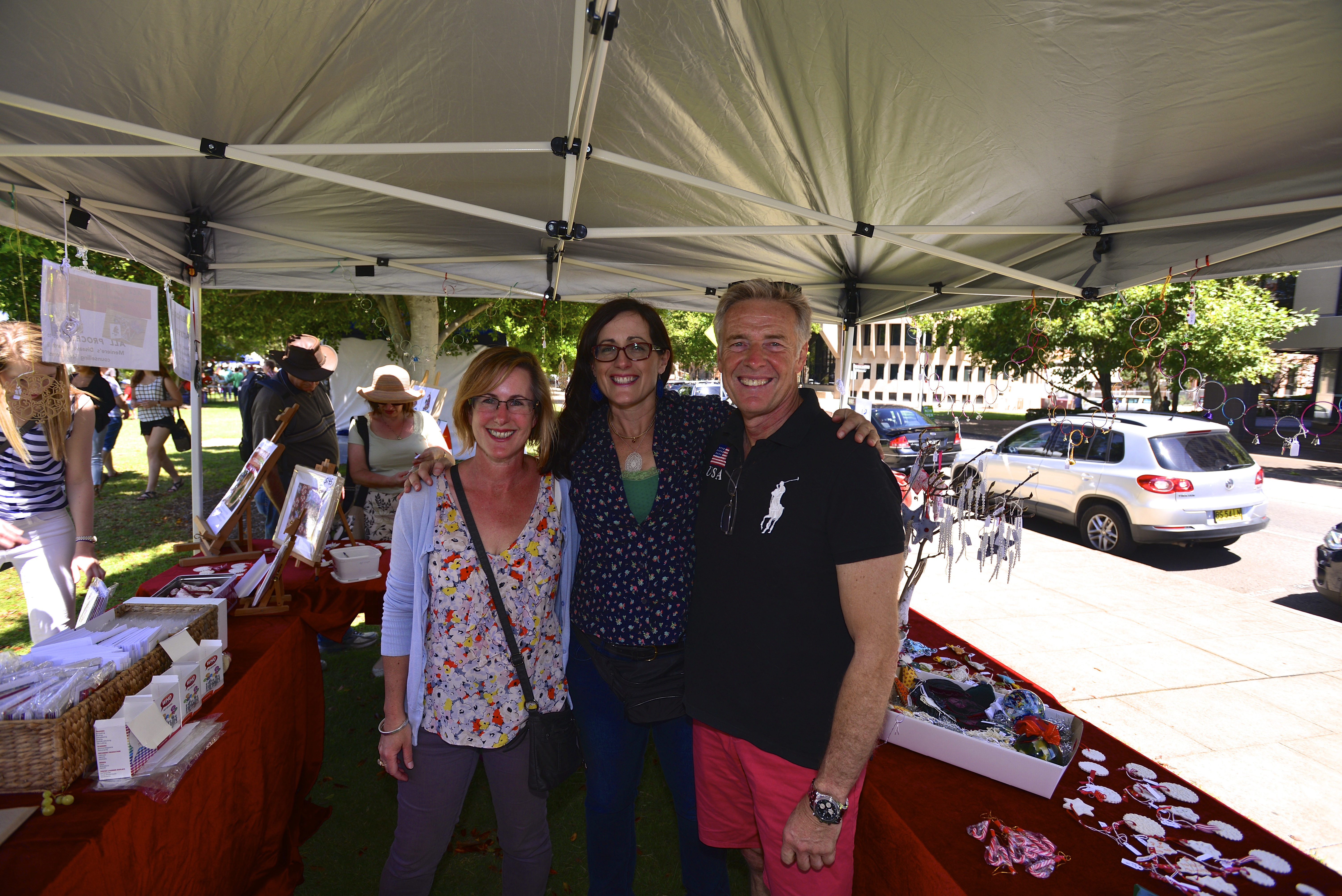
The local member of State Parliament, Tim Owen, spent time helping out the girl’s on the stall, and the local TV Station took an interest, which gave them some prominence to highlight what they are endeavouring to achieve with Marion’s Artree.
And there were some lovely pieces of artwork that was donated by artists’ from all over Australia in support of this project.
Bravo to the girl’s, what a great success!



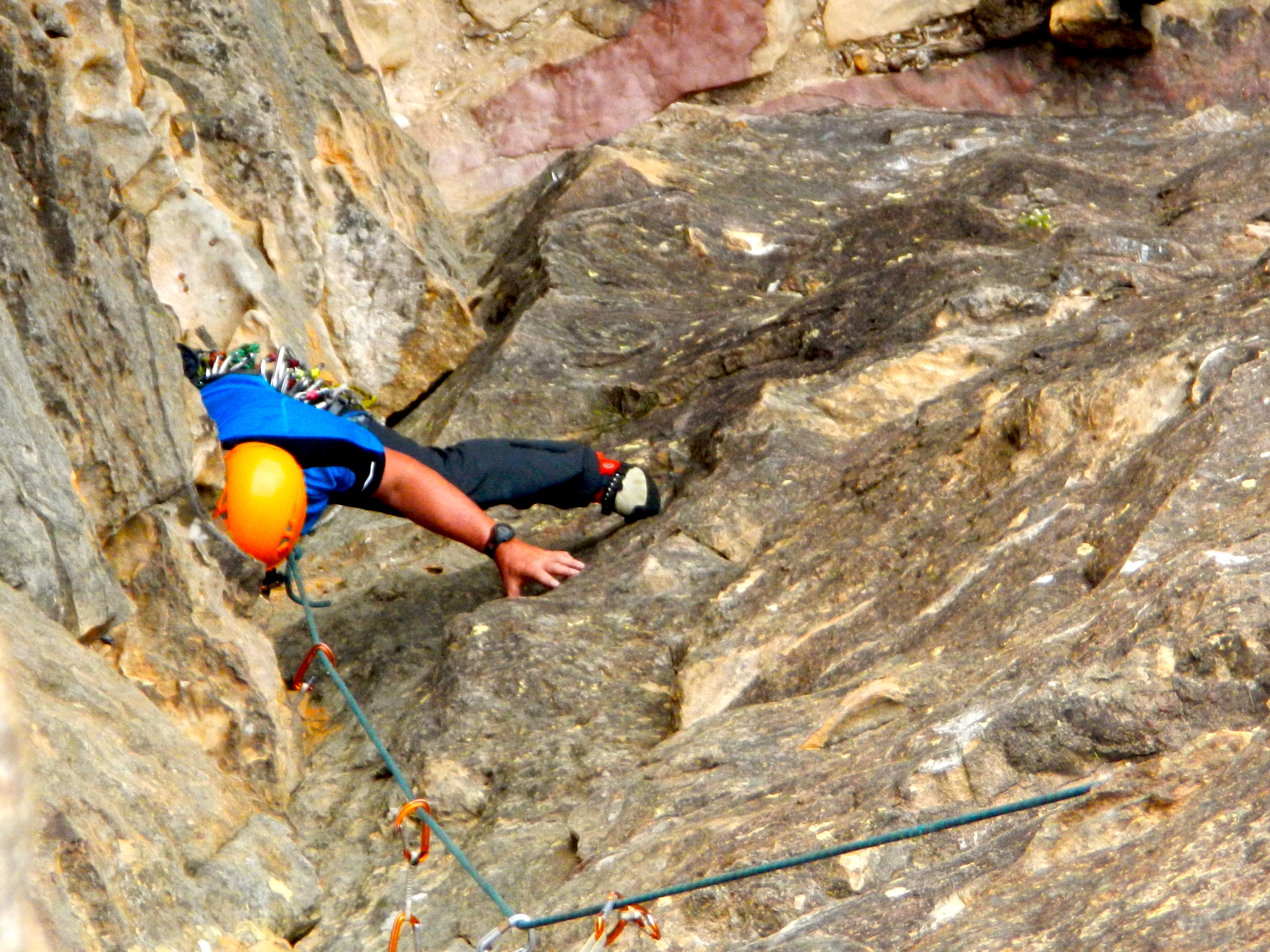
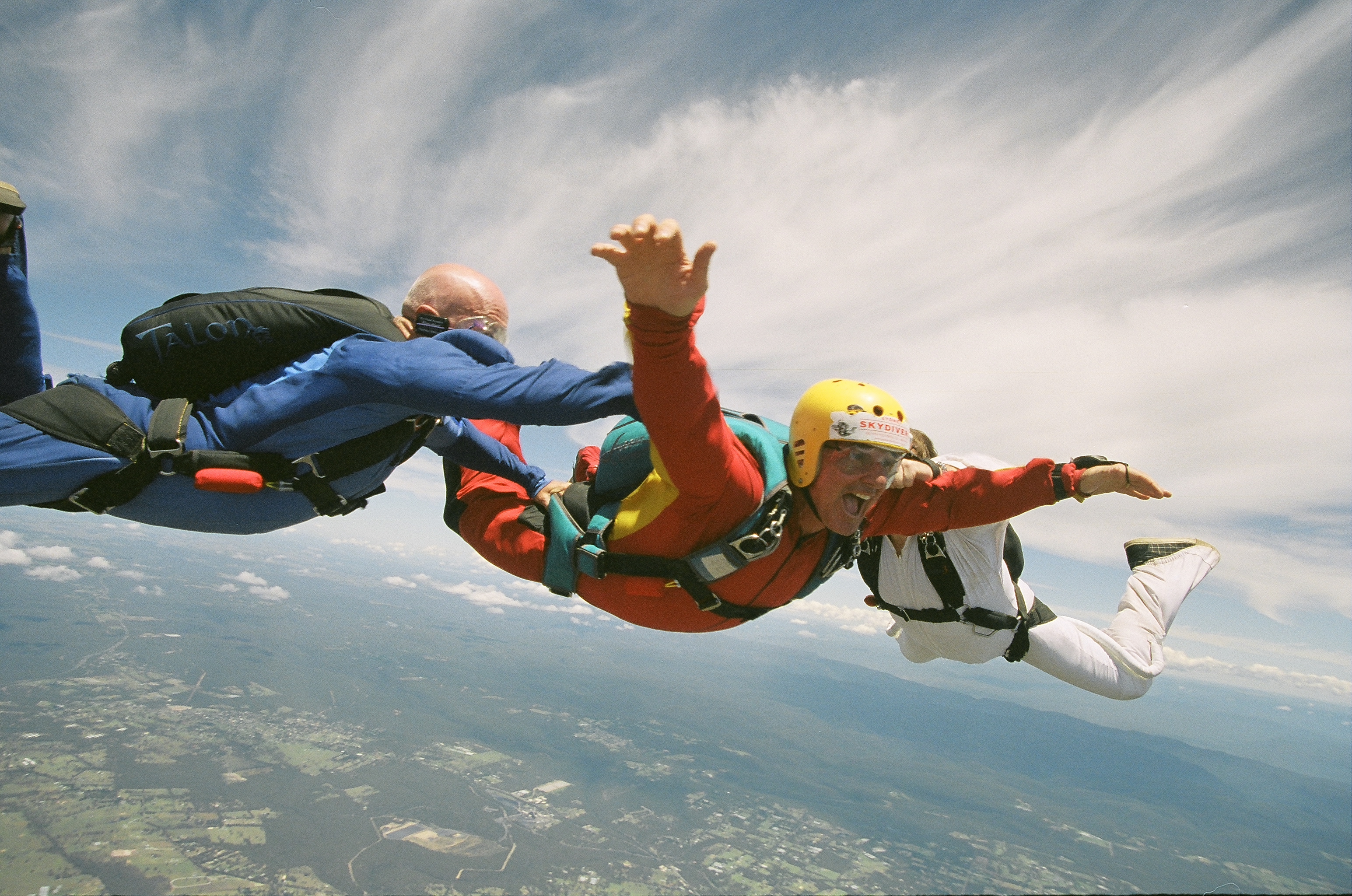

Hell, come to think of it, the poor bloke was probably cleaning up the aftermath of the dinner party we enjoyed with the parents of TomO’s mate last night…
Now nothing ever seems to happen in our house before a cup of tea has been taken, which shouldn’t be that surprising as Janet’s father, Archie, was a tea importer, so after our mandatory cup of tea this morning we boarded The Landy, camera gear at the ready, and headed about 50-kilometres to the north of Sydney into Yengo National Park.
This park is a favourite of ours and we have spent many hours atop Devil’s Mountain watching the sun set on the the park’s western horizon, or Burragurra as it is known by Australia’s first inhabitants.
The mountain has many aboriginal rock engravings etched into its surface, including the spirit footprints of Wa-boo-ee, the creator of heaven and earth. In aboriginal legend he stepped from here to Mount Yengo in one stride and then ascended back into the sky.
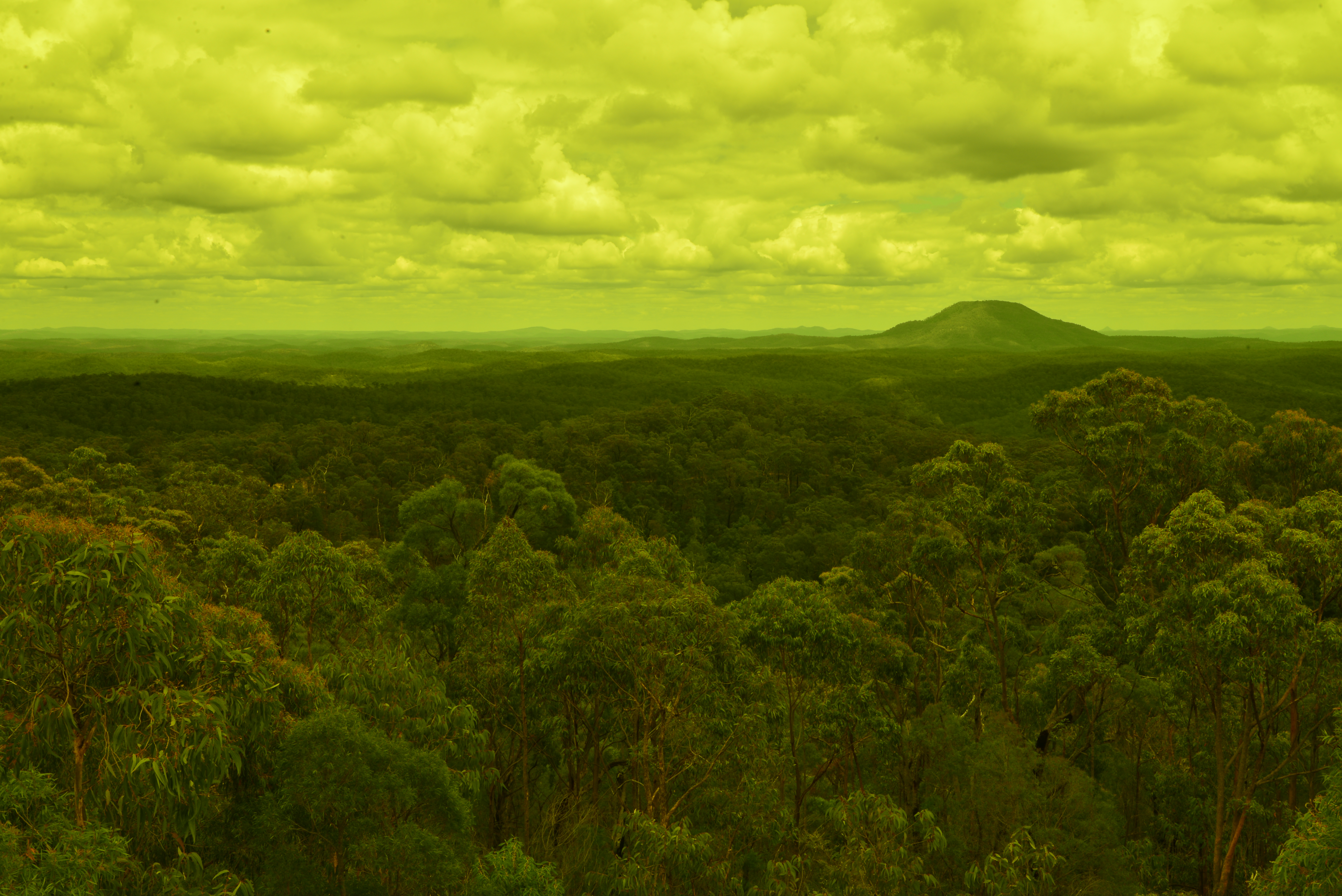
All this, just to the north of Australia’s most populous city, strewth, how did we Aussies’s get so lucky?
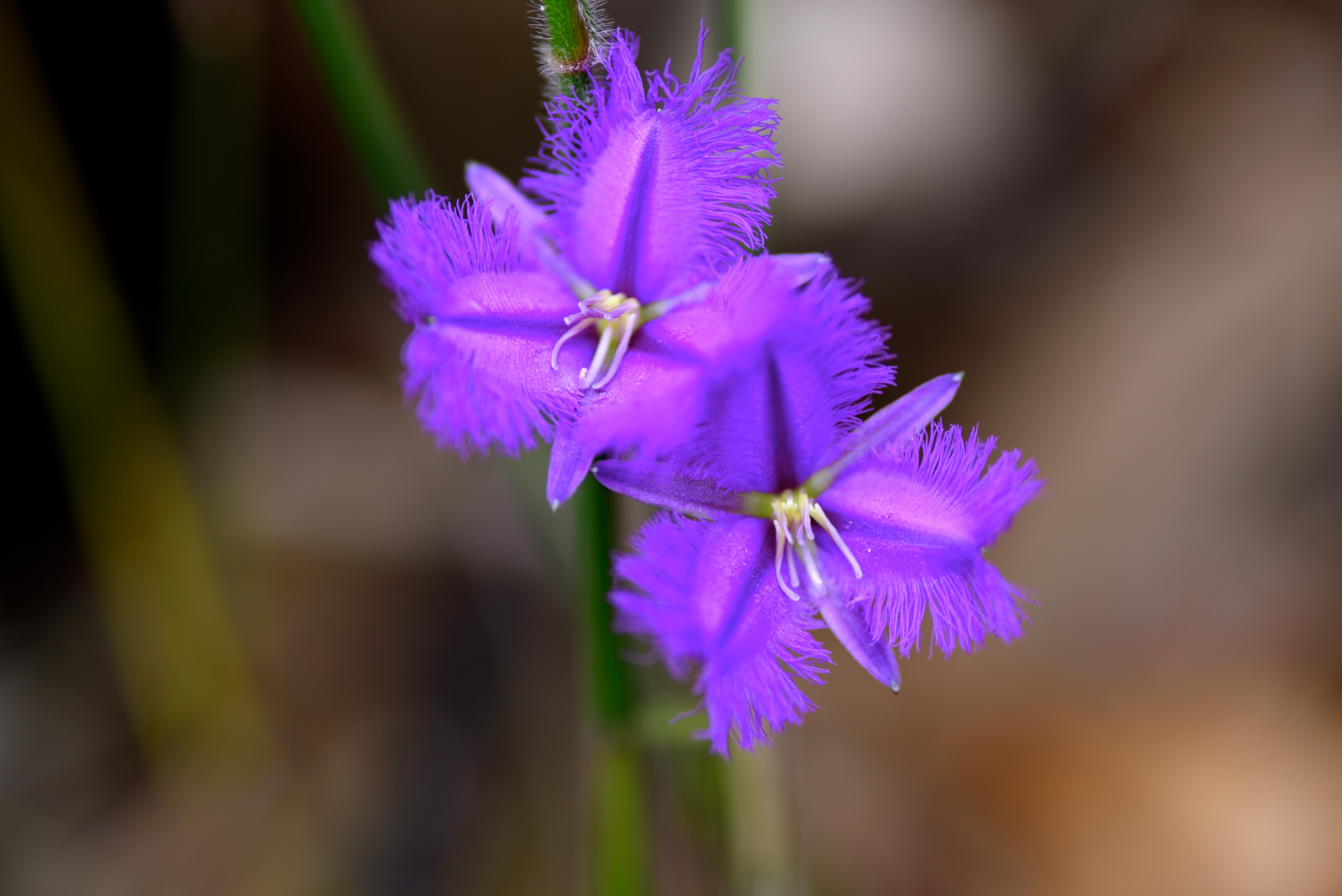
And you know how I tend to rave on about the Australian Bush and Outback, well just take another look at the beautiful example of a Fringed Lily. They are so minute and in flower presently.
And as harsh as the Australian Bush can be it is such a fragile environment producing what can only be described as Living Works of Art…just like the Fringed Lily!


It was almost over as quickly as it began and very few found the fortune that they came in search of, and of course those that prospered most were the people who ran the stores, supplying equipment and provisions to the miners, and the many hotels that quenched the thirst of those who were looking for the “big strike”.

Hill End is a historic town administered by the New South Wales National Parks. There is a pub, a store, and plenty of old buildings that give a glimpse into how life might have been in those heady gold fever days. For the more energetic, there is a walk to Bald Hill where there was a lot of mining activity.
And the Royal Hotel is a great place to have a beer, or two, and a meal in the bistro.
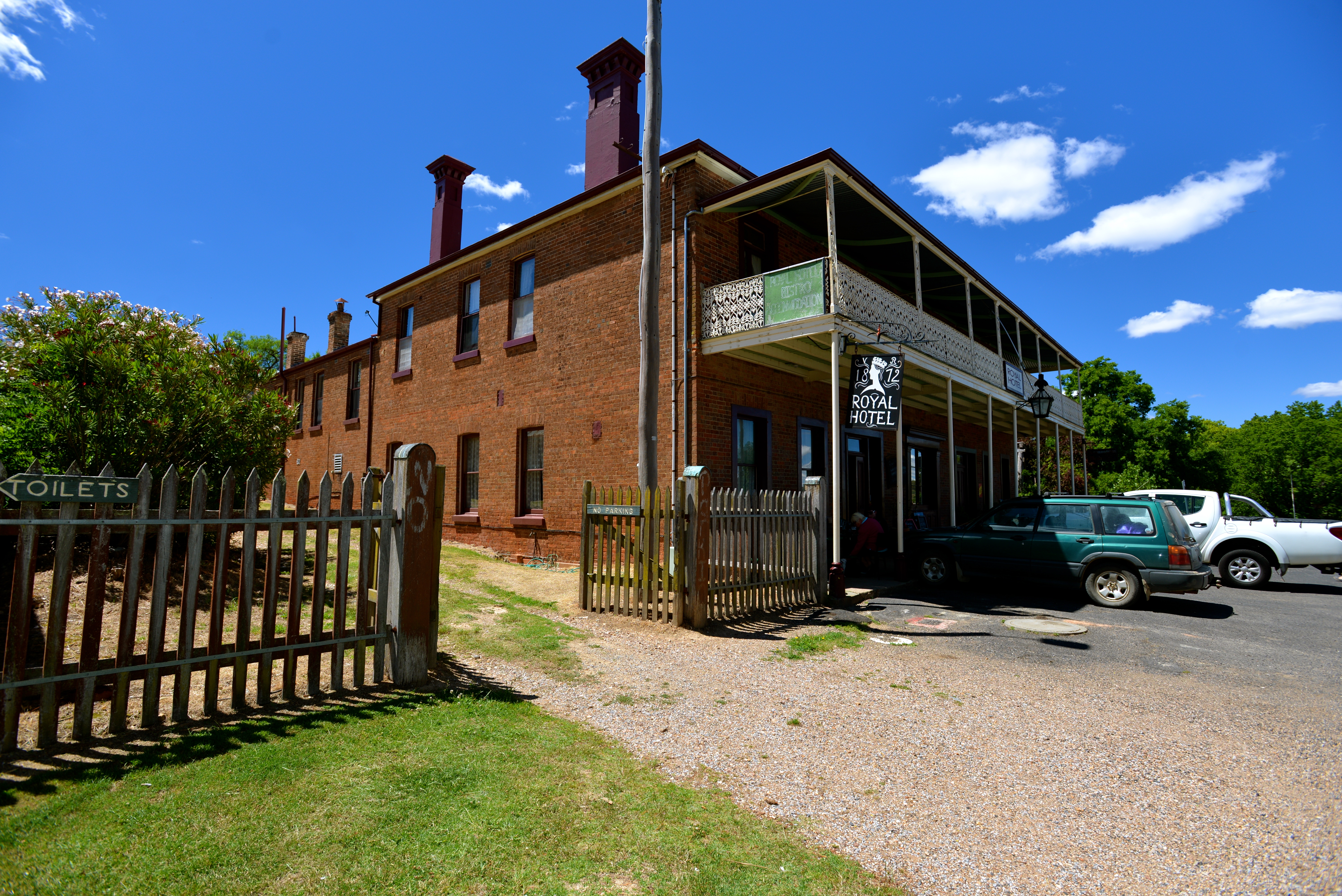
Leaving Sydney we travelled the Great Western Highway via Bathurst and the small township of Sofala.
We camped at Glendora campground, which is located about 1.5 kilometres from the pub and is well equipped to take caravans and camper trailers, with powered and unpowered sites available and self-registration. In fact this is a good spot for larger groups with full facilities including electric barbecues and hot showers.


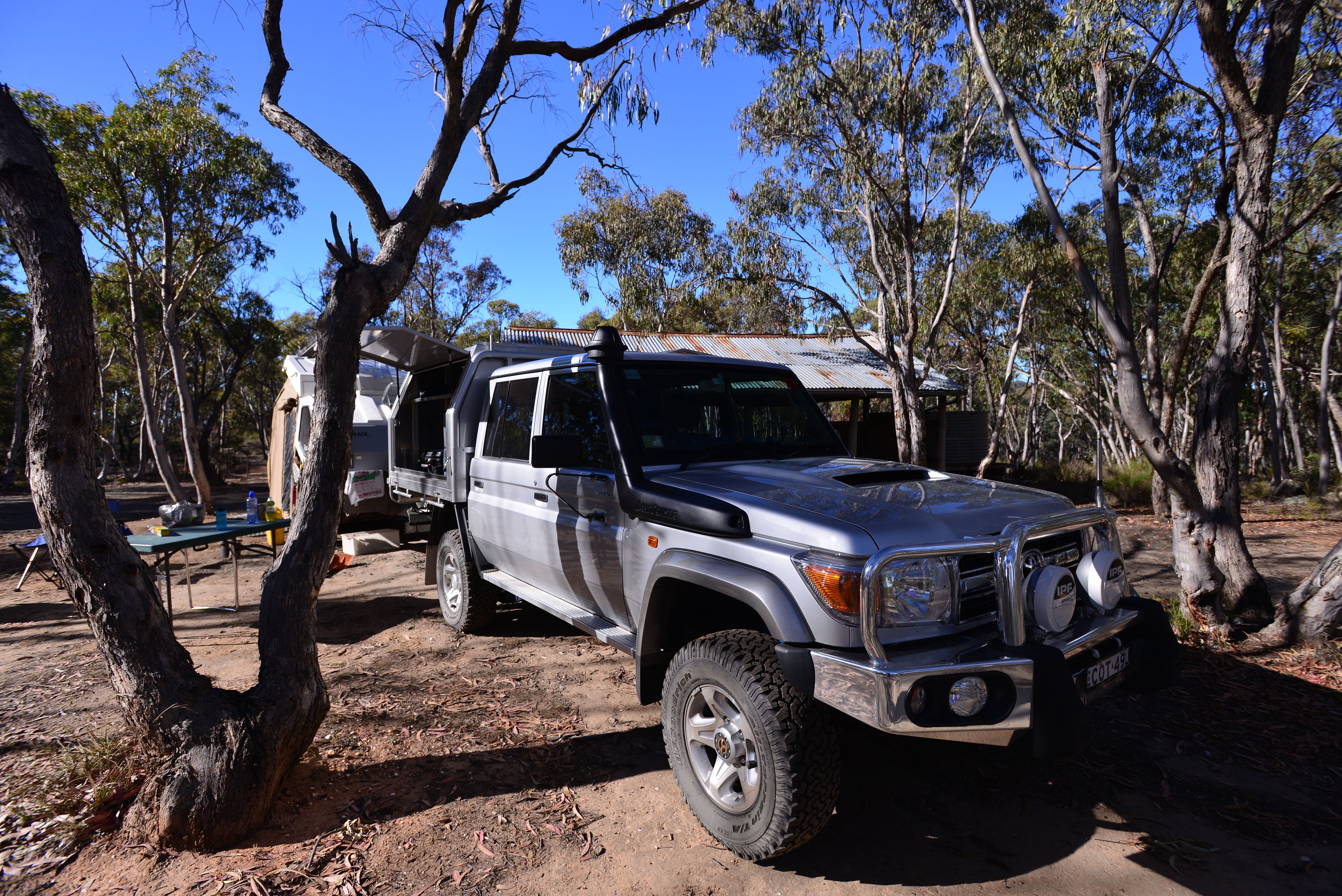

There is also a campground in the centre of town, which was about half full…
Leaving Hill End on Sunday we travelled back to Bathurst via Dixon’s Long Point Road, a four-wheel drive track that winds its way down to a rocky creek crossing on the Macquarie River.


“The Landy” had its first workout and performed admirably, although it was hardly taxing for the big V8-engine housed under a bonnet as big as a football field.
The views are spectacular and you can camp by the river and wile away the day under a deep blue sky…
The drive down to the river takes about one hour, depending on whether you stop along the way to visit the Cornish Roasting Pits, which we didn’t do on this particular occasion.
Travelling on you eventually come to Ophir Reserve which is located in a gorge where the Summer Hill and Lewis Creeks converge, and it was from here that the gold in the gold medals presented at 2000 Sydney Olympics was mined.
A great spot for a picnic, and it didn’t take long before TomO found a rope swing.

Leaving Ophir it is less than an hour drive to Bathurst and another couple of hours back to Sydney.
And what about the Ghouls I hear you ask?
The National Park Rangers do a Ghost Tour that takes in a number of properties in Hill End and can be organised with about a week’s notice. It was uncertain whether “The Landy” would be finished in time for this trip so we thought we’d keep the ghost tour up our sleeve, giving us a reason to return again soon…

For anyone visiting the central west of New South Wales, Hill End and a tour of the region is well worth the experience. And there is some good four-wheel driving to be done, if you are inclined. Otherwise the Dixon Long Point Road is easily traversable and will reward you with some stunning vistas of the Australian Bush…



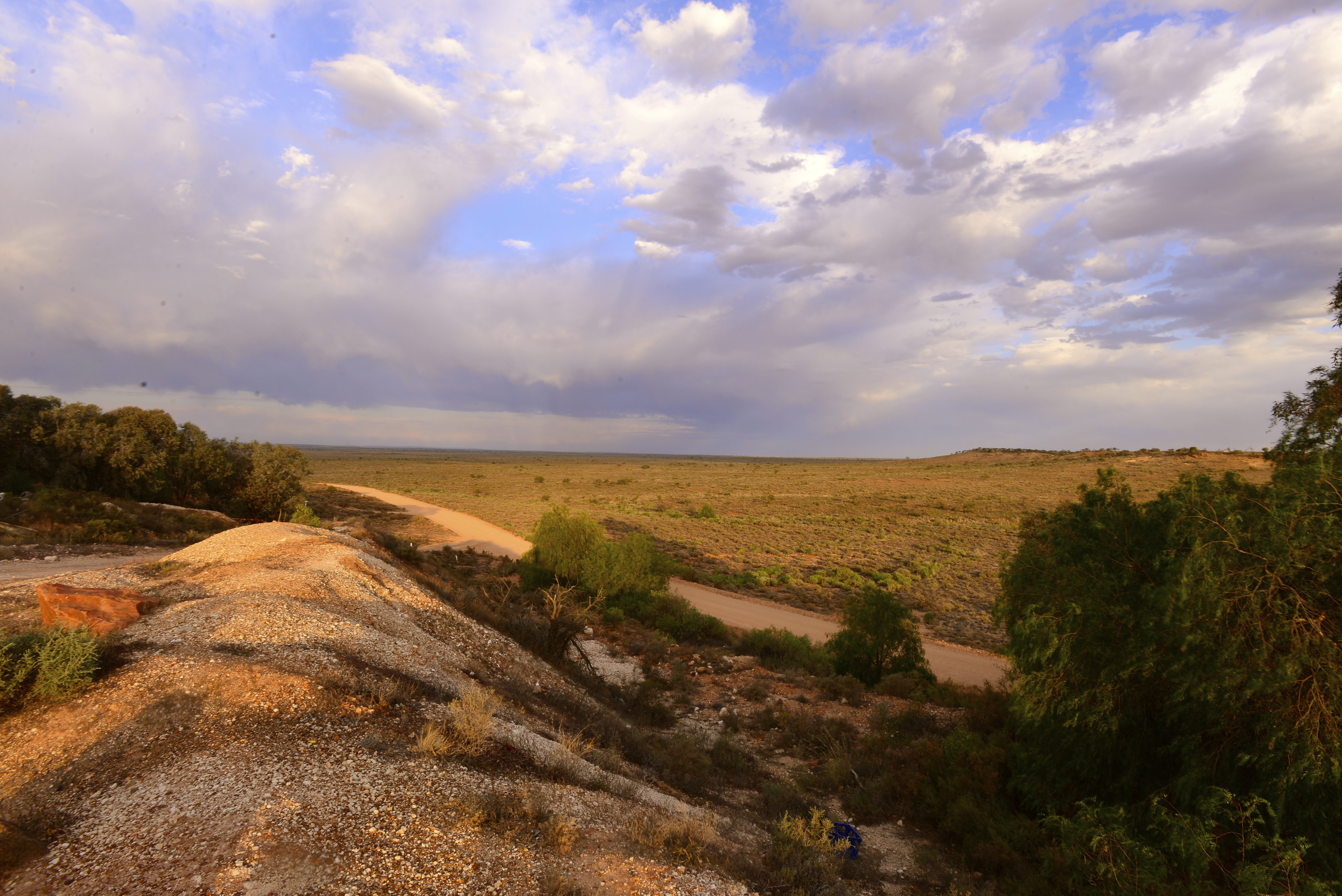
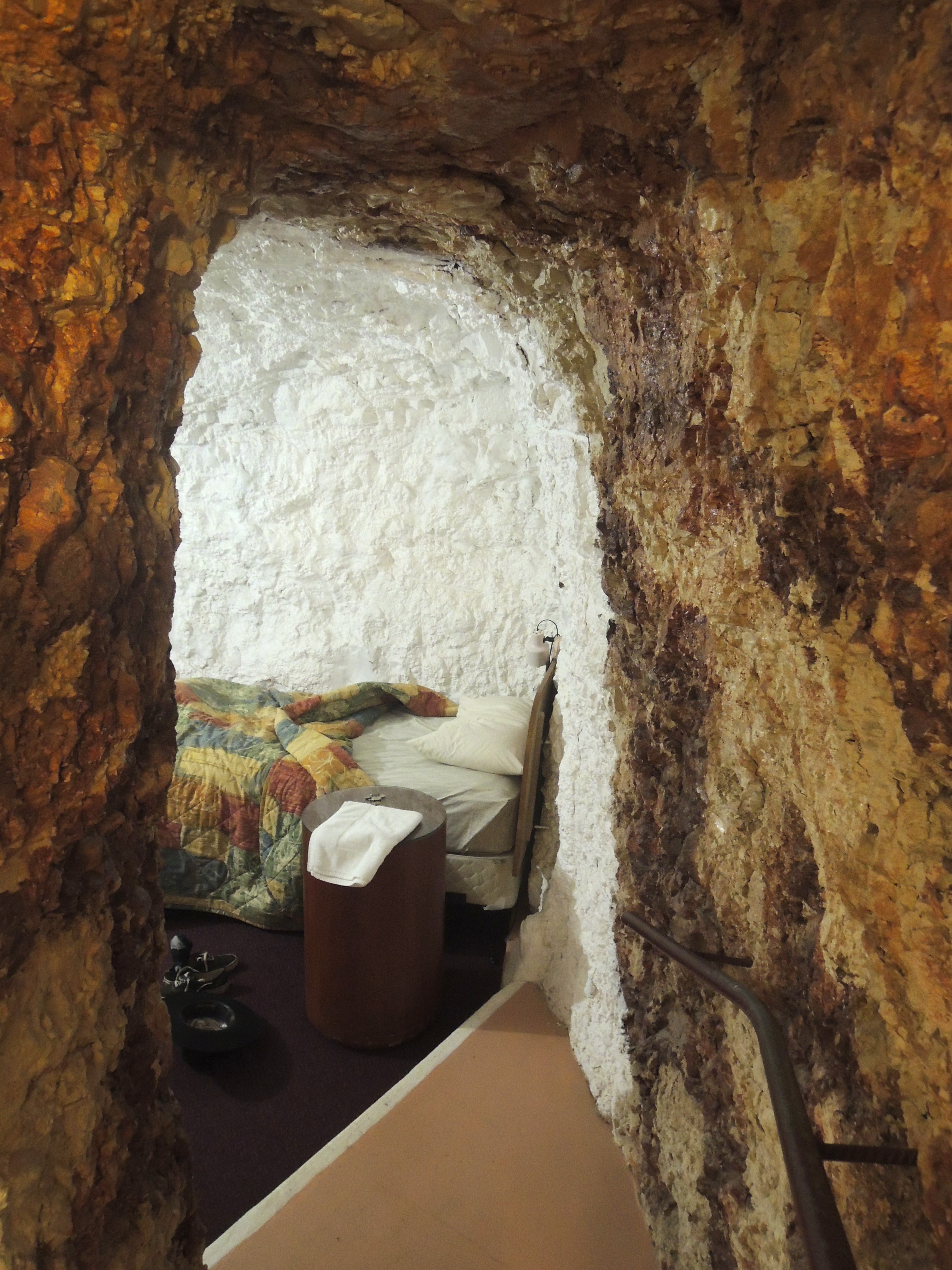
And just below the surface is the Underground Motel where we stayed in rooms fashioned out of an old mine. White Cliffs is an opal mining town, whose day time temperatures in summer can be above a ‘hundred on the old Fahrenheit scale for weeks on end and below zero at night in the depths of winter.
Seemingly, there is little happening on the climbing front just at the moment, even though I have recovered sufficiently from the operations earlier in the year, I’ve just lost a bit of zest for it.
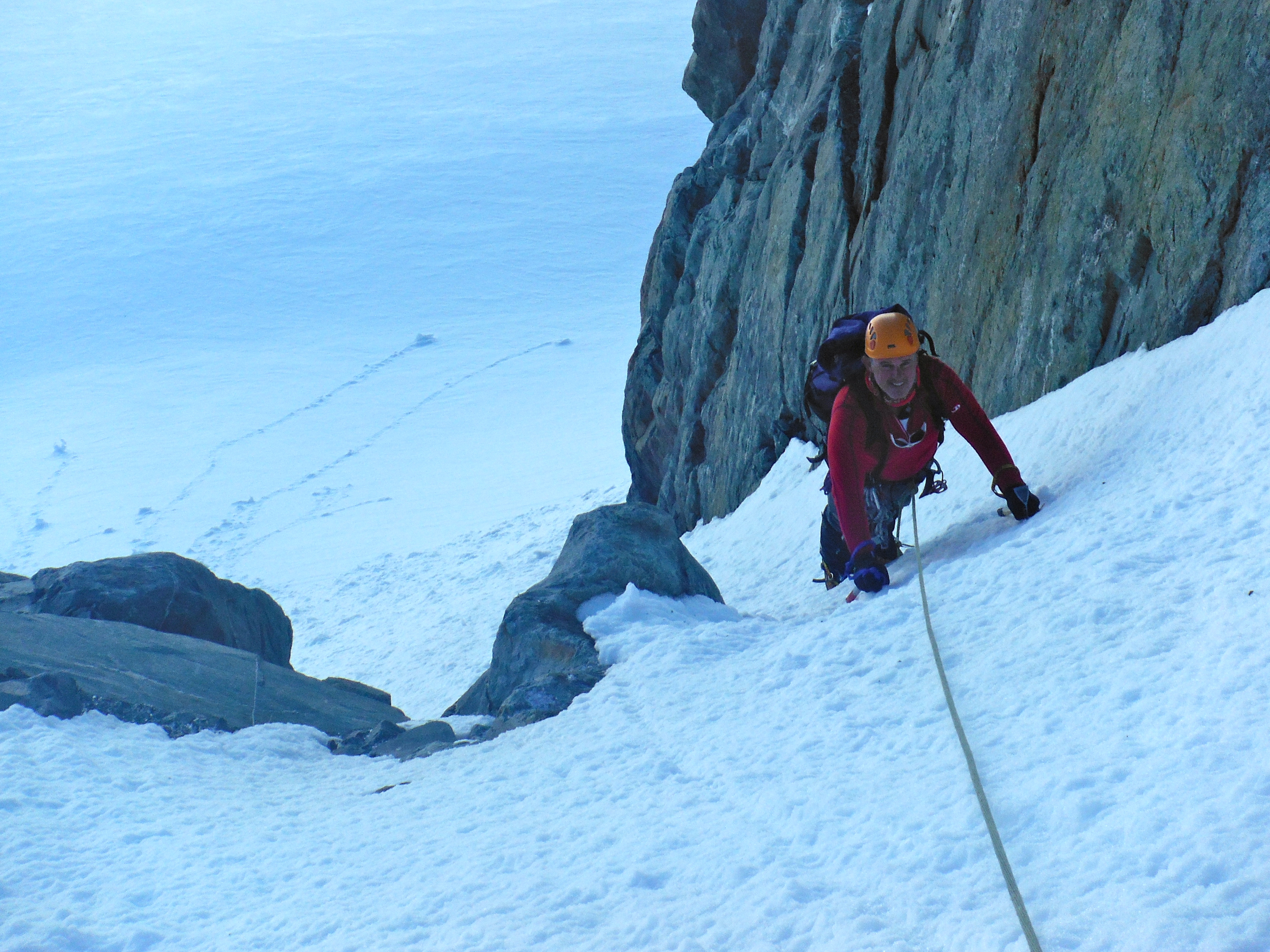
Isn’t life funny sometimes, hey!
I wanted to be on those high mountains so badly earlier this year, in fact I was scheduled to be in Nepal climbing this month, and now I’m struggling to get motivated enough to get back out there – so fingers crossed for me!
And crikey, in the meantime, it is Janet’s scones cooked in a camp oven in the Outback and TomO’s antics whilst on tour– and there’s nothing wrong with that!

 Xplore