The Shearing Shed, early morning, Outback Australia…
Photo: Baz – The Landy

Photo: Baz – The Landy


Photos: Baz – The Landy

Photo, Baz – The Landy

 Warracoota Water Hole, Diamantina National Park
Photo: Baz – The Landy


Photo: Baz – The Landy

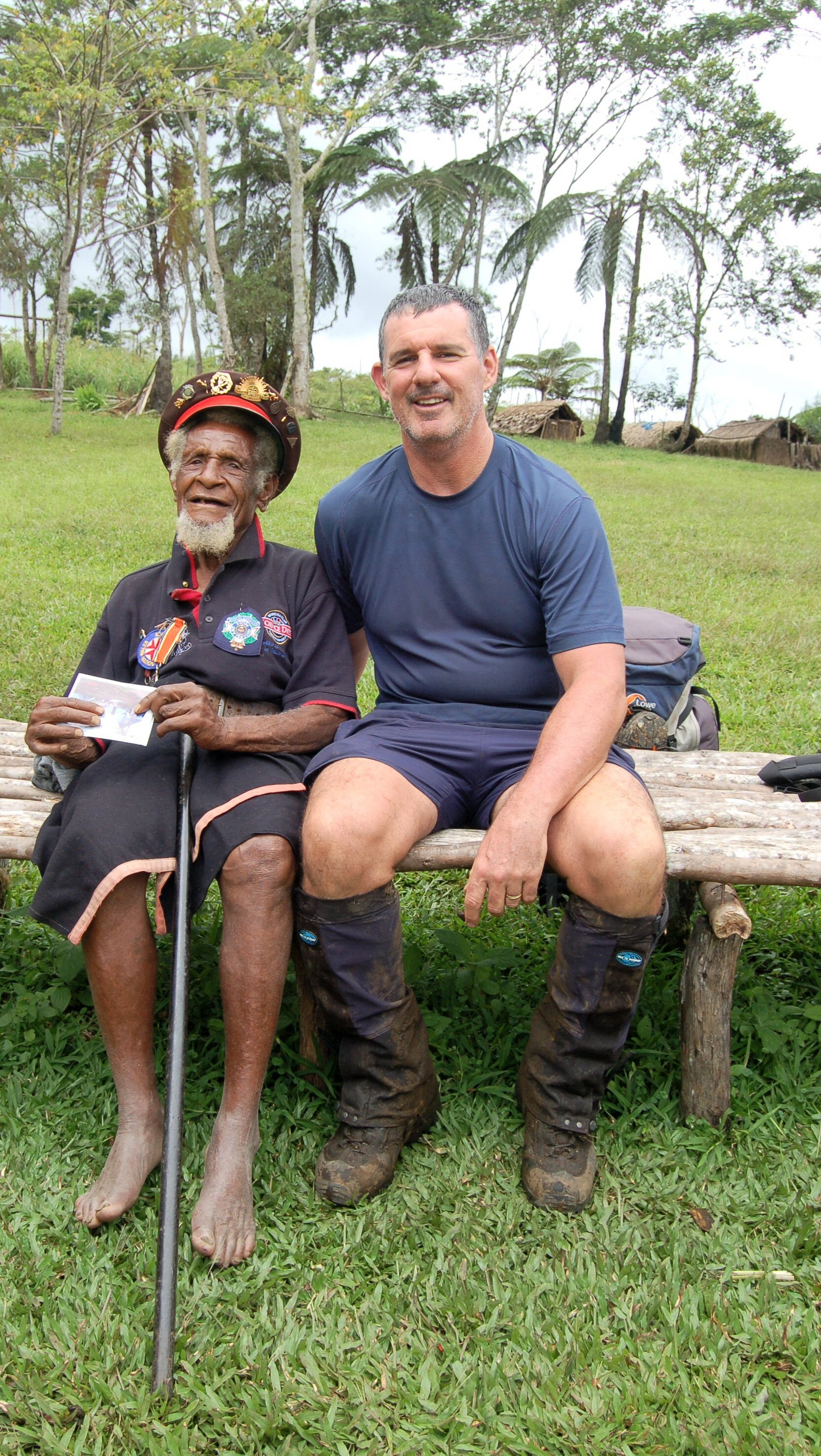
Military historians have written often of the bravery and courage shown by those involved in the New Guinea campaign, especially along the Kokoda Track, and no doubt there are countless stories of others whose sacrifices and bravery are known only to a higher authority.
Today, many Australian’s in increasing numbers are walking the Kokoda Track to pay homage to those Australian’s and Papua New Guinean Nationals, affectionately known as the Fuzzy Wuzzy Angels, who fought to defend Australia and Papua New Guinea. Most, if not all, are moved by the experience, especially after gaining only a glimpse of the conditions they would have experienced and the enormity of the task they faced against the highly-trained Japanese invasion force.
In the mid 1980’s my partner, Janet-Planet, and I lived in Papua New Guinea and we relished the opportunity to travel and work in a country that was so close to ‘home’ but was so culturally different to Australia
The experience was humbling at times.
Before leaving the country one of my National colleagues said that I would return on many occasions in the future. Of course I said I would love to, but he was insistent, telling me that he ‘knew’ things of the future.
And he was correct, since leaving I have returned twice, once for work in the mid 1990’s, and the second to walk the Kokoda Track in 2006.
I have always had a deep interest in Australian Military history and the Anzac Spirit; the Australian commitment to one’s mate that is legendary and unique amongst the World’s fighting forces; on the sporting field, anywhere for that matter. And it was with that in mind that I found myself walking the Kokoda Track with a ‘mate’ in 2006.


We visited many battlefields; sang ‘Danny Boy’ in honour of Butch Bissett at the site that his brother, Stan, nursed him to his death, and stood in silence to the fallen at Bomana War Cemetery just outside of the country’s capital, Port Moresby.
The countryside was amazing and the people warm and welcoming.
Ten years later and I am to ‘return’ once again.
In May next year I will be travelling to Papua New Guinea, this time to trek the Black Cat Track in the country’s Morobe Province.
Yes it sounds like a long time off, but time flies, right, especially when you are trying to get your fitness “up to speed”.
Partnering up with a group of like-minded people we will be guided by Aidan Grimes, an Irishman with a great sense of humour and who now calls Australia home. Aidan’s experience and knowledge of the battlefields of this region are unparalleled and with this knowledge in hand he will help us retrace the steps taken by those who fought in this region over 60 years ago, expertly guiding us through the jungle and over mountains.
Although we will never be able to walk in the boots of those that trod this region during the War Days……
The Black Track Cat starts in Wau and winds its way down to the coast at Salamaua, with many suggesting this track makes the Kokoda Track seem like a Sunday afternoon stroll in the park.
It is not an established track like ‘The Kokoda’ on which thousands of trekkers regularly tread, but a forgotten World War ll track that passes through what has been described as some of the toughest and most-hazardous terrain in the world.
In an account of his experience in The New Guinea Narrative 2001, Signalman Lloyd Collins, 3rd Division Signals, explained;
“…there was little conversation. You neither had the time nor the inclination. Talking required energy and energy was a scarce resource. When passing a mate you sometimes glanced at his face, a face dull from fatigue and dripping with perspiration. You saw his sticking clothes, his muddy boots and trousers. You noticed the heavy pack and you could hear his heaving breath as he struggled past. Then, as you pitied him and felt sorry for his plight, you realised that you looked the same to others. Even though no words were spoken the silent glance conveyed sympathy and understanding…”
This hardly sounds like a holiday I hear you say, perhaps it is more of a test of one’s own ability to draw on inner-strengths, to be inspired and stand in awe of those that fought to protect our country; laying down their own lives so we may enjoy the freedoms and way of life we do today.
To add to the adventure we will raft down the San Francisco River from the village at the end of the track to Salamaua on rafts made locally before resting overnight and completing our journey back to Lae by sea.
It is said that Salamaua is one of best kept secrets in the world and one of the most idyllic places you will ever go!


Those that follow my expeditions into the magnificent Australian Outback will know that I enjoy a camp oven roasts, scones, and Janet’s dampers, not to mention the odd beer or two. And whilst maintaining a high level of fitness it is fair to say that I am back in the gym, rowing, and weight training as well as spending time much time in the “hills” the Australian “bush” with my backpack on…something that I need little encouragement to do!
Cheers, Baz – The Landy


Photo: Baz – The Landy


Since arriving home from the Outback a few weeks back I have been heading up the driveway to “The Shed” in the pre-dawn darkness to exercise on my rowing machine and lift a few weights.
Don’t worry, I’m an early morning person…
Over the coming months my exercise regime in “The Shed” will involve high intensity workouts on the rowing machine and weight resistance training in preparation for my expedition to Papua New Guinea early next year.


And rest assured, there will be plenty of hill climbing with a 20 kilogram backpack and I could never go a week without getting in a couple of paddles on the surf ski.
And this weekend’s weather in the harbour city is set to be perfect for all kinds of outdoor pursuits…
Crikey, bring it on!
Baz – The Landy
(Photos: Janet-Planet)

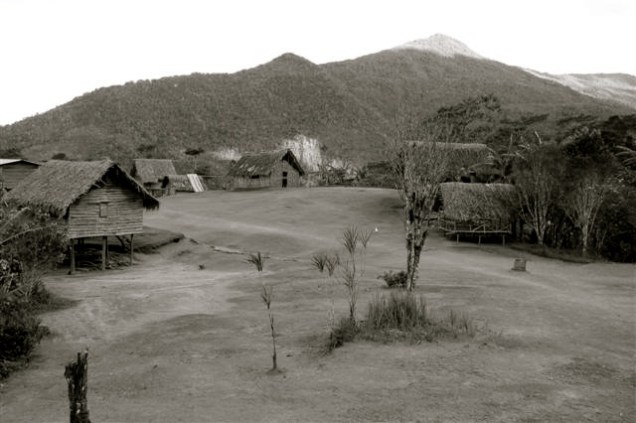
This region of Papua New Guinea has some of the most spectacular jungle scenery on the planet and is the habitat of the country’s national emblem, the superbly beautiful Bird of Paradise.
I had to postpone a trek along the Black Cat Track a few years back due to civil unrest in the region, something it has been prone to from time-to-time, but I have been anxious to undertake this adventure and revisit a country Janet-Planet (Mrs Landy) and I lived in as newly weds many years ago…
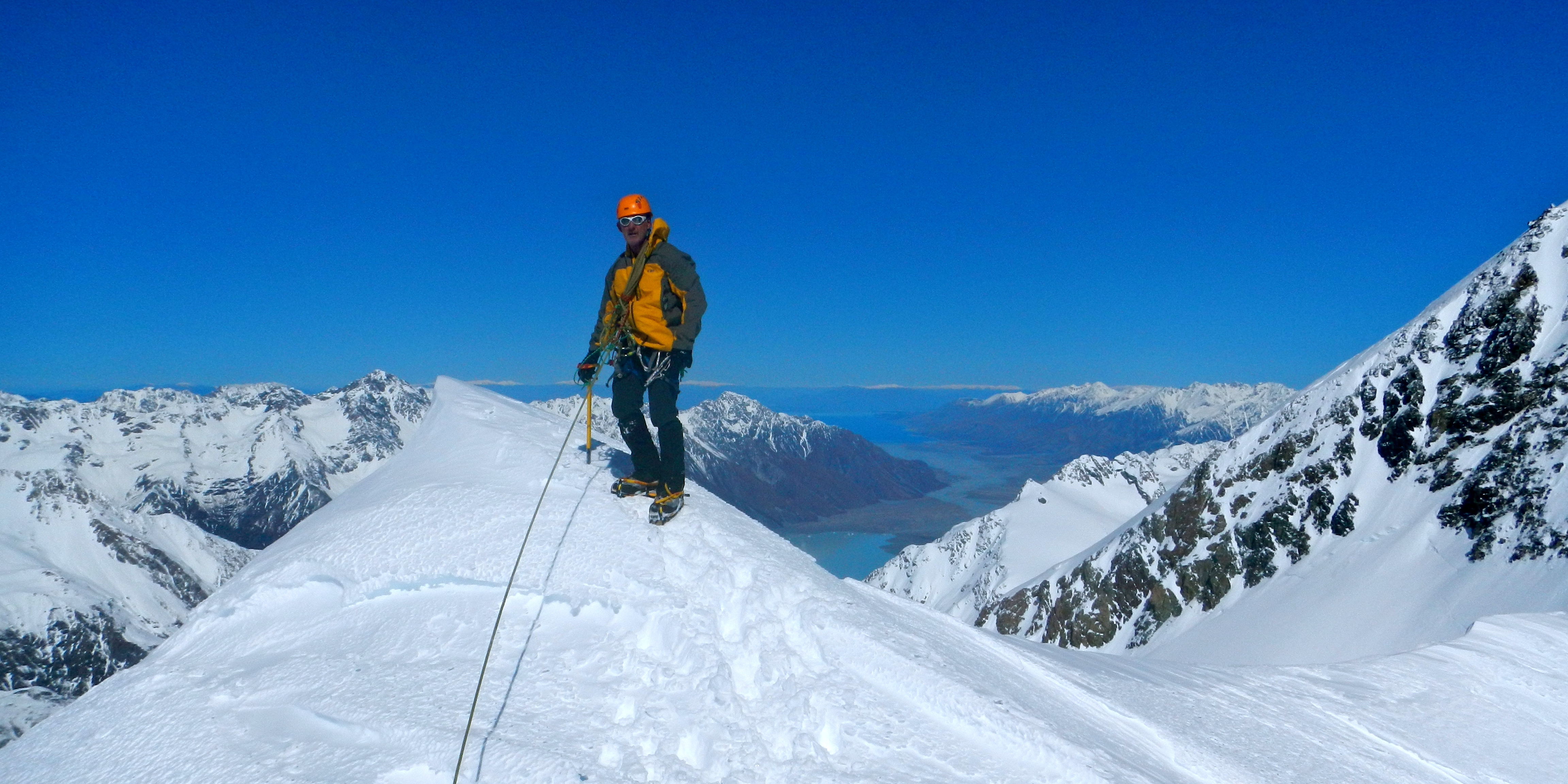
And whilst I have not given up on my desire to climb amongst the world’s highest peaks in the Himalayas, the earthquake and tragic devastation it caused to Nepal and its people earlier this year has added a layer of complexity to that ambition!
But crikey, I need to “feed the rat” with adventure and an opportunity has arisen to join a trek along the Black Cat Track in May 2016 with a group of Papua New Guinean Nationals – “Legends” as they are rightly referred to and ably led by Aidan Grimes.
Co-incidentally, it will be almost 10-years to the day that I walked the Kokoda Track with Aidan, a veteran of 100 traverses of the Kokoda Track; a track that is synonymous with Papua New Guinea and the battles fought by our brave and courageous “diggers” during World War Two.


It will make a change to the Australian Outback and snow covered mountain peaks…
What an adventure, hey!
So strap on your backpack and get your hiking boots out…there is plenty of training to be done…
Baz – The Landy


My recent adventure into the deserts of Western Australia involved a return journey of over 10,000 kilometres into some of the world’s most inhospitable country, crossing vibrant red sand dunes where no roads or tracks exist…

But don’t be put off by the remoteness and harshness of the Australian Outback as the rewards for the traveller, the adventurer, is a landscape more bio-diverse and fragile than the Amazon rainforest.
The contrasting beauty of a rugged landscape, the colours that you will see can never be replicated in a painting or photograph, but the memory of a setting sun, the golden hue it creates as it gently slips below the distant horizon will imprint a lasting memory that will have you longing to return to this place…

My journey took me across Australia’s interior on a quest to assist a group of like minded people construct a shelter and other buildings for the Birriliburu people, the Traditional Owners of the Little Sandy Desert and Gibson Desert region of Australia…
Mind you, it is also about the journey and there was plenty of opportunity for me to explore and photograph other parts of the Australian Outback as I made my way westward…
Now let me say, shovelling sand and gravel into a cement mixer, on a clay pan and under a scorching sun is hard work and won’t necessarily count as a highlight of the trip. But the opportunity to spend time with the elders of the Birriliburu mob in their country, on their lands, was well worth the discomfort – it will leave a lasting impact on my life!


Crikey, don’t get me wrong, it was a pleasure to assist, I’m just complaining about those aching muscles that were antagonised in the process…
Amongst the aboriginal people I spent time with were a number of elders who were born to nomadic parents in the desert, first generation desert people who lived, hunted and sheltered on the very lands we were on and without any contact with Australian’s of European descent.
One of the elders, Geoffrey Stewart, was born to parents Warri and Yatungka, a couple who engaged in forbidden love under tribal laws and whose story is recounted in the book “Last of the Nomads”.
Another, Georgina “Dadina” Brown, took us to the place where she and her family were discovered by Stan Gratte, an historical enthusiast, in 1976. At the time Stan was retracing the route of a 19th century explorer.
Georgina is an accomplished artist with work on display in the Australian National Gallery and her story is recounted in the book Born in the Desert – The Land and travels of a last Australian Nomad.
All were willing to share their country with us, showing where they roamed the desert with their families and explaining how they captured food and travelled from rock-hole to rock-hole to find water.


Geoffrey shared some “Dreamtime Stories” and permitted us to view some magnificent rock art located in a gorge not too far from where we were based in the desert.
I have been travelling Australia’s vast outback region for many years and have always recognised it has a “spiritual beauty” to it. But this trip has been special in a way that I never thought possible and has helped me view life through a different lens, putting a different perspective on life…


We live in a society that insists we plan our lives away, where we have an insatiable appetite for instant gratification, and need the latest gadgets, where we are able to visit a supermarket for our daily food needs with little thought as to how it arrived there…
It was refreshing to observe another perspective on life from people whose ancestors’ have inhabited our sunburnt country for over 40,000 years – a people whose philosophy of living in harmony with the environment is the pathway to ensuring a sustainable existence.
No, not necessarily an easy one, that’s for sure!
Most importantly, this trip and time spent on country with the Birriliburu mob has reinforced something that modern day living often has us overlook and that is the only moment you can live in is the one you are in.
Such is the life of a desert dweller…
Baz – The Landy
As a footnote:
The Birriliburu Lands are an Indigenous Protected Area not open to the general public. I visited at the kind invitation of the Elders of the Birriliburu People.


Photo: Baz – The Landy


As a young lad growing up in Far North Queensland, FNQ to the initiated, I can remember my father taking me on a Saturday morning ritual to check the mail at the post office followed by a milkshake at our favourite milk bar.
I suspect Dad was never interested in what the mail brought, in fact I don’t ever recall him opening it, but boy did we savour those milkshakes.
So it was to my great surprise that I discovered Bell’s Milk Bar in our iconic Outback town of Broken Hill. Now I have written often about the rich history of “The Hill” and on sojourns to and from the Outback we always take the time to stop over, if only to stand on the western edge of this great town as the sun cast its last rays on a red ochre coloured landscape.
But somehow I had overlooked this gem that is caught in a 1950s time warp.
Needless to say I wasted no time in ordering a chocolate malted milk which I savoured with great pleasure as Janet and I wandered around looking at the memorabilia that has been collected over the years…
Plastic tables, plenty of chrome, even the old heavy black phones!
Without a doubt it is now on our must-do things when passing through “The Hill” in fact we’ve made a mental note to ensure it is the first thing we do as “The Landy” heads into town…
Crikey, I’d drive the 1,200-kilometres from Sydney any day to fill-up at Bell’s; to reminisce of days long-gone, of those moments with the “Old Man” in downtown Townsville drinking our liquid gold through a paper straw, the silence punctuated only be the slurping sounds of a quickly disappearing shake.
So take my tip and be sure to include Bell’s on the itinerary next time you are passing that way, you won’t be disappointed!
Photo Baz – The Landy

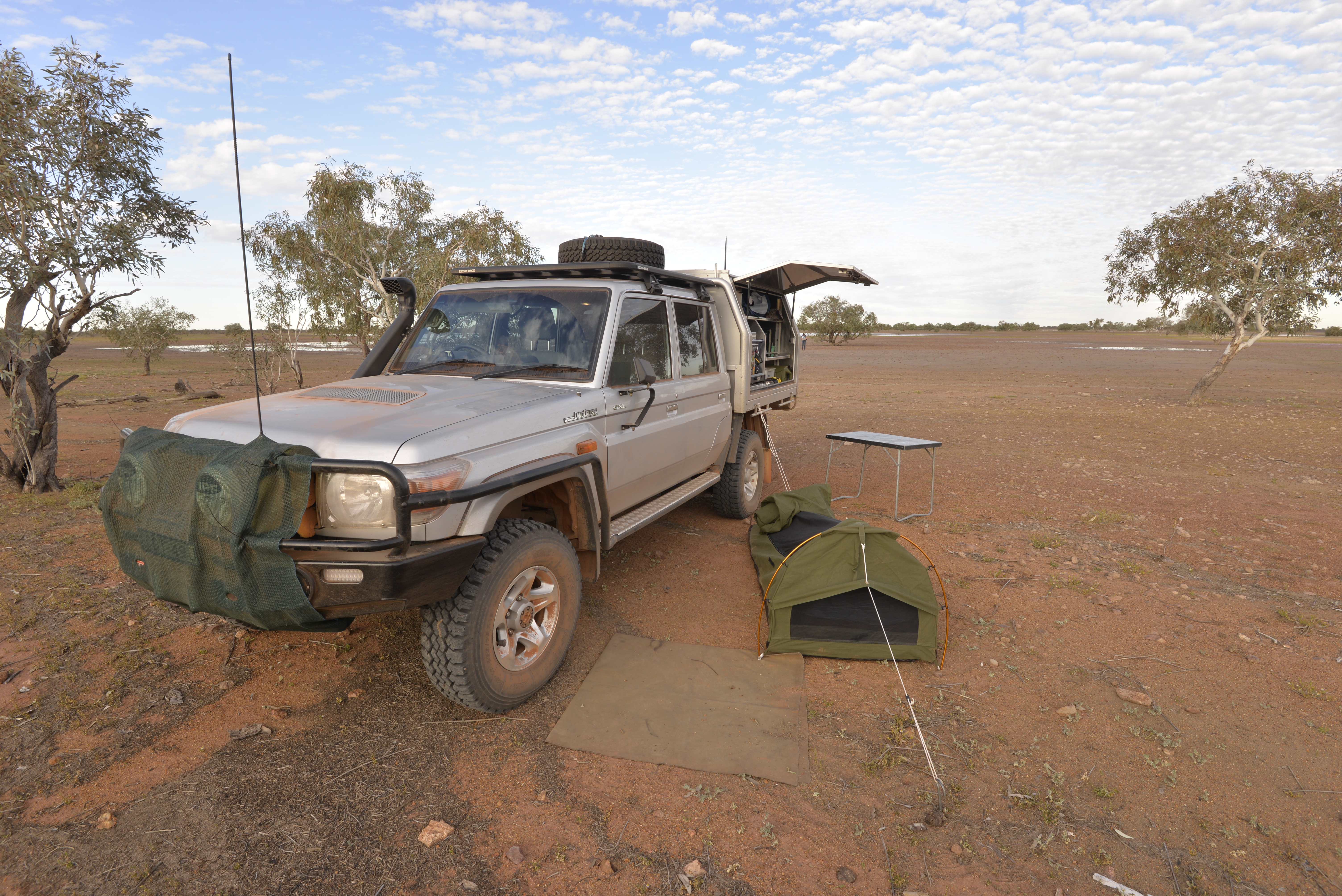
Photo: Baz – The Landy


Photo: Baz – The Landy

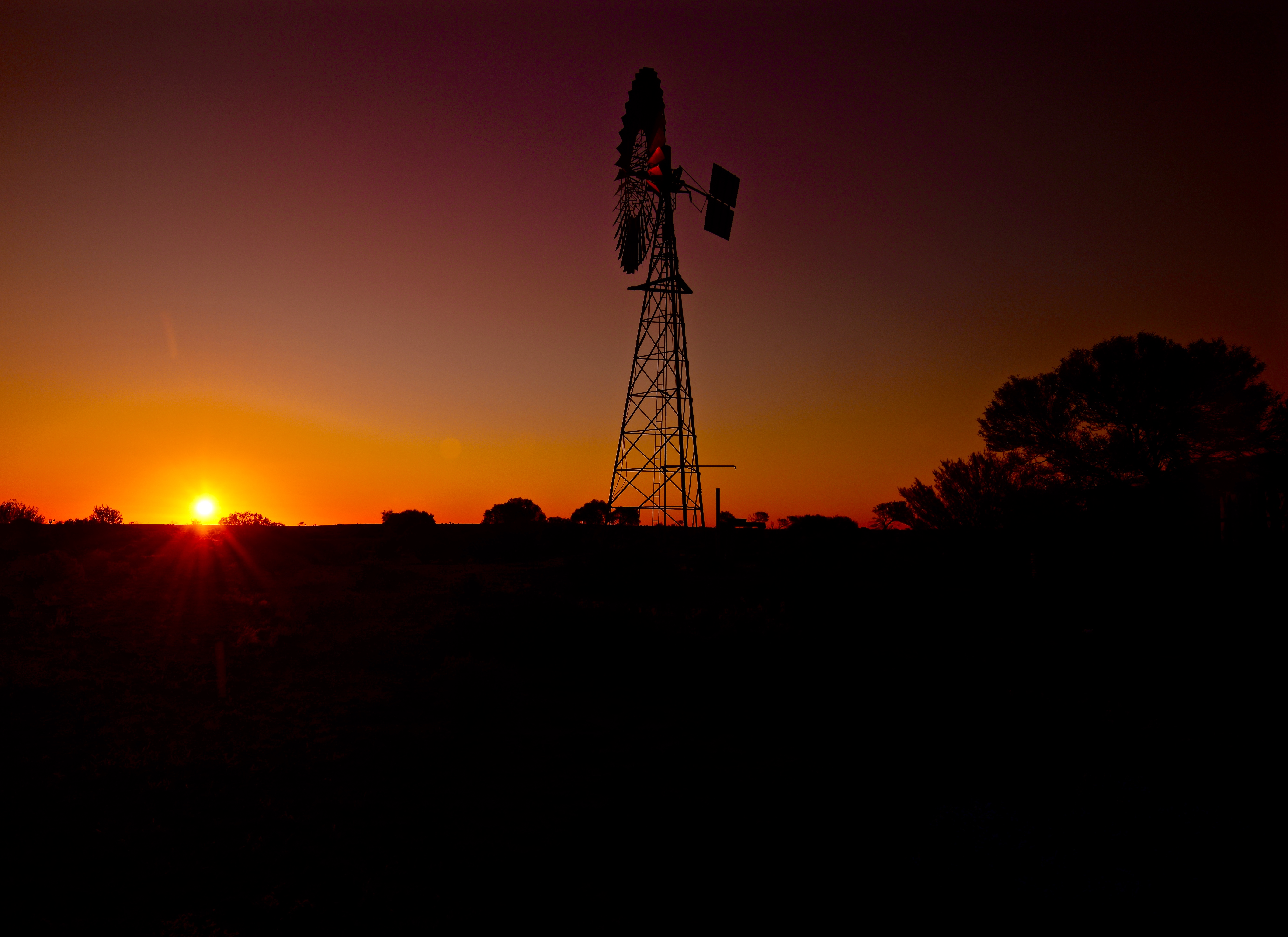
Photo: Baz – The Landy


Photo: Baz – The Landy
Footnote: The “T” in Tjuta is silent…pronounced Kata (T)~juta


I am, slowly, with great emphasis on slowly, making my way home, after my journey across Australia and into country with the Birriliburu People, traditional owners of much of the Gibson and Little Sandy Desert region of Australia…
My time on country with the Birriliburu Mob has been a wonderful experience and I look forward to sharing the experience with you, but for now, let me share some photographs of our magnificent Sunburnt Land – our island continent that time forgot!
Photos: Baz – The Landy
Footnote: My travel into the Birriliburu Indigenous Protected Area was at the invitation of the Elders and Traditional Owners; access is not generally granted.

Now I know some of you have been wondering how do I pass the time following the white line along the blacktop for these sort of distances, especially as Janet-Planet, the wonderful Mrs Landy, hasn’t joined the trip yet…
Yes, her presence in “The Landy” is always engaging and enlightening…
Well I’ve got quite a comprehensive music library consisting of around 10,000 songs so I’ve plenty to choose from, but oddly, I have listened to very little music on this trip and have spent most of my time tuned into ABC Country.
Yes, the Australian National Radio Broadcaster…
Now before you go knocking it, give it a go I say, there is plenty of topical stuff they talk about, and yes I had to endure a couple of business reports giving a read on the value of the Australian dollar. I suppose the boss will be pleased to know that I tuned in but crikey, thought I had left the trading desk behind!
But anyway, the topics are far-reaching, some serious, others amusing. One I listened to was a standout though. It was an interview with a bloke who works for the Department of Agriculture and his speciality is bee keeping.
We all love honey right?
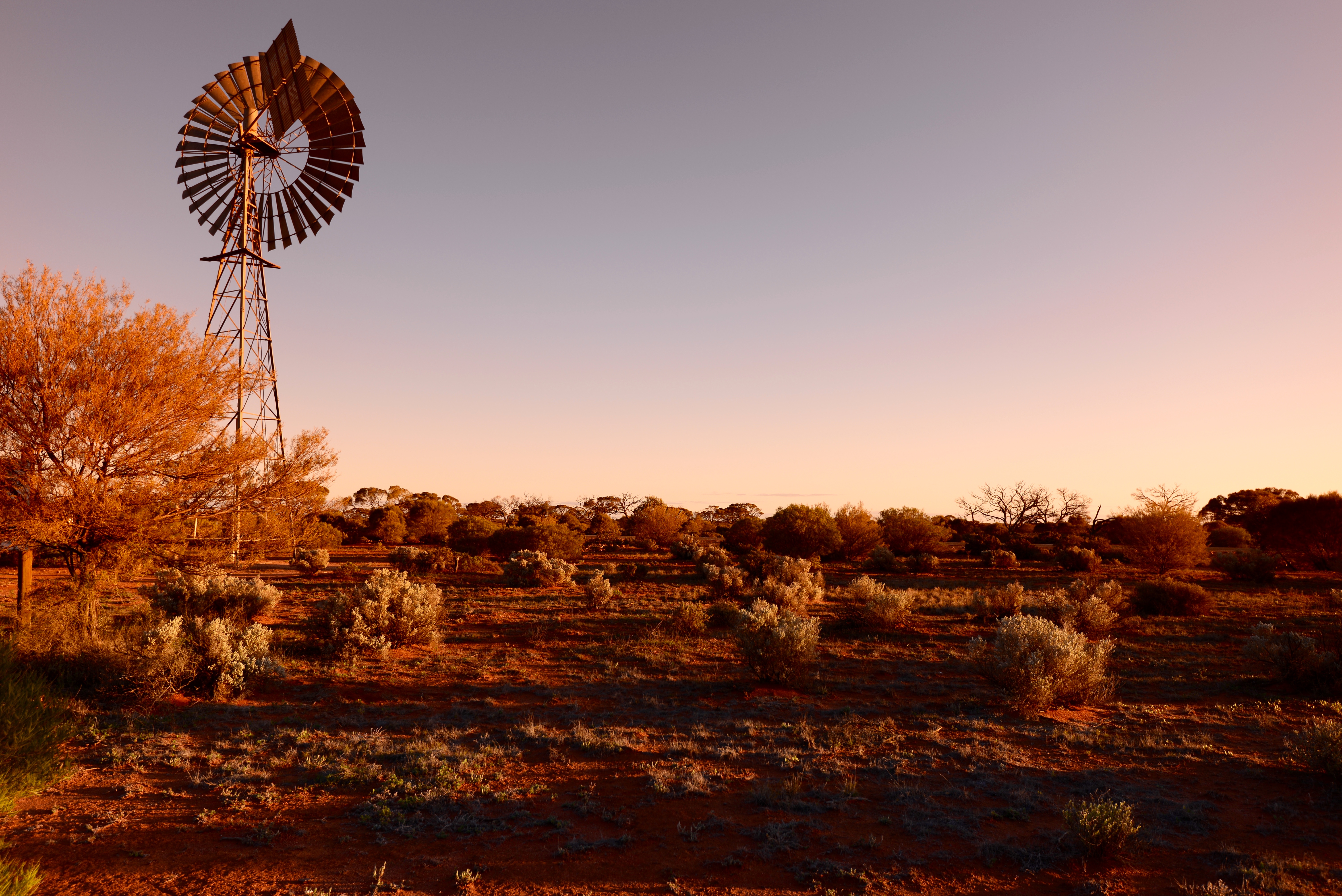
Hey, before I get on with this yarn, don’t windmills transport you to the Australian Outback in a nano-second…
Anyway, predictably the interviewer had to get a Winnie-the-Pooh joke in early, it was an oldie, but still an oldie, if you know what I mean. But this bloke wasn’t going to be detracted from the topic…
Besides, I’m sure he has heard them all.
Actually, lets not call him “he”, but as I can’t remember his name let’s call him Cyril, ok?
Well Cyril gave a fascinating account of bee keeping to the point I’m sure he had people running out ordering a hive. Did you know they post Queen bees around in the mail, yep, postage stamp attached.
It kinda puts a new spin on airmail, I guess..
Anyway, Cyril recounted how he first became interested in bee keeping at the young age of 10 years and was encouraged whole-heartedly by his parents. He eventually went on to do some agriculture studies that were the pathway to a life-long career and passion.
And clearly, Cyril was passionate about this, let there be no mistake about that!
But the clincher for me in this whole interview, and it had me in sticthes, was his account of how, as a teenager, he had a beehive in his bedroom.
Yes, that’s right, a beehive in his bedroom.
Cyril had a hole cut out in the window for the bees to come and go and glass panels in the hive so he could observe the behaviour of the bees. Oh, don’t worry, there wasn’t a dark side to this story, no sting in the tale, so to speak…
Seriously, I tried to sneak all kinds of things into my bedroom as a teenager and let me say I was stung on more than one occasion by an ever-watchful mother – but a beehive in your bedroom?
Okay, I get it, some of you might like a bit of honey in the struggling paddock, just to sweeten things up a bit, but I’m betting you scooped it out of a jar, not straight from a beehive at the bottom of the bed!
But Cyril’s story is just so far out there I think he gets away with it…
Well thanks Cyril, odd as it may seem, your interview was a highlight for me as I stared down that endless white-line and it helped me pass the time away as I travelled through the Australian Outback; the Bush…
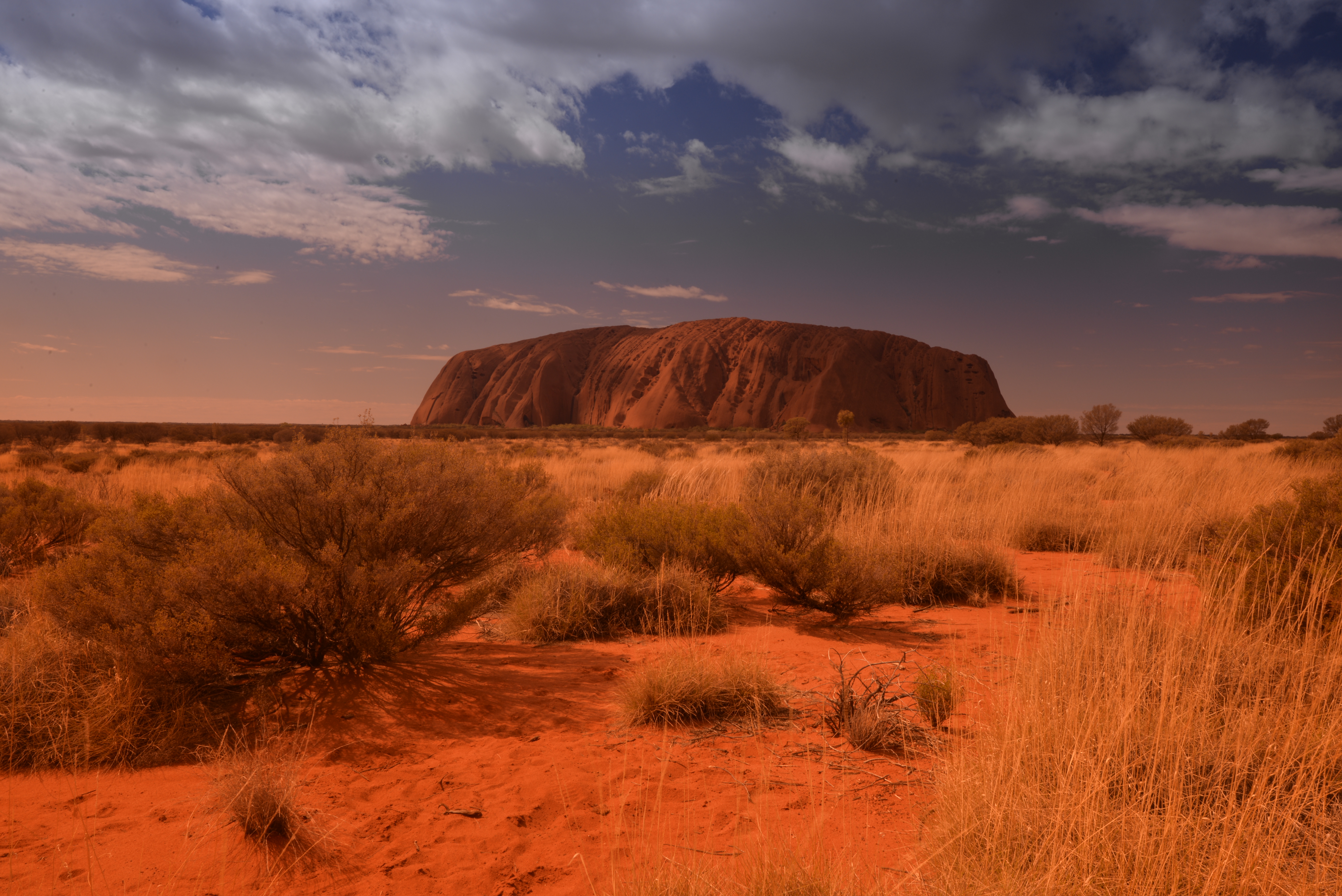
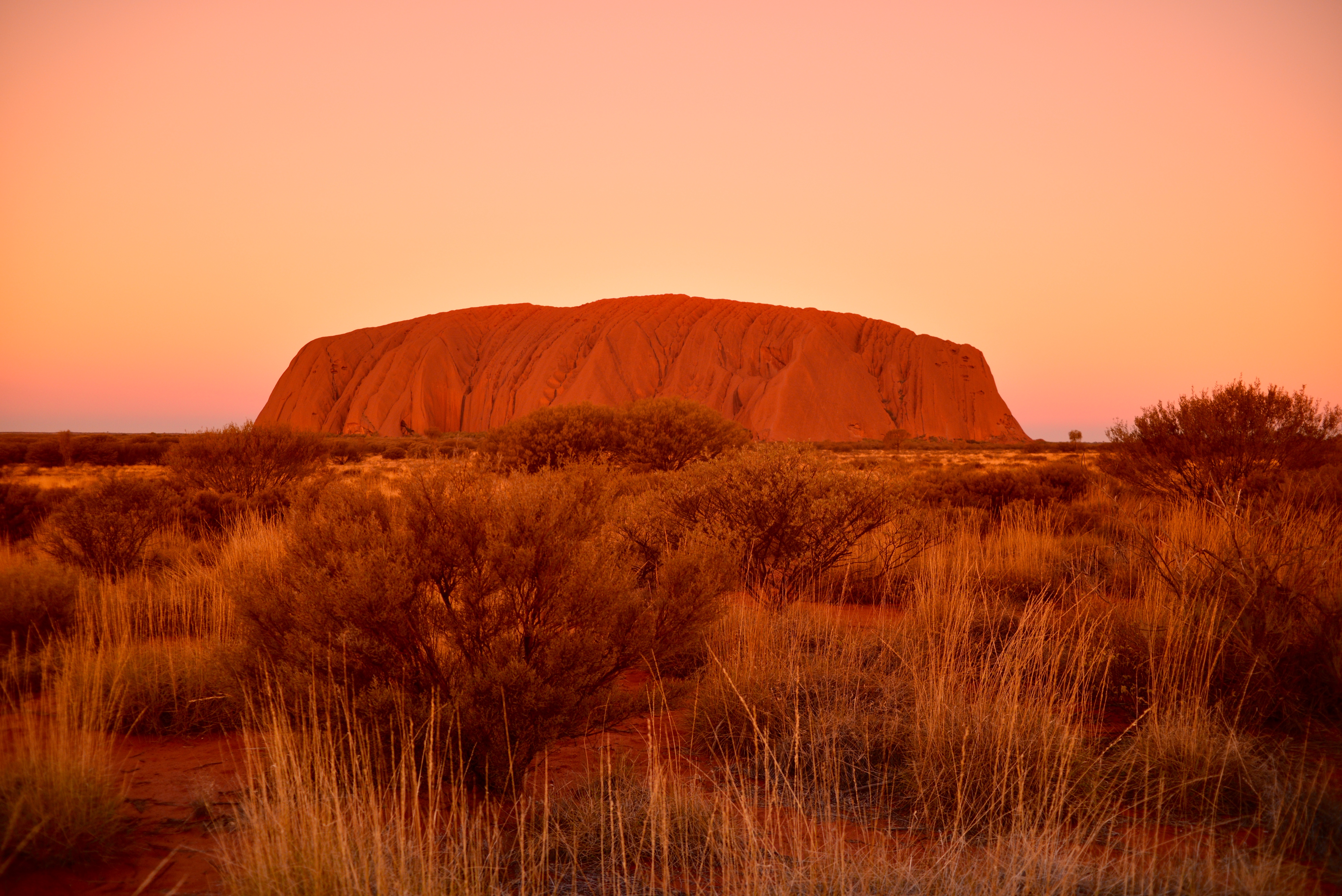
Anyway, as I mentioned, I’m at “The Rock” which is a first for me despite extensive outback travel and interestingly, it is mostly referred to as Ayers Rock in much of the signage around the Yulara Resort, rather than Uluru as it is now known. I find some comfort in that as I grew up knowing it as Ayers Rock.
Not that I can’t respect change, but I will take the liberty of referring to it in the way I have always been accustomed…
But there will be no climbing for me, I will be content to get some great photos of it as the sun sets on another outback day…
Speak soon…Baz
Photos: Baz – The Landy

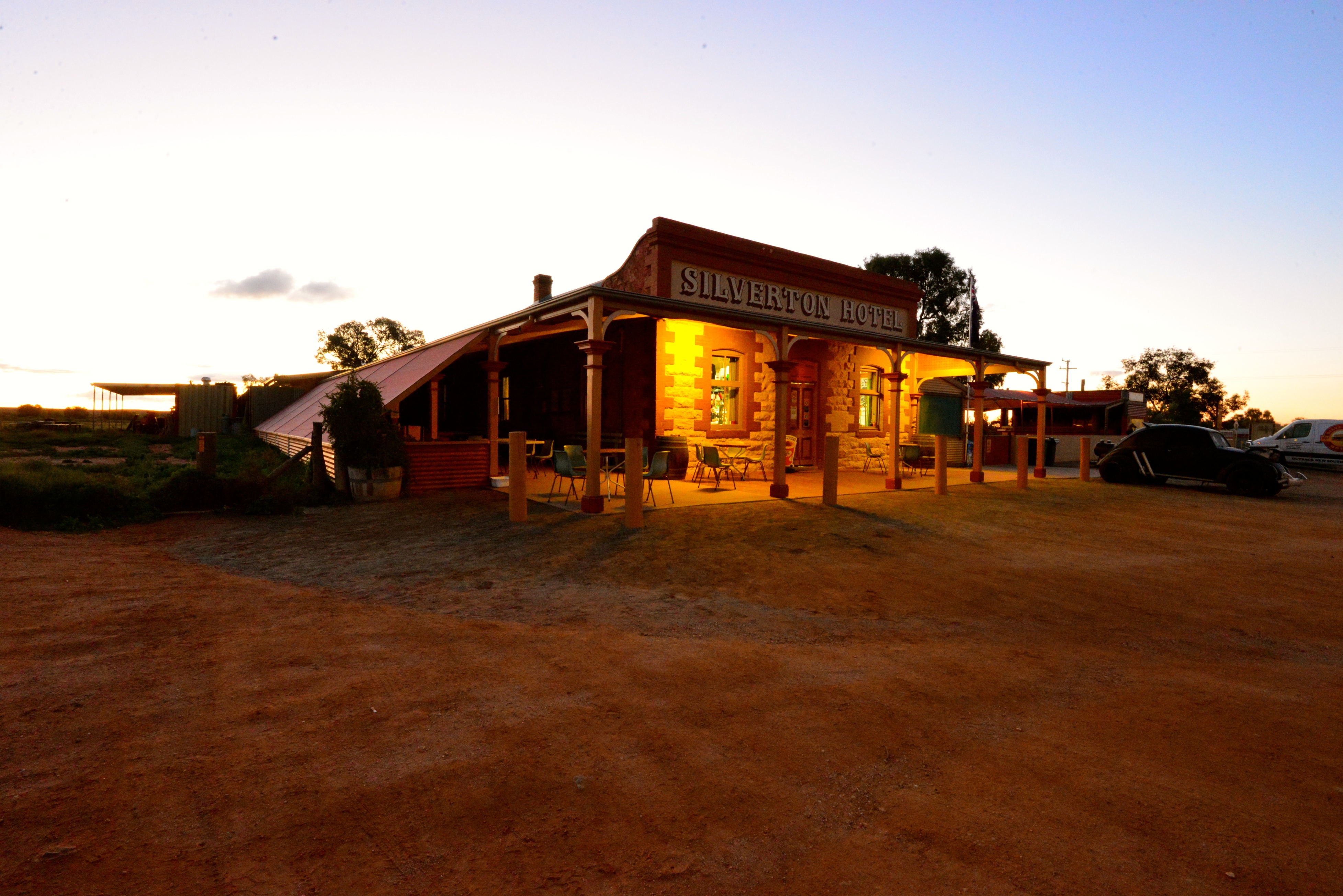
Nothing speaks Australian Pubs like this beauty at Silverton, and yep, had a couple!
Photo: Baz The Landy


Rest assured I was eager, departing before the kookaburras’ were stirring, the neighbours no doubt awoken by the familiar sound of “The Landy” edging down the driveway..
Mind you there is the mundane of actually getting out of the city, but before long “The Landy” was pulling the TVAN up and over the Blue Mountains, along the Bells Line of Road and through the small apple growing community of Bilpin, on what was a cold start to the day.
I elected to take the TVAN Camper Trailer on part of this trip to give some comfort on the journey to Central Australia and back again, especially as Mrs Landy will be joining me when it is time to point “The Landy” homewards. Otherwise it will be a swag roll to sleep under the stars whilst in the desert…
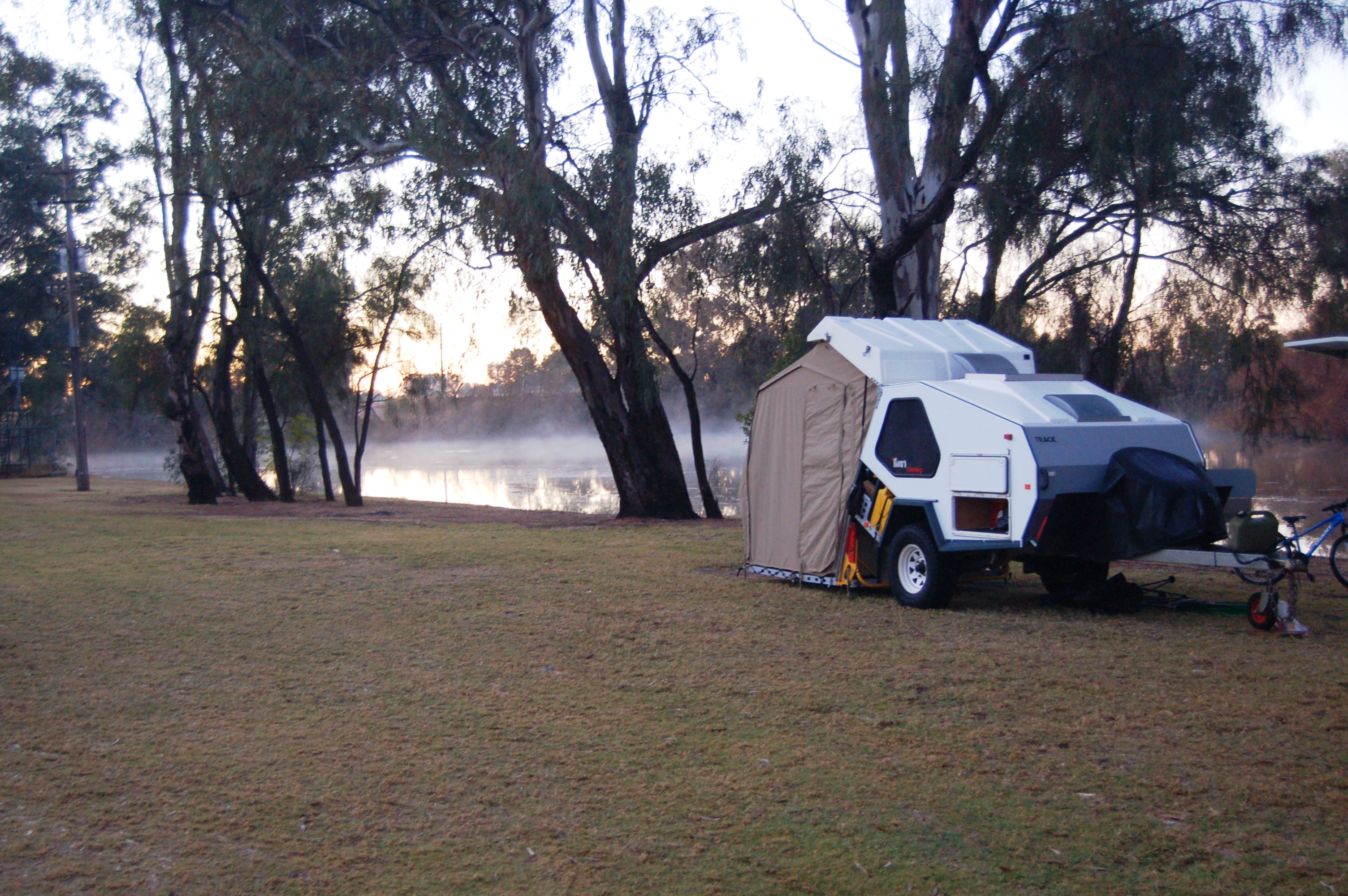 Similar to recent trips to Australia’s centre I headed west on the roads less travelled visiting the small rural towns of Tullamore and Tottenham, in the New South Wales central west. And central it is, as the route passes close by to the geo-graphical centre of New South Wales not too far from Tottenham.
At the risk of being called anti-social, it is quite pleasant driving along by yourself and it is something I greatly appreciate from time-to-time as it provides a welcome escape from the close working quarters on the currency trading floor of a major Australian bank – my usual haunt in between the weekends.
I even got to argue and debate with myself, and win a few of those exchanges during the day!
The sun was starting to head towards the western horizon as I reached the outskirts of Nyngan and a camp, the first of the trip, by the Bogan River. Before long I had the camp established, pulled out a chair, sat back, and relaxed!
Here I was, finally released from the shackles of urban living in Australia’s largest city, Sydney and the phone rang!
No way, it couldn’t be work, surely?
Although a call on a Saturday is not unheard of, it was Mrs Landy and the Crown Prince ringing to see how the first day Out and About was!
Perfect, thanks!
Baz – The Landy


It will be a journey that will take us across our sunburnt land towards Uluru and beyond to the Central Deserts of Western Australia…
We’ll travel to a place where time has forgotten, where the hot scorching sun parches a landscape that is as beautiful as it is rugged. A country inhabited over the millennia by Australian Aborigines and crossed in more contemporary times by explorers’ who challenged themselves to discover what was in the Australian interior.
You will get a camp fire view of the setting sun as it slips gently below an orange tainted horizon, and if you are an early bird, watch a rising sun cast its first rays of light over the windswept land, a mug of piping hot tea in hand.
But for sure, you’ll get to experience the teeth shattering corrugations of the Great Central Road as “The Landy” makes its way westward, and at day’s end, quietly slip into a deep slumber under “The Milky Way”.
During the next few weeks “The Landy” will cover over 10,000-kilometres across a landscape that will transport me from the urban living of Australia’s largest city, Sydney, across the Australian Bush and into the vibrant and colourful Australian Outback.


Now perhaps there will be some who are thinking, is this city slicker meets the outback?
Crikey, who knows…
Mind you, I’m as comfortable in the outback as I am crossing the Sydney Harbour Bridge on the daily commute to the office, having travelled to many remote parts over the years flying light aircraft or driving “The Landy” – our mode of transport that has morphed as time advanced.
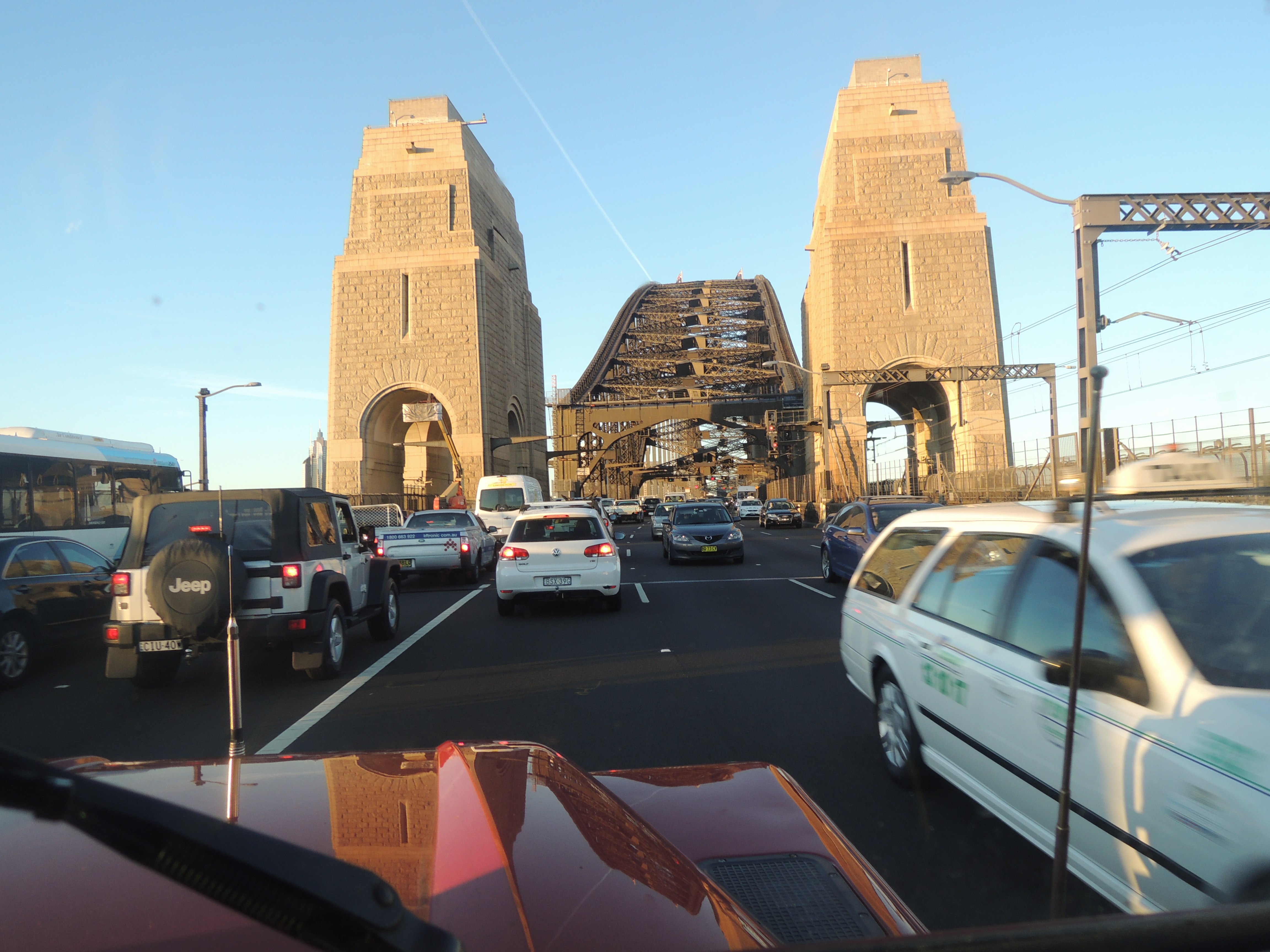
Okay, I do agree, the good old ‘Fender hasn’t changed much in the past 50 years, seemingly, so we’ll just say I use the term “morphed” sparingly.
And despite the opportunity to view the magnificent Sydney Harbour each day, I won’t miss that daily dodgem car run!
But I am digressing…
Along the way I will be travelling with a group of like-minded people, sharing a few laughs around the camp fire and I’m sure, fixing almost as many punctured tyres as there are flies buzzing around. Importantly, I will be spending time with the Traditional Owners and Elders of the Birriliburu Country to assist them in building some “back to country” infrastructure.
Our travel will be along remote tracks that are covered in spinifex grass and frequently travelling where no tracks exist, where a never ending blue sky caresses the ochre-red earth on a faraway horizon.
And don’t go worrying if you haven’t heard from me for a while, rest assured, I’ll be around the camp fire at day’s end, recounting, laughing, and dreaming!
Whilst we live in a modern society with plenty of gadgets to keep us all in contact, sometimes they just don’t work in the Australian Outback – well that is what I told my boss anyway, so best I continue to run with that story…
I’ll welcome your company in the front seat of “The Landy” as the journey unfolds and don’t worry about long lapses of silence, it’s okay – the sounds of the Australian Outback will more than compensate for the lack of chatter!
And if you are stuck at home in-the-armchair, be sure to drop by every so often, I’ll be updating the blog as the journey unfolds and you can check out where I am as “The Landy” rolls along the bulldust by simply clicking on the “Map – Where is The Landy” tab at the top of the page.
Anyway it is almost time to get under way, so buckle yourself in and give Mrs Landy and the Crown Prince, TomO, a wave good-bye…
Photos: Baz – The Landy


Photo, Baz – The Landy


“The Landy” came about as a consequence of owning three, four-wheel drive Land Rover Defenders over the years. And there is no doubting the ruggedness of this great marque and its capability to tour around our great Southern Land, to travel into our remote outback.
As you can see “The Landy” has morphed over the past decade or two and is now a sleek looking Toyota 79 Series Dual Cab, customised for long-range and remote area travel with a range of over 1,500-kilometres.
Mind you, that type of range can be dwarfed by the distances from civilisation in the Australian Outback…
Oh, and yes, thank you, I’ve recovered fully from the “Defender” era, although the bank balance remains in rehab after years of supporting the Land Rover specialist’s retirement fund…
Crikey, you have got to love the old Defenders though, and having owned three it would be hard for me to argue that I don’t still have a fondness for them, especially “Red Rover” but they take more work to keep them on the road than it does to keep your mother-in-law happy…
And strewth, not to mention the expense.
Clare, my dear mother-in-law, only costs me a bottle of good champagne once a year, and even then I get to drink it anyway…
Whilst I’m reluctant to refer to the new vehicle as “The Landy” that’s for sure; the owners’ of either marque, Toyota or Landrover, would never forgive me, but “The Landy” reference has stuck, so “Baz – The Landy” it is…
“Out and About Having Fun”
Photos: Baz – The Landy

Photo: Baz – The Landy


Travelling with a small group of like-minded people we will make our way towards the Gibson Desert in Western Australia where we will be assisting traditional landowners built some infrastructure, including shelters to use when they visit this remote part of Australia.
I have always been fascinated by Aboriginal Culture and the Australian Aborigines have a rich heritage and association with our great sunburnt country that dates over 40,000 years. Mind you, it was only in the late 1970s that an old couple, Warri and Yatungka, came in from the desert not too far from where we will be travelling, having lived a traditional lifestyle with no European contact.
You can read more about their remarkable story in the book “The Last of the Nomads” by WJ Peasley.
Our travel will be along remote tracks that are covered in spinifex grass, and much of it will be in areas where no tracks or roads exist. In fact, our main role is to mark a route into the area where the infrastructure is to be built enabling a group of people from Track-Care in Western Australia, who will be towing trailers with the construction equipment, an easier run into the region.
Whilst in the region we intend to do some off-track exploring of the travel route of some of Australia’s early explorers, and more specifically, the Calvert Scientific Exploring Expedition of 1896-1897.
Our small team is being expertly led by someone who has travelled extensively in the region over the past decade and it is due to his experience and familiarity with the region that he has been called upon by the Central Desert Native Title Services and Track-Care to assist in this undertaking.
As you would expect there is a reasonable amount of planning that goes into this type of expedition, including water and food supply, as well as vehicle preparation.


The typical choice of vehicle, and one well suited for Australia’s harsh outback, is the Toyota Landcruiser in its various forms. “The Landy” has been specifically modified, including upgraded suspension, specific tyres, and additional fuel tanks, to enable long-range travel in the outback.
On this trip I will be carrying 400 litres of fuel for the remote area work we will be undertaking, which will total near to 2,000 kilometres, and will consume a total of around 2,000 litres on the trip by the time “The Landy” arrives back home in Sydney.
So be sure to drop by every so often to “Check out Where I’m travelling” (on the tab at the top of the page) and I will update on the adventure as communications permit!
Cheers, Baz – The Landy


Let’s face it, there is nothing better than the company of friends and good pub food washed down with a couple of schooners of Fourex. Not some beer brewed with water taken from a stream on the eastern side of a mountain in some place I couldn’t pronounce even if I wasn’t into my third schooner.
I mean, what’s wrong with a good old Fourex? Okay, VB or Carlton Draught if you prefer and a Chardy for the girls…
Perhaps I’m showing my class here, (I did say class) but one of the things I truly look forward to is a trip into the bush, the outback, down a dusty track where you are likely to develop a thirst that can only be quenched with a schooner or two at day’s end in a pub that is most likely called “The Royal” or maybe “The Railway” or “Tattersall’s”.


Crikey, even Janet (Mrs Landy) has been known to down a beer or two in these revered establishments!
It’ll be nothing fancy mind you, a few bar stools here and there mostly occupied by Bluey and the boys who’ll tip their hats and give you a G’day as you step through the door. The menu simple, but tasty and its okay to toss your dog a couple of scraps to clean off the plate when you’re done…
The conversation is typical, but mostly amusing, no-one is taking it too seriously, or concerned that you are wearing the right clothes, after all shorts and singlets are the go, if you like, and you’re not going to need to mortgage ya’ house when it comes to your turn to shout!
Crikey, Mrs Landy and I have enjoyed some great moments in some out of the way places in the Australian Bush, The Outback – and we might have had just that one too many on an occasion here and there, but that is usually because our classic pubs in the bush are timeless, especially when the amber fluid flows and the banter ramps up!
Over the next couple of months “The Landy” will be pointed westward towards the remote Gibson Desert region and I’ll be making sure the route to get there is long and dusty as there is nothing better than dropping into a “real” pub at the end of a day’s drive just to say, G’day!
So where is your favourite “watering” hole?
Cheers, Baz – The Landy

 Flinders Ranges, Australia
Photo: Baz – The Landy

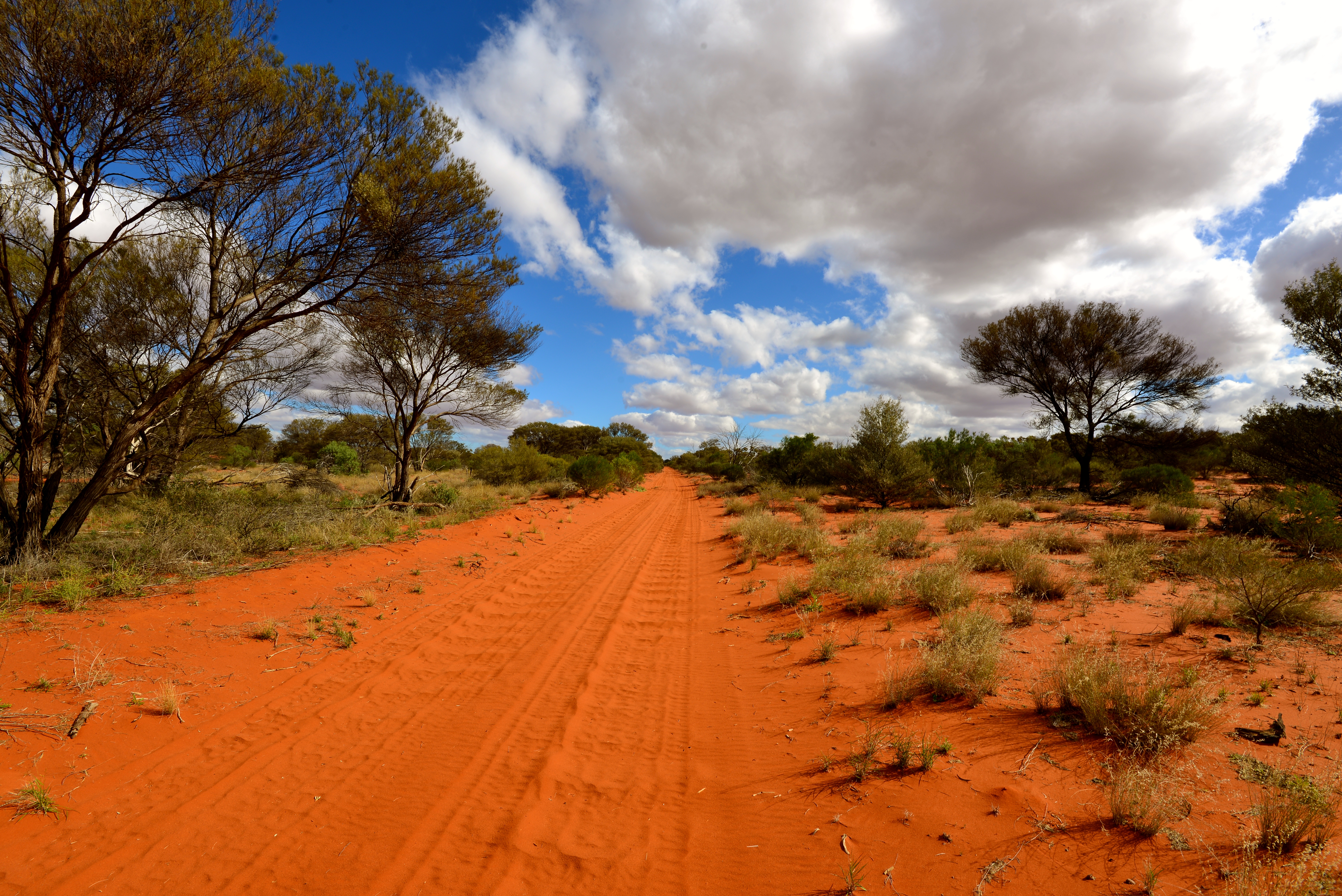
We will make tracks where no other European Australian’s have previously been as much of this trip will be completely across country, no roads or tracks to follow.
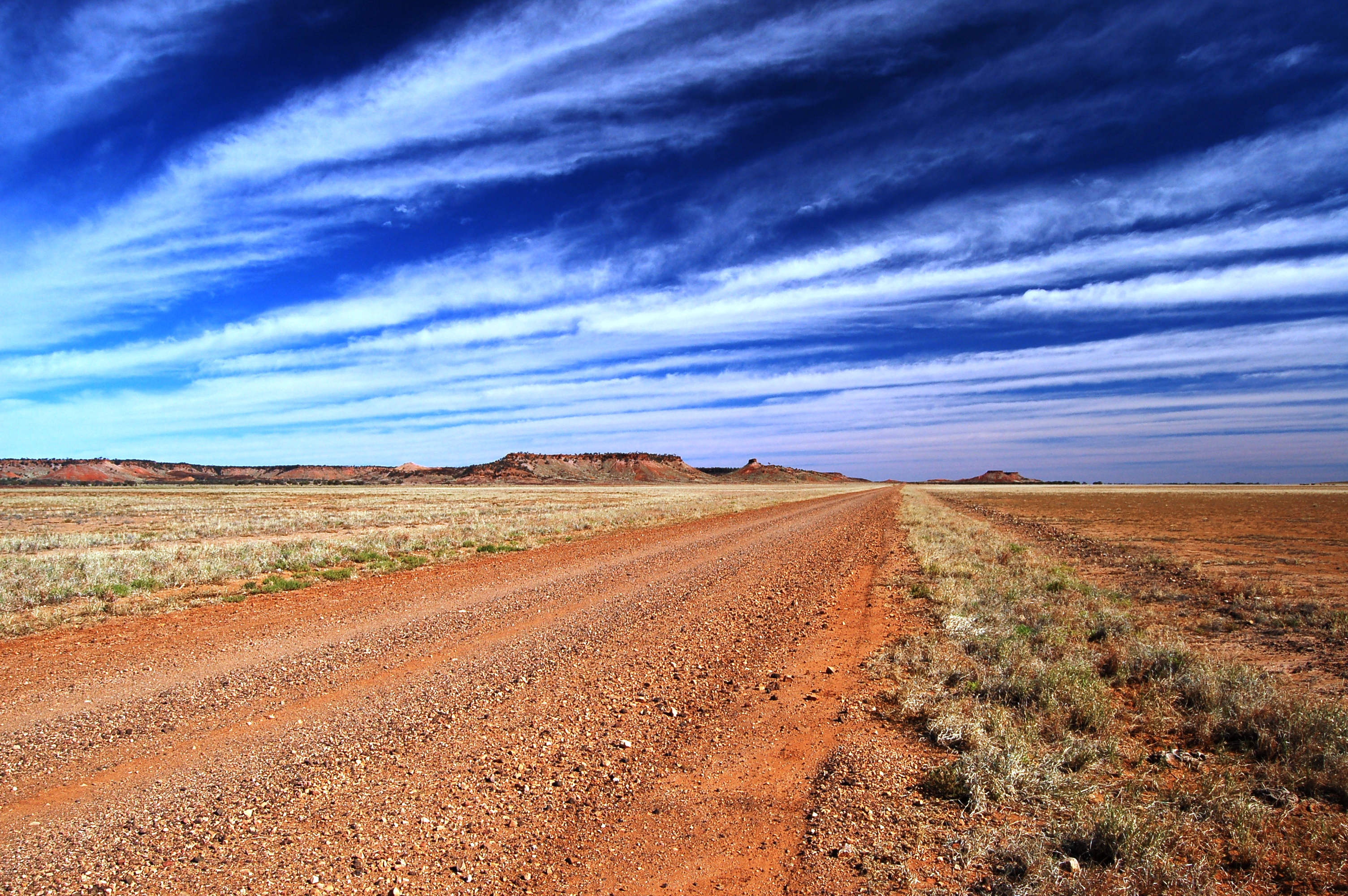
It was less than 40 years ago that an elderly couple came in from this desert region after living a nomadic life with no European contact at all. Their’s is a remarkable story and told in a book “The Last of the Nomads” by WJ Peasley.
I vowed to visit this area one day…
And whilst I have had a sojurn from “The Landy Blog” over the past couple of months I look forward to sharing the stories and photographs as the trip unfolds…
Photos: Baz – The Landy…


Photo: Baz – The Landy


Um, yes…countless! Some time ago, another beautiful person, Lavinia of Salmon Brook Farms, along with her partner, Rick, planted a memorial garden on their farm in America dedicated to the memory of Janet’s sister, Marion and her father, Archie.


Tragically, Marion lost her life to Meniere ’s disease a number of years ago, and Archie, well Archie lived a wonderful life passing away just before his 99th birthday in 2013. Since Marion’s passing, Janet and her sister have dedicated much time to supporting sufferers’ of this disease through fundraising under the banner “Marion’s Artree”… In her most recent newsletter, which you can view on her blog, Salmon Brook Farms, Lavinia wrote… “It has been said by many that gardens link us from the physical to the spiritual”. And crikey, ain’t that just so true… For sure Lavinia and Rick, you are true testament to the motto we love so much! “There are no ordinary moments; no ordinary people; no ordinary lives…” From the bottom of our hearts, thank you… Baz (Big bad), Janet (Planet), and TomO (the wonder boy!), 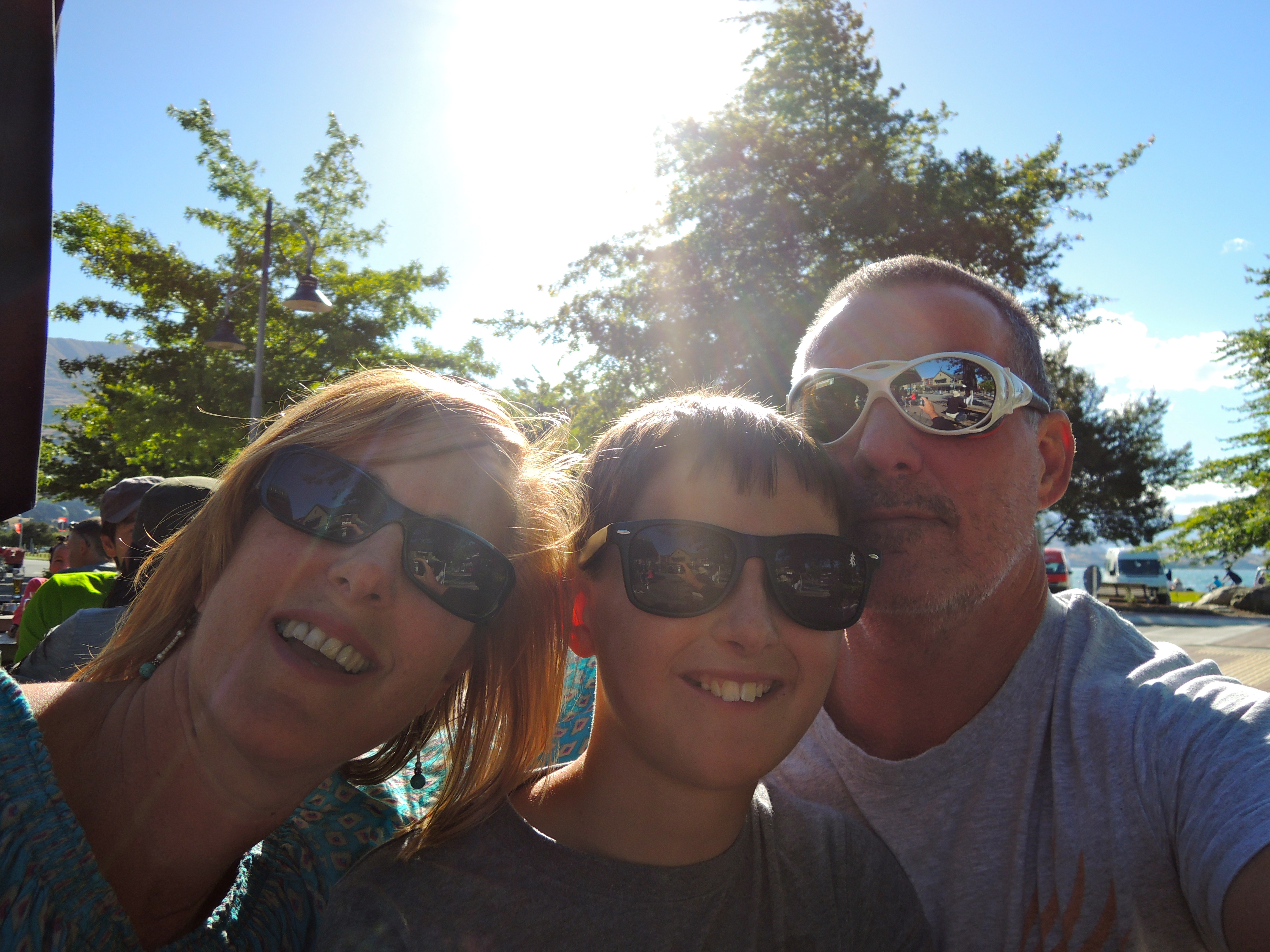

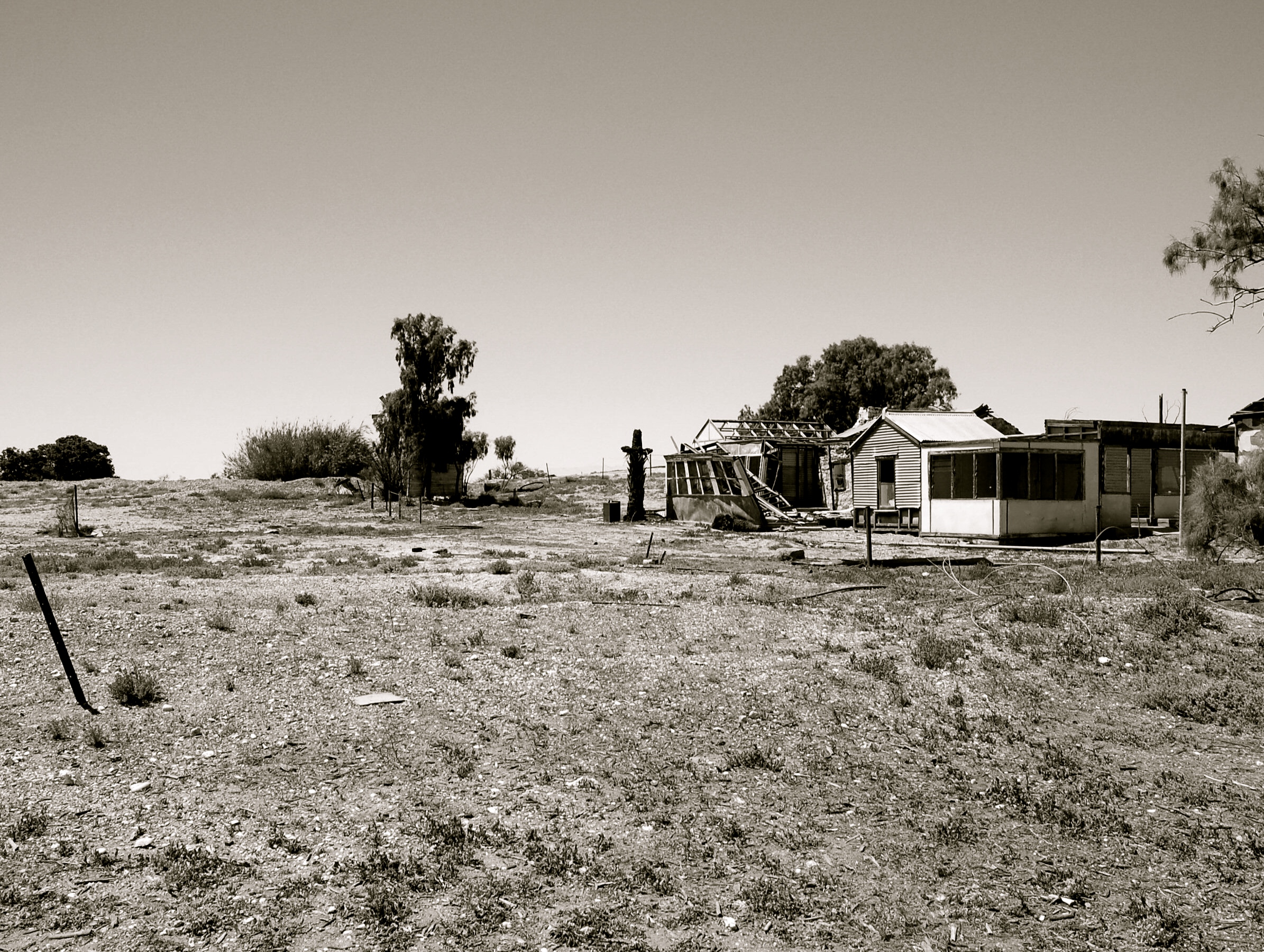
Photo: Baz – The Landy, in the Corner Country, Outback Australia…


Photo: Baz – The Landy, in the lower Blue Mountains, Australia.

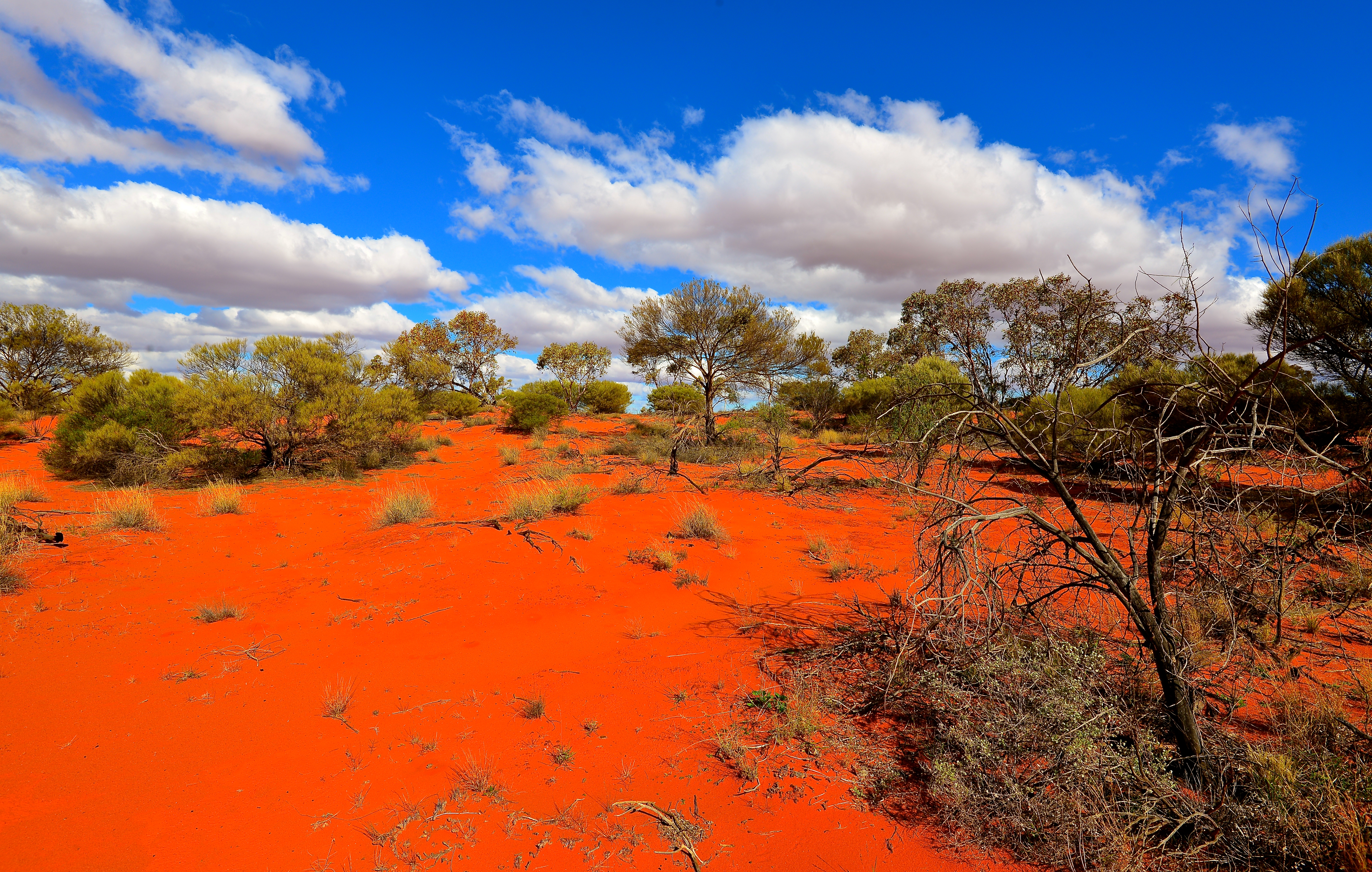
We will make tracks where no other European Australian’s have previously been as much of this trip will be completely across country, no roads or tracks to follow.
They say one door closes and another opens and crikey, isn’t that the truth!
Recently I wrote a piece on “Fate, are you a Believer” after forgoing a trip to climb a 6,500-metre peak in Nepal, but missing the terrible natural disaster that devastated the country following last week’s earthquake; a tumultuous event that has sadly taken the life of many Nepalese people.
I was due to arrive in Nepal last Wednesday, as it turns out the day our son, TomO, broke his kneecap in the school gym.
And yes, he is making a great recovery…thanks!
Mind you when I’m not climbing I am travelling the great Australian Outback, photographing a parched red earth that stretches from horizon to horizon, kissed by a deep blue sky that provides a canopy over our sunburnt country.
As fate would have it, I received a telephone call from an acquaintance this week, a fellow kindred spirit and outback traveller who is assembling a team of people to assist a group of traditional owners, indigenous Australians, build a structure to house a pump in an extremely remote part of Australia; an area rich in aboriginal history and culture, but rarely seen by European Australians.
It was less than 40 years ago that an elderly couple came in from this desert region after living a nomadic life with no European contact at all. Their’s is a remarkable story and told in a book “The Last of the Nomads” by WJ Peasley.
I vowed to visit this area one day…
Strewth, I’m more excited than a rooster in a hen house and there isn’t a lot of time to prepare so I’d better get cracking – I look forward to sharing the stories and photographs I capture in between wielding a shovel, pick, and hammer!
Photos: Baz – The Landy…


Photo, Baz – The Landy, Welford National Park


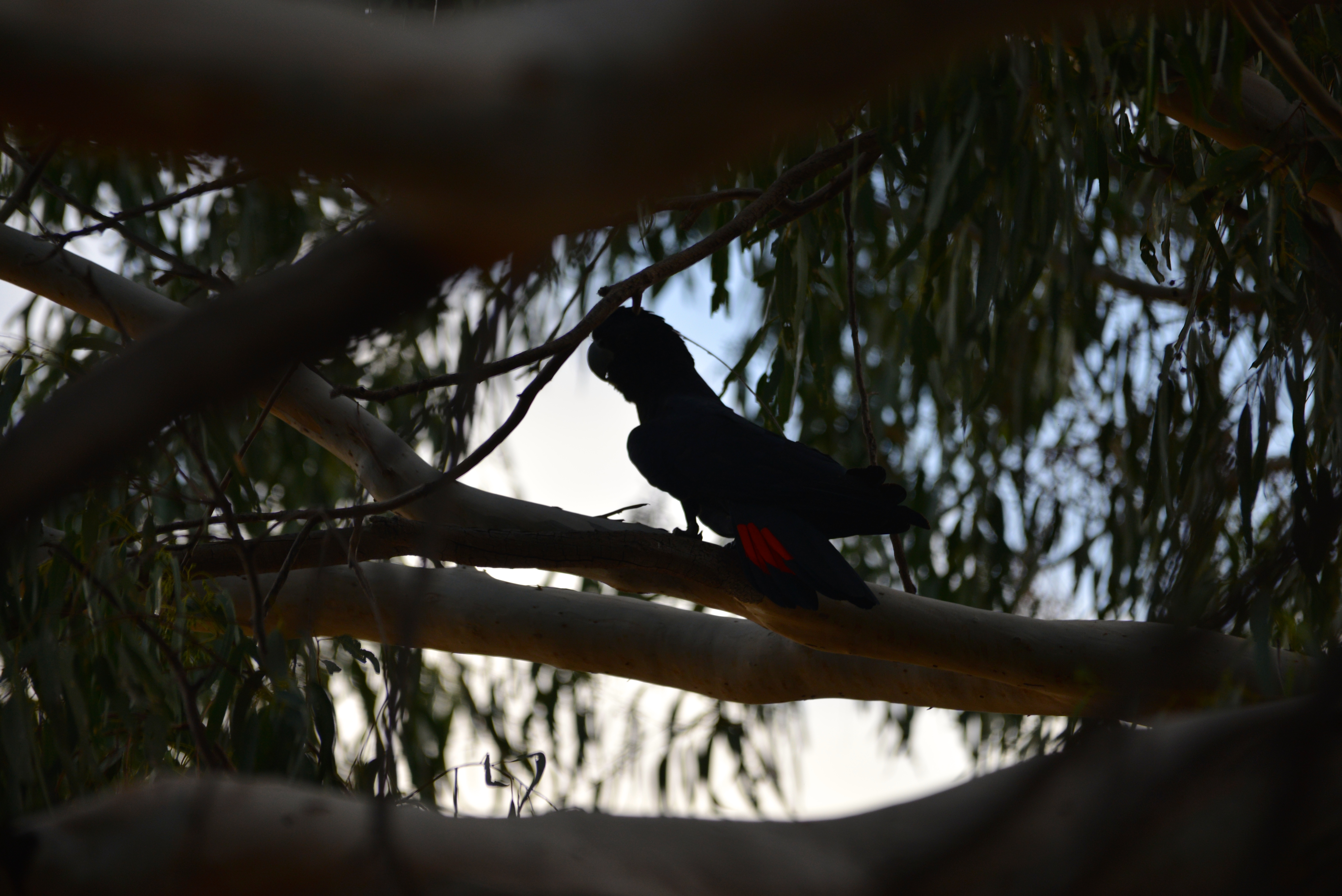
Photo: Baz, The Landy


Recently we spent a few days alongside the Darling at Trilby Station, a large sheep station not too far from the river port of Louth. Its owners, Gary and Liz are welcoming hosts and the Murray family can trace their settlement on the river back six generations to 1860 – truly, a pioneering family!
In days long gone river boats gently steamed their way from the coast to Bourke, their owners’ plying trade and carrying much needed supplies to the small communities that were established at varying intervals along the river. On the return journey, loaded with bales of wool, the boats were gracefully navigated to the sea port situated a long way from the dusty and, at times, desolate interior.
I am sure many will remember the Australian mini-television series “All the Rivers Run” that was based on the novel by Nancy Cato. Whilst it was centered around the Murray River, daily life on the Darling would have been much the same.
As my kayak gently rocked in the shallow waters on a cooling breeze, the sound of the rustling leaves on the river gums transported me to another time as I drifted downstream from our camp. I could hear the laughter of people long-gone, the toil of the boat crews ensuring the boiler had a head-of-steam, and the gentle sound of the paddle on the steamers as their river boat captains navigated their way along the river, skilfully and carefully avoiding hidden and submerged obstacles…


In times of drought and lack of rains further north many boats were trapped as the river turned into a series of water-holes as it dried up. Although in the days of the River Boat the Darling flowed far more freely than it does today as there were no weirs to hinder the gentle flow of the water, no cotton farms sucking the life from it or the surrounding country that depends on its precious water for survival.
Cotton farming arrived into the region in the 1960s after the Boon and Buster families established themselves in and around Bourke.
The fifty years since that time has seen a steady decay of the Darling and the greater Murray-Darling basin. One has to question the wisdom of growing cotton on the world’s driest continent at the expense of degrading the water in our rivers – some will rightly call it vandalism.
I am a avid student of aboriginal culture and histories, striving to read, learn and listen to as much as I am able to absorb. In April 2010, aboriginal people whose traditional areas border the Darling, Macquarie and Bogan catchment areas formed a group to ensure their views on river management were heard.
The following quote from Phil Sullivan, an Ngemba traditional owner, struck a resonance with me and perhaps it will with others.
“Water to me is the essence of life. And I’ve got to respect life, and I’ve got to honour life. If I don’t honour it and look after it, then it’s going to take my life away from me. It’s going to take the very essence of who I am away from me.
So that’s why I honour the river, the water, and give respect to it. Because in the end if I don’t look after that… then me and my family and my tribe and the gift that’s been given to us is going to be whittled away.
I got to give honour and I got to give respect to that, first and foremost. And then everything else will fall into place. It’s like a bit of a foundation.” 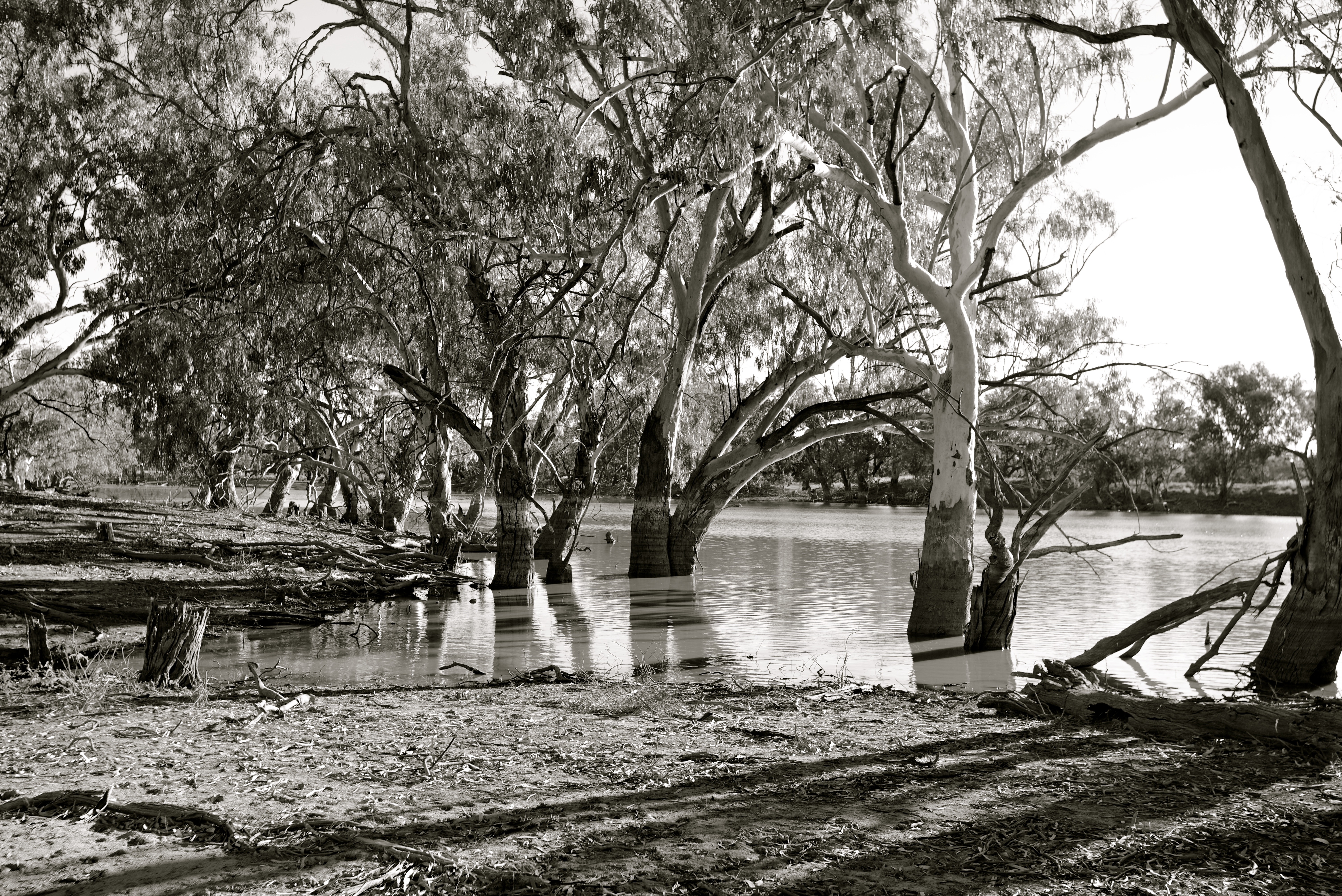
The Darling River should be treated as a natural treasure for all, not dammed with weirs so the water can be whittled away on an agriculture crop that may have some economic value, but a huge environmental cost.
Whether visiting for the first time or returning to explore further, take your time and enjoy the Darling, a mighty river that breathes life into a parched and ancient land…
Cheers, Baz – The Landy

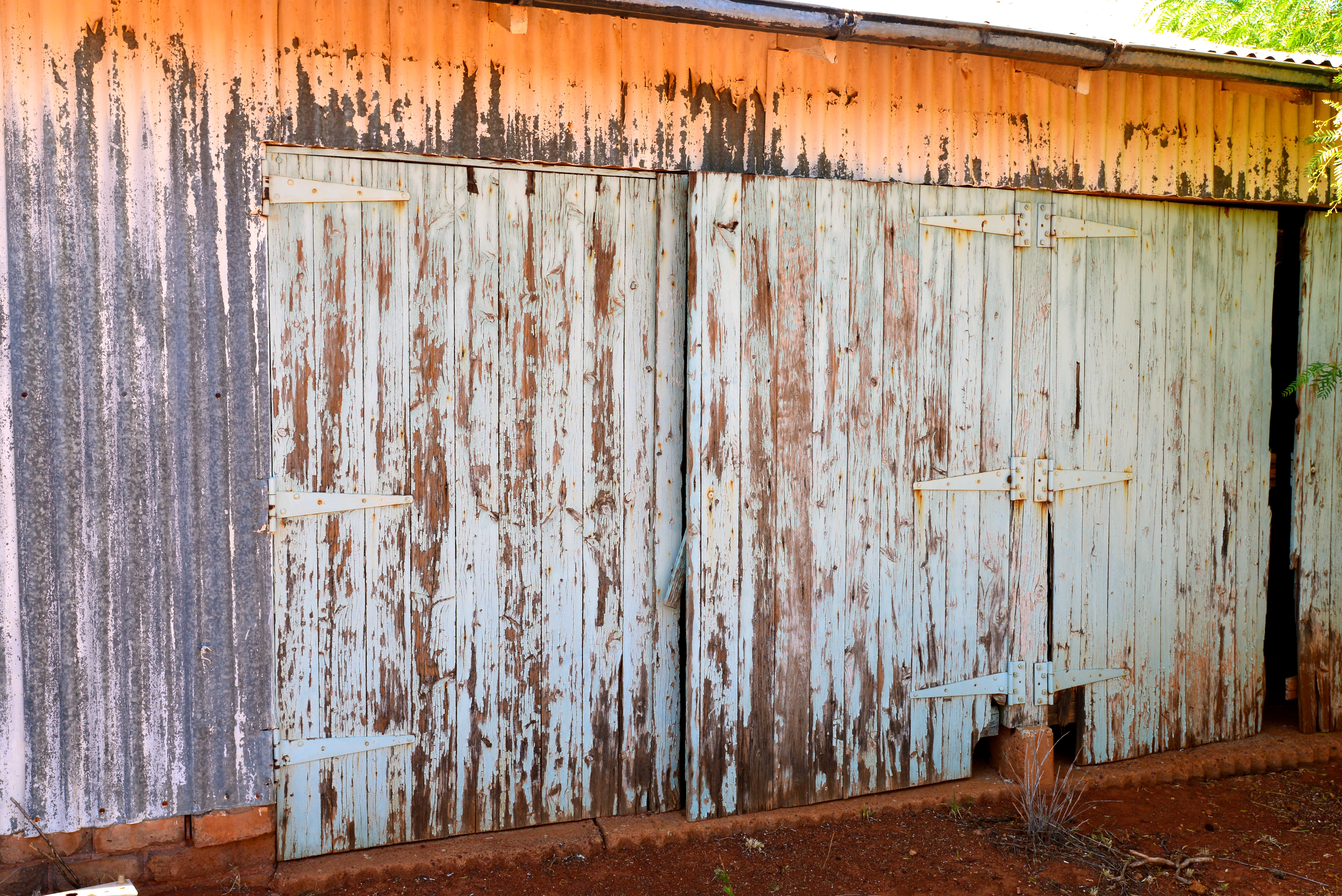
Photo: Baz, The Landy


Last Wednesday, TomO, the crown prince, broke his patella, his knee cap as it is more commonly known, in a bad fall in the school gym.
Needless to say it was a traumatic time for Janet and me to see the little bloke in so much pain.
This happened on the day I was due to arrive in Kathmandu to climb Mera Peak and just ahead of the tragic news overnight of a severe earthquake involving large loss of life in Kathmandu.
TomO had surgery on Thursday to repair his patella and all went well and he is recovering at home with lots of ice-cream! Unfortunately this will keep an active young man on the benches for the next few months, but the young bounce back quickly!


My climbing partners on this trip to Nepal headed to Lukla just prior to the earthquake and I’ve had news they are okay…
Janet has always been behind my mountaineering ambition and adventures one-hundred percent, but gave me a hug this morning and said,
“Glad you didn’t go you were needed here for reasons we didn’t know at the time…”
If it had not have been for Deb’s condition, which we would change in a heart beat if we could, I would have been in Nepal. But despite her condition Deb is still looking out for her little brother in ways that big sister’s do and perhaps only the “universe” will ever understand…
Our thoughts go out to all those affected in Nepal and if you are able to support the wonderful Nepalese people via a relief fund, please do.

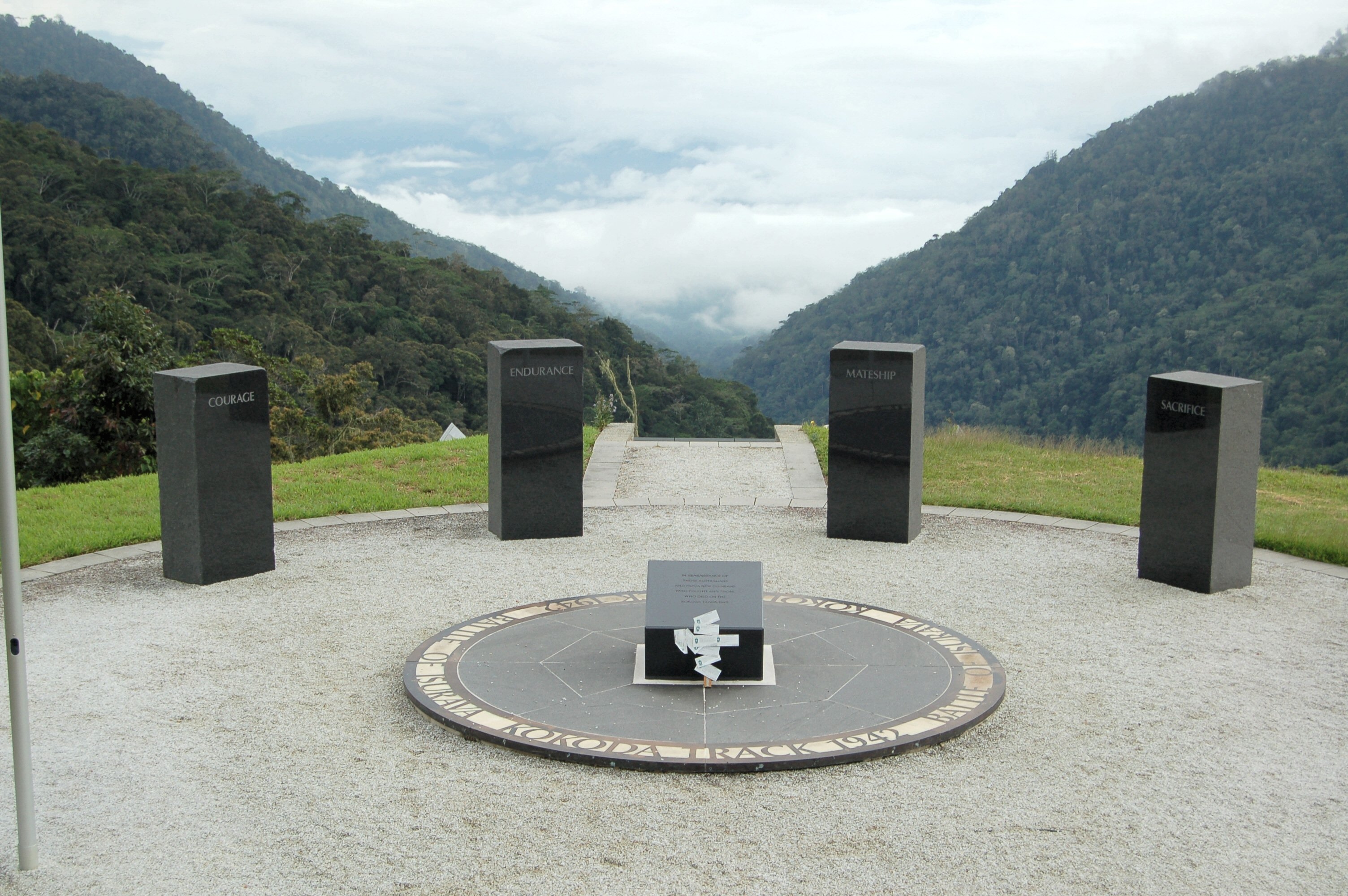 This morning, just prior to the rising of the sun, Australian’s for all walks of life gathered in the parks of our cities and our small country towns to honour the men and women of our military who made the ultimate sacrifice so we may enjoy the life we do today.
As I stood silently by the Memorial in our local park the sun was piercing the eastern horizon on a glorious morning, the Kookaburras’ were heralding the arrival of a new day and I thought how lucky am I to have grown up in this great Nation of ours.
Our outback travels take us through many small towns and communities in this vast country of ours and it was from these places that the young men of a new Nation enlisted to serve the Empire…
Bluey and the Boys, people just like you and me, men, just boys, that didn’t think twice about serving King and Country.
Today marks the 100th Anniversary of the landing at Gallipoli, Turkey, in 1915, a place where the term ANZAC was forged on that small wind swept peninsular, stained forever with the blood of our brave and courageous…
“They shall grow not old, as we that are left grow old; Age shall not weary them, nor the years condemn. At the going down of the sun and in the morning We will remember them.”
Lest We Forget


Crikey, I have just worked my way through that whopping big manual that came with the VCR recorder and now they tell me they’re finished, kaput, and useless.
TomO, the crown prince, said it belonged in a museum anyway, adding that in fact that most of the contents of our house were starting to resemble a museum collection.
Strewth, isn’t that something else that has changed, the cheek of the young people these days…
And how about fast food?
Hell, I remember when fast food was a Chiko Roll and a can of coke from the local fish and chip shop. These days we’ve got so many choices that a bloke would starve before he got around to making up his mind.
Hey, what about GPS and smart phones?
Talk about change, I never had any problem finding the corner store, but seemingly the young and not so young need one to navigate around the local mall these days. And besides what was wrong with the old paper maps that you could spread across the bonnet of the car and then spend an hour chasing across a paddock after that big gush of wind turned it into a sail?
But they call this progress, change…
On a recent road trip, dubbed “Ocean to the Outback” we visited my mother’s hometown of Bundaberg situated on the east coast to the north of Brisbane. Fay reveled in the visit and we spent time visiting the property that her Grandfather owned and ran cattle on when she was a young girl. “The Springs” as it was known due to a spring fed creek on the property is now a scout camp.
As a young adult she worked in the Metropolitan Hotel in downtown Bourbong Street, the epicenter of the town. Mum insisted we stop, have a beer and a good old-fashioned counter-lunch.
I remember as a kid having a can-of-lunch there. At least that is what I thought they called it. It was a few years later when a cute barmaid in a small country pub fell into stitches of laughter when I ordered a can-of-lunch that I made the discovery; it was a counter-lunch.
But I’m digressing and Janet is peering over my shoulder asking about the cute barmaid…

There was much reminiscing as Fay walked through “The Met” and we were fortunate to spend some time with the owner who loved to hear about how the pub was in the days gone by.
As we sat down to our can-of-lunch and a few beers, Mum looked around and said that it had all changed, it wasn’t the same anymore, she said. You couldn’t see the old stairs that took you up to the accommodation rooms and the old kitchen had gone.
Sometimes things have the appearance of having changed, but maybe when you delve just below the surface you see that nothing really has changed after all – maybe it is just a matter of perspective!
As I sipped my beer I looked around and thought…
“Surely nothing has changed”
After all the main bar was full of people chatting, laughing, enjoying a meal…
And of course, drinking an ice-cold beer!
I’m betting nothing has changed at “The Met” in the last hundred years…
Do places or life generally really change or just our perspective?
Photos: Baz – The Landy

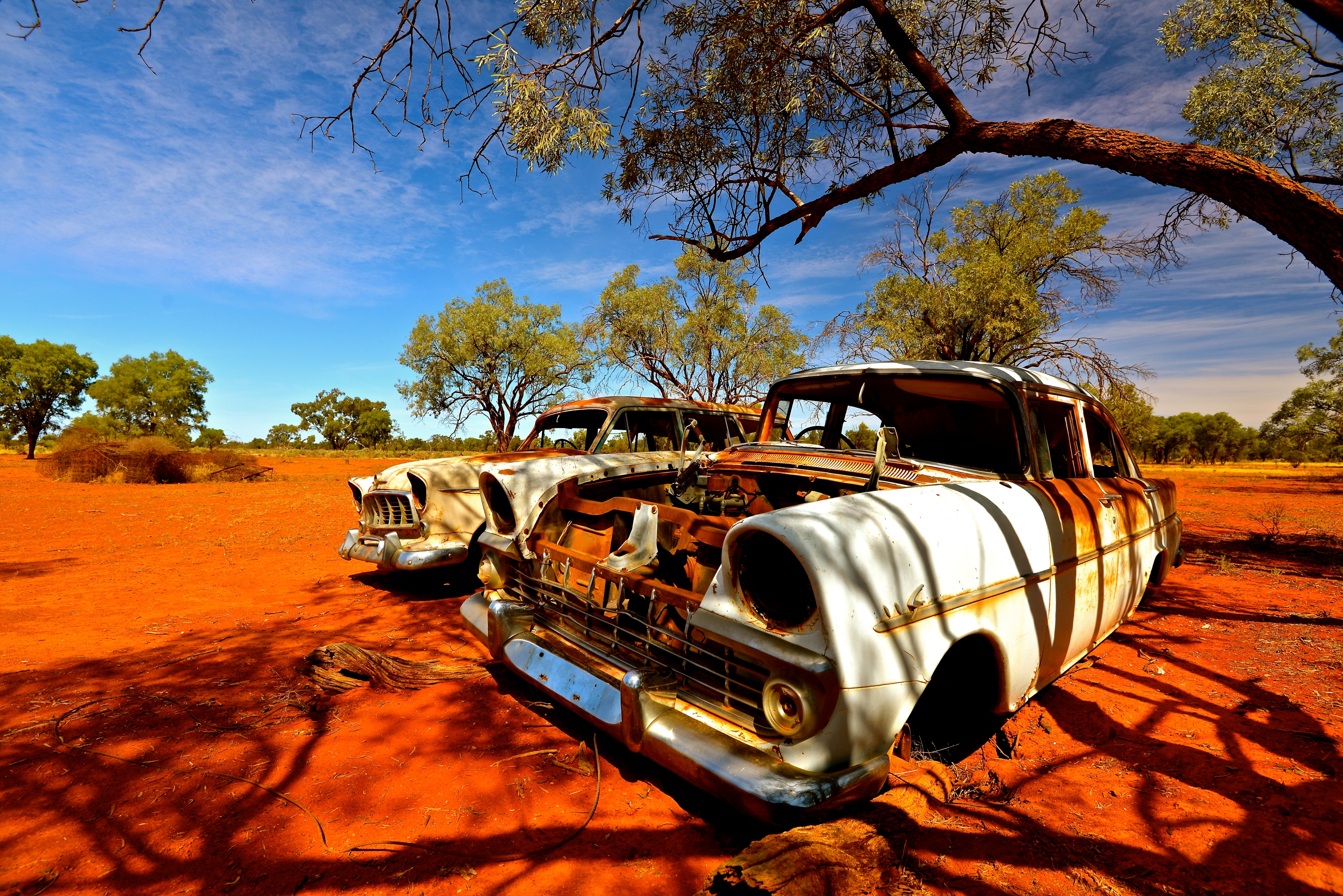
Photo: Baz, The Landy

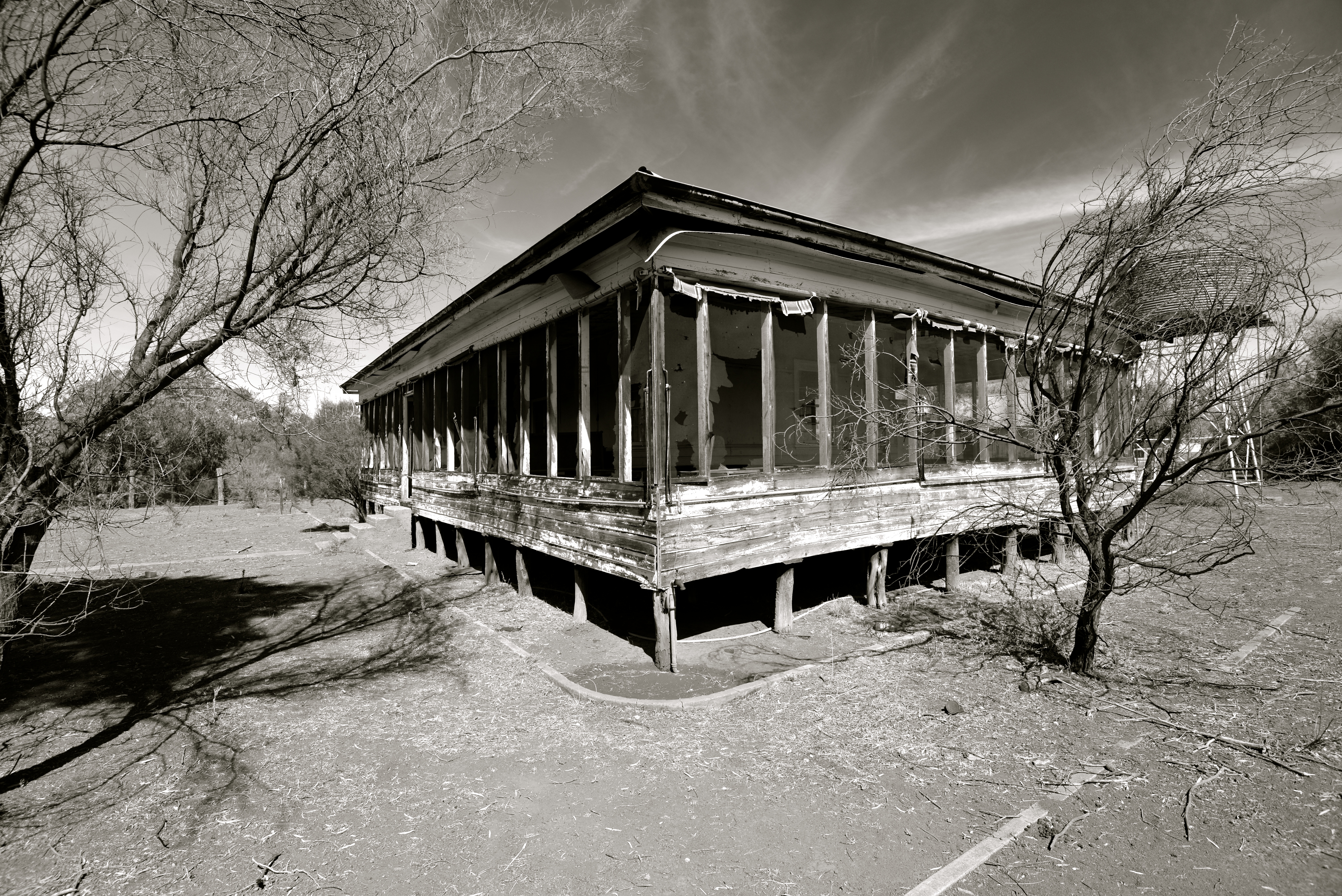
Photo: Baz, The Landy…


Shindy’s Inn, situated in the small township of Louth, is one place you are sure to get a warm welcome! Centrally located on the banks of the Darling River it is the focal point of this small community, and it is little wonder why. The owners, Dave and Cath Marett, make all visitors feel at home just like they would a local.
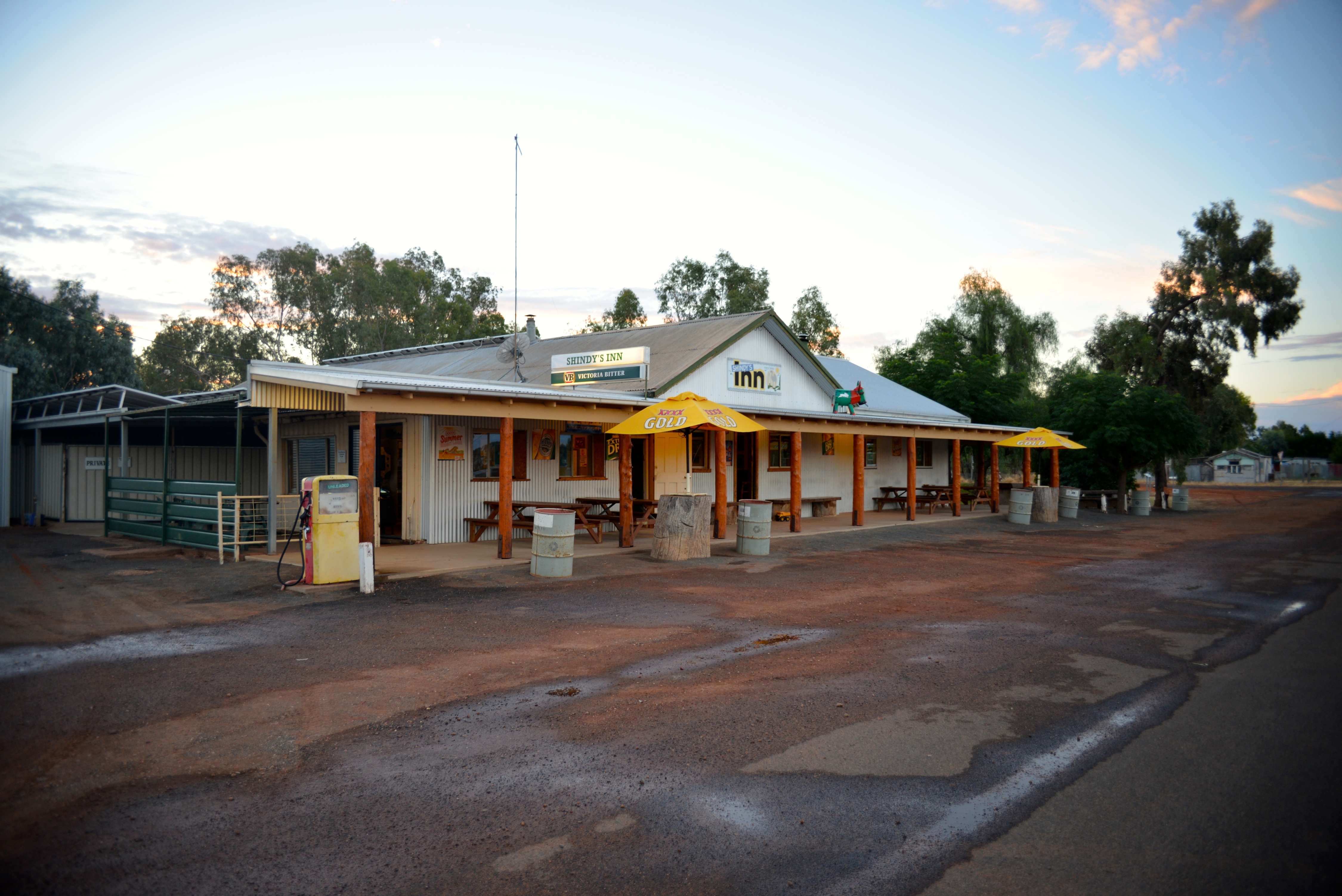
Founded around 1859 by Thomas Andrew Matthews, Louth was a stopping off point for the river boat crews plying their trade along the Darling River.
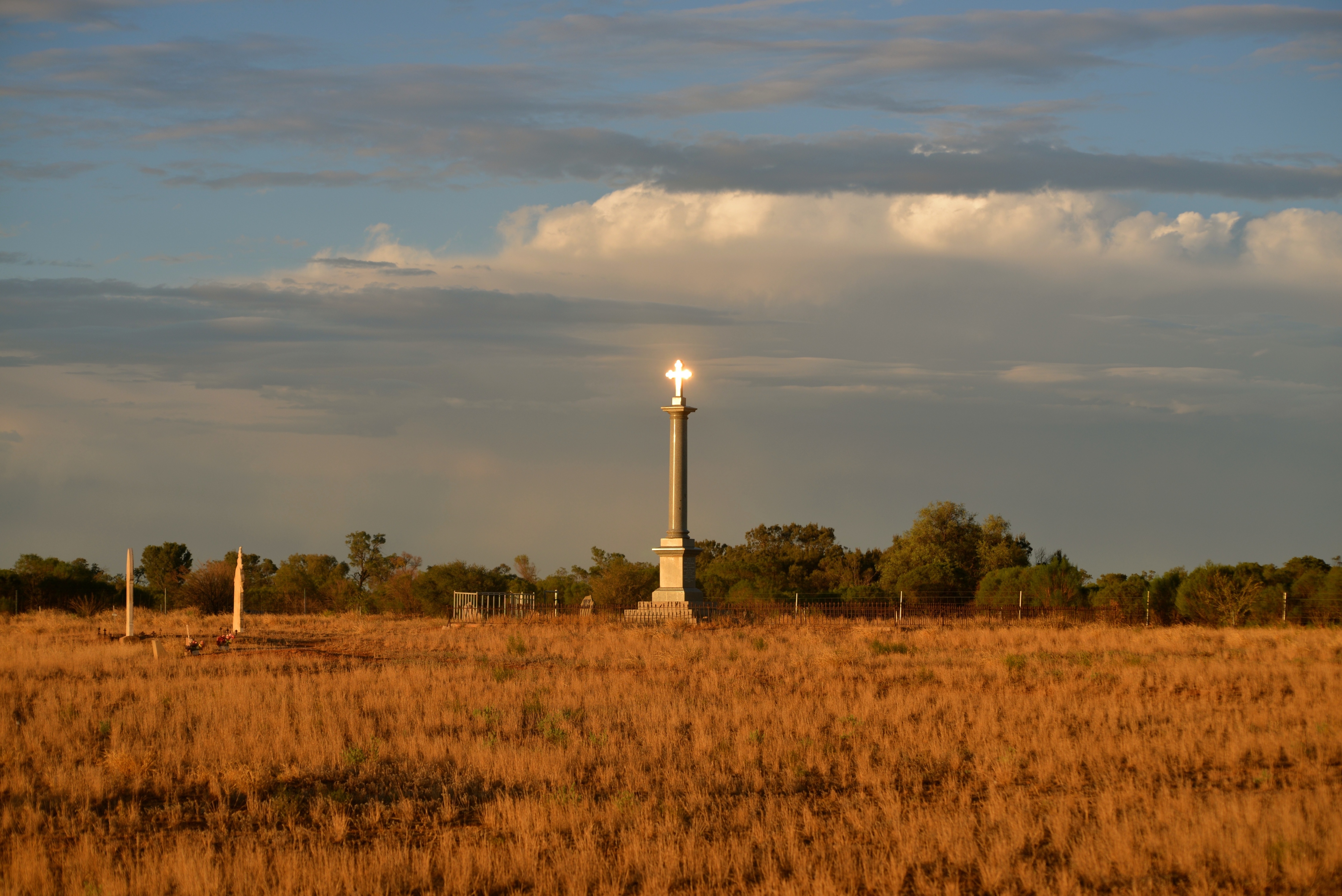
Thomas, or “TA” as he was known, was married to Mary who passed away at a relatively early age in 1886, and to mark her passing he commissioned a monument be made from granite and with a large cross at the top.


What makes this monument quite special is that on the anniversary of her death, the cross, when viewed from the home they lived in, shines brightly from the reflection of the setting sun. And at other times of the year this extra-ordinary phenomenon can be viewed from varying positions around the town.
Apart from being quite an engineering achievement and not to mention it had to be made in Adelaide, well over a thousand kilometres away and transported by paddle-steamer on the Darling River back in the 1880’s, it has an ethereal feel to it.
Recently we camped alongside the river just a short walk over the bridge to Shindy’s Pub.
Just ahead of sunset Dave took us to the place where we could view the glowing cross do what it has done every other day for long over a century – it shone brightly, so bright that it was almost difficult to look at it.
To see is to believe, as they say, and we stood quietly during those few minutes before sunset, seduced by the hypnotic flicker of light radiating from the cross…
Sometimes you just need to “scratch” the surface a little in these out of the way places just like a prospector would searching for those little glints of gold. And the rewards can often be far greater than a finding a nugget at the bottom of the pan!
So be sure to drop by “The Shindy” if you are in the area and say hello to Dave and Cath.
And perhaps in the golden hue of a setting sun you can drink a toast to a remarkable man, Thomas “TA” Matthews as the love of his life casts her eternal glow over an ancient land…
(updates a previous story)

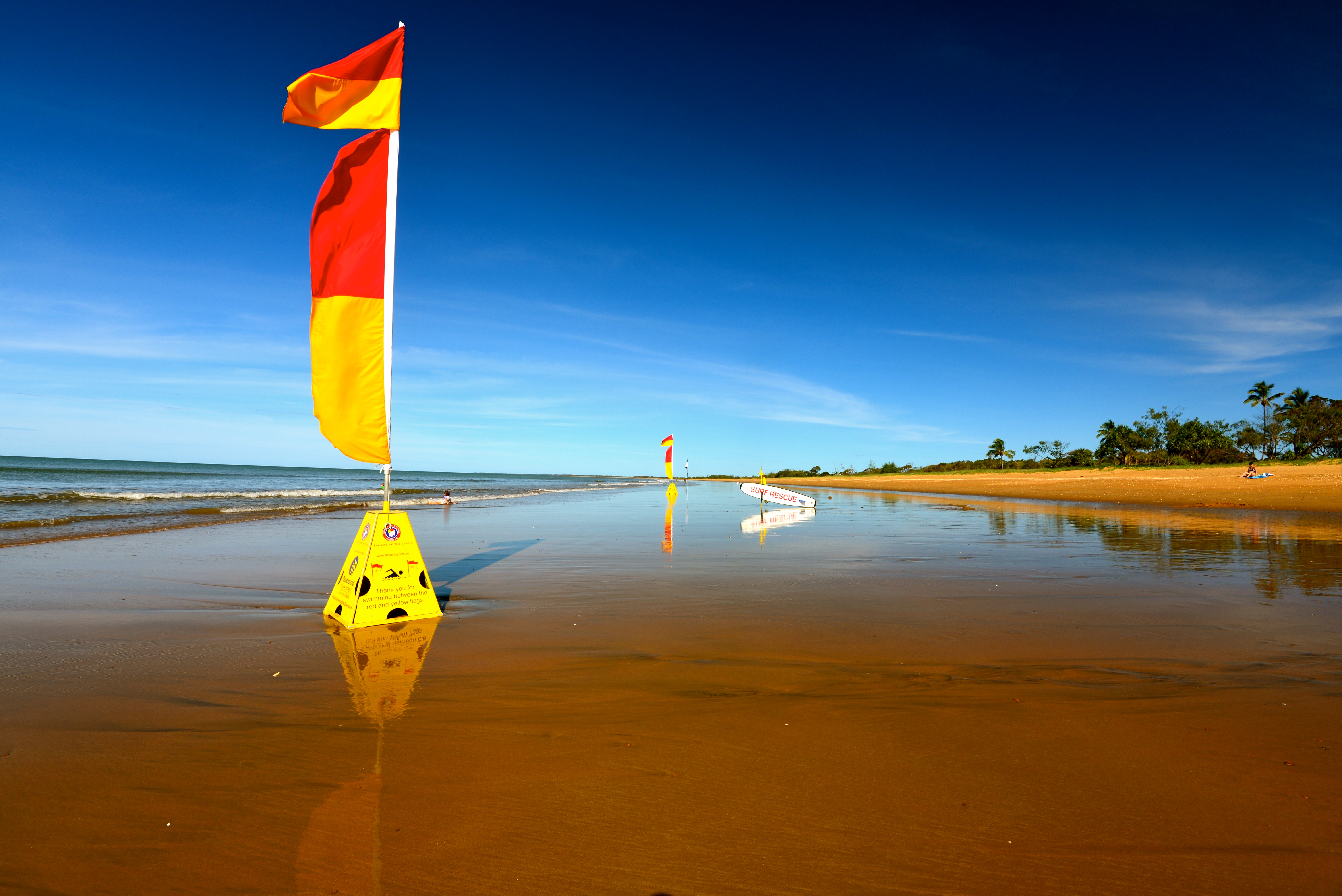

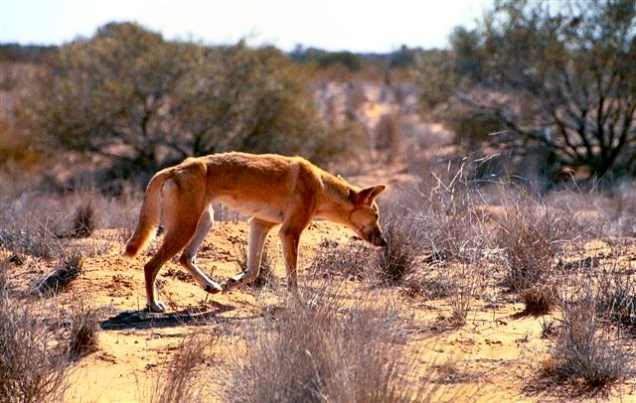
The Australian Dingo, at home in the Australian Outback…
Photographed in the Channel Country, far Western Queensland.
You’ve just got to love the landscape, the flora and fauna, that makes the Australian Outback what it is!
photo: Baz – The Landy


 No mistaking it – this is Australia, and how unique is our wildlife, hey!
Photo; Baz – The Landy


In a couple of weeks we will be heading off on our first trip of the year and themed from The Ocean to the Outback.
Starting close-by to the World Renowned Fraser Island, the largest sand island in the world we will make our way inland to Trilby Station, a large sheep property situated on the mighty Darling River in Outback Australia…
Hey, it will be great to have you along, so I’ll give you a shout as we are heading down the driveway in “The Landy” – strewth, if we’re lucky Janet-Planet might cook up some of those great scones of hers over a camp fire!
Photos: Baz – The Landy

 Xplore