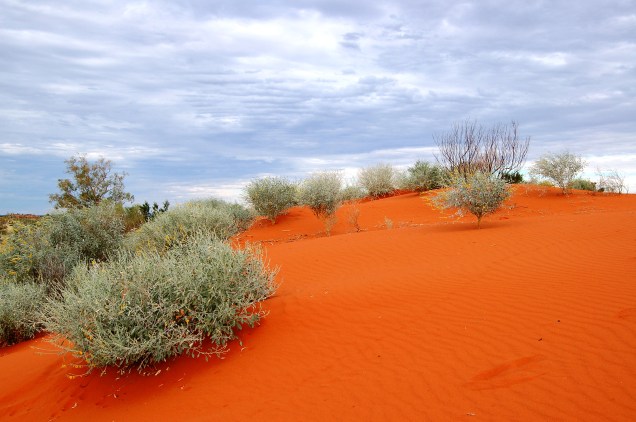
One of my passions is travelling the Australian Outback, the rich red soil kissing a vast blue sky in the far off distance, in the never-never…
Rest assured the never-never is a real place and the term was often used to describe the vast uninhabited inland region of Australian. But in reality, Australia’s first people, Australian Aboriginals, inhabited much of this vast land, the never-never…
The term never-never has appeared in many poems, writings, there is even a novel, “We of the Never-Never”, authored by Aenas Gunn. The book is really an autobiographical account of her time on Elsey Cattle Station in Australia’s Northern Territory.
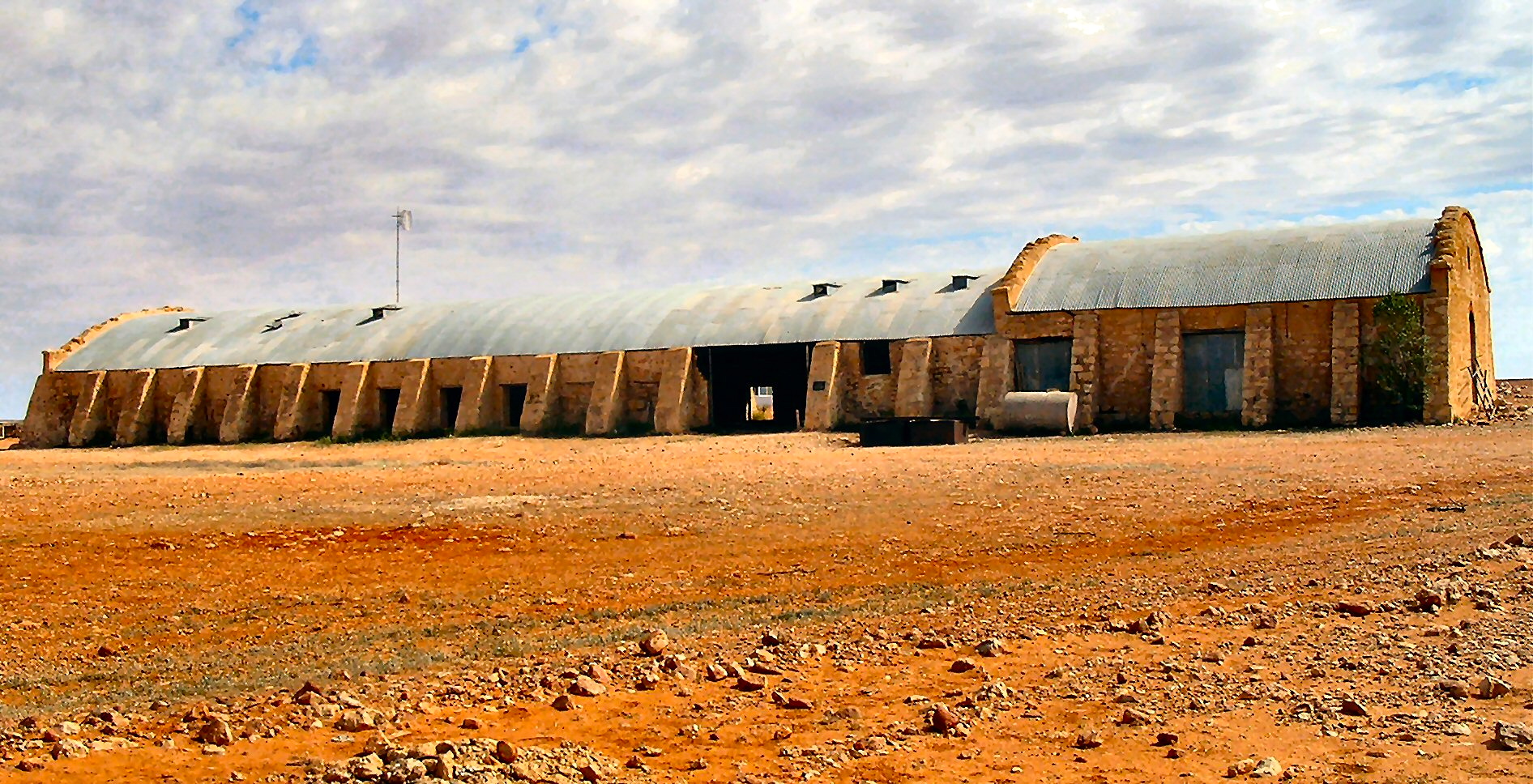
I’ve visited Cordillo Downs many times over the years and it is truly big-sky country out there. Standing in its shadows I try and picture in my mind’s eye the people who worked here, how they arrived, where they went.
For you see, Cordillo Downs is in the middle of no-where and there is something very appealing about that.
And you’ll be hard pressed to find a tree in the “gibber country”.
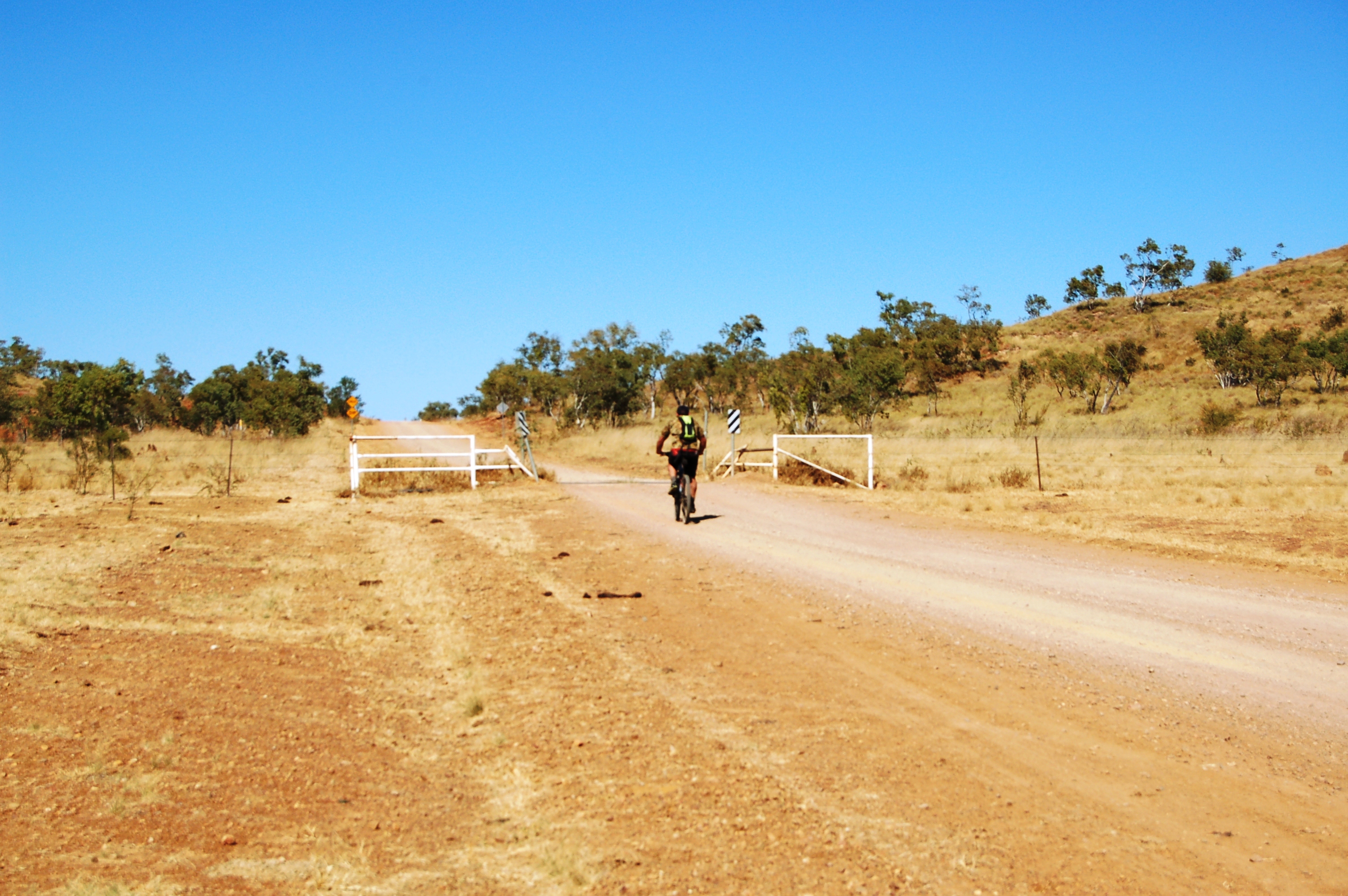
Stores were transported from a town approximately 600 kilometres to the south by Afghan Camel Trains and workers frequently rode bicycles across an arid desert landscape to seek work in the shearing shed.
The Never Never, Outback Australia
Hey TomO, there’s an adventure for us, riding our mountain bikes up the Strezlecki Track to Cordillo Downs…
Outback Australia, truly full of surprises and if you aren’t carried away by the magnificent landscape, you’ll be carried away by the flies, that’s for sure!
As Monday rolls around it is time to reflect on another great weekend in the mountains with family and friends.
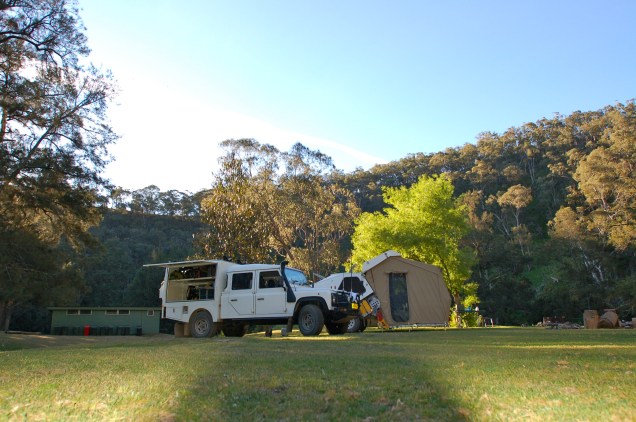
On Saturday morning we boarded The Landy and headed to Turon Gates, a rural property not too far from a great Australian wine growing region, Mudgee, to the west of Sydney.
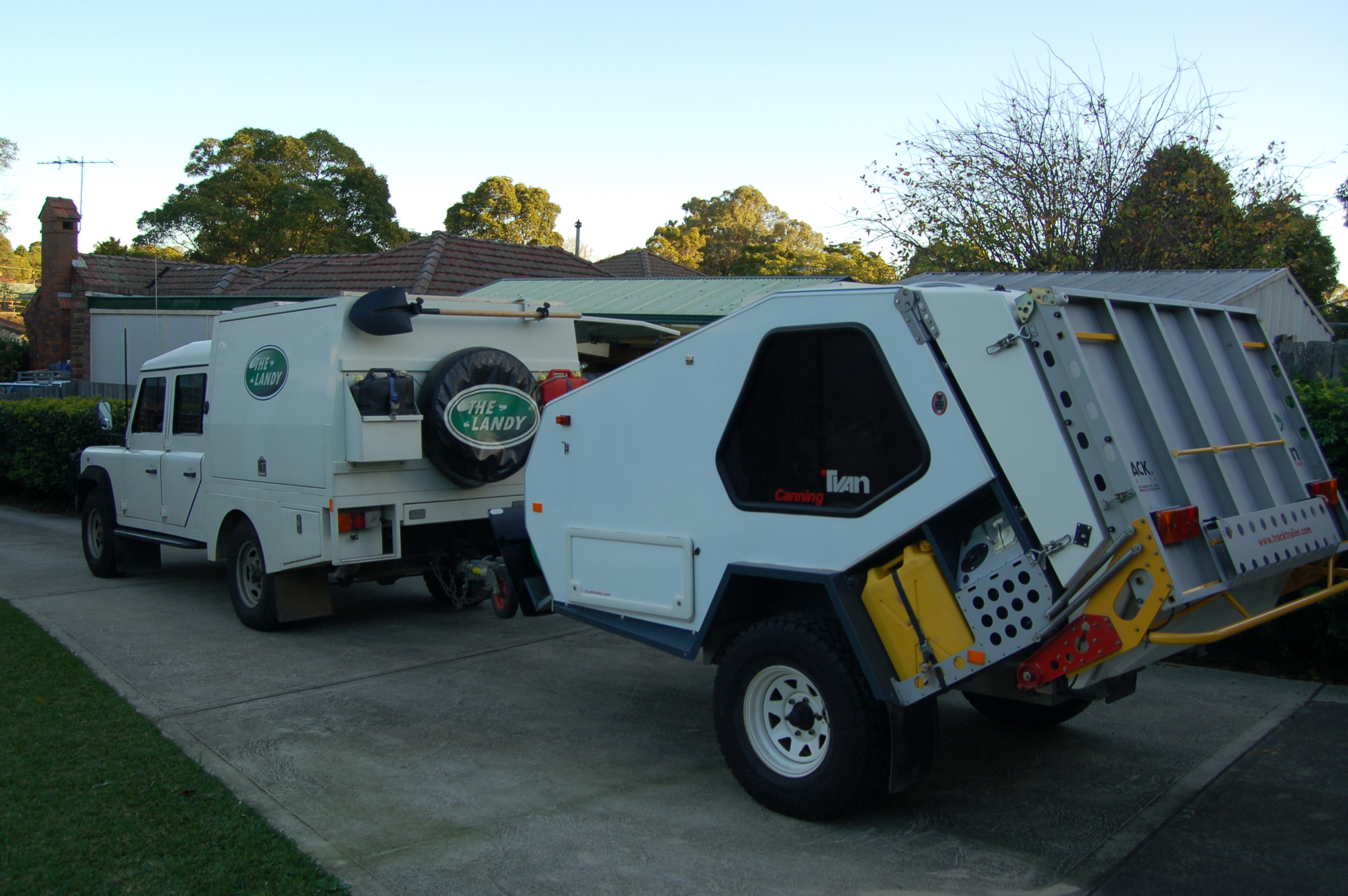
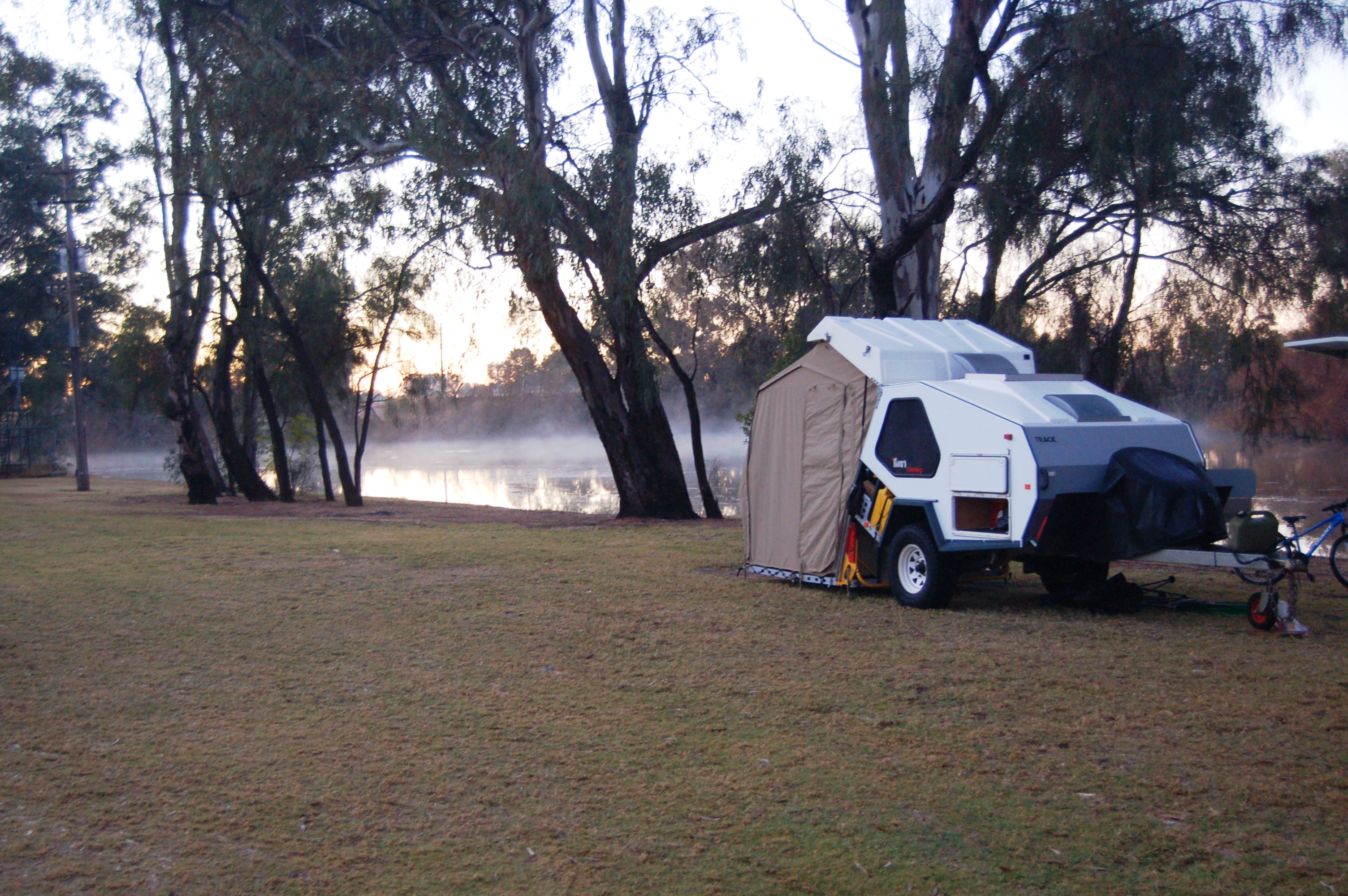
It is a comfortable three-hour drive in the The Landy, which is no speed machine, especially when towing our T-Van, a specialist camper trailer designed for extreme travel. This weekend it would not be put to its full potential, and with plenty of mountaineering and overseas travel over the next 12 months, it is unlikely to see the red bull-dust of the Australian Outback anytime soon.
We did pass some of my favourite climbing areas on the drive, but this weekend was about relaxing, eating, and eating, and relaxing, with Janet, TomO and family friends.
Crikey, did we eat or what?
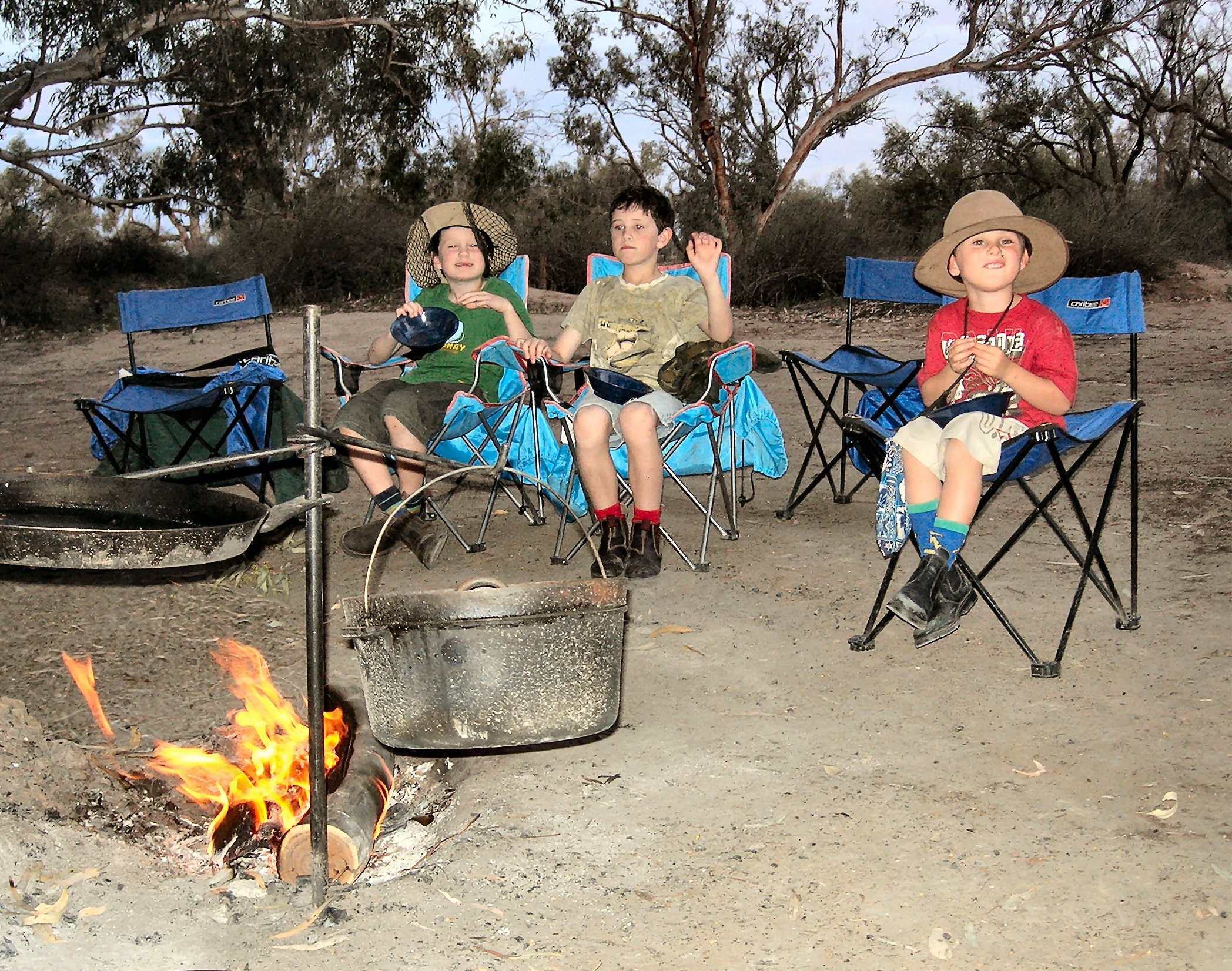
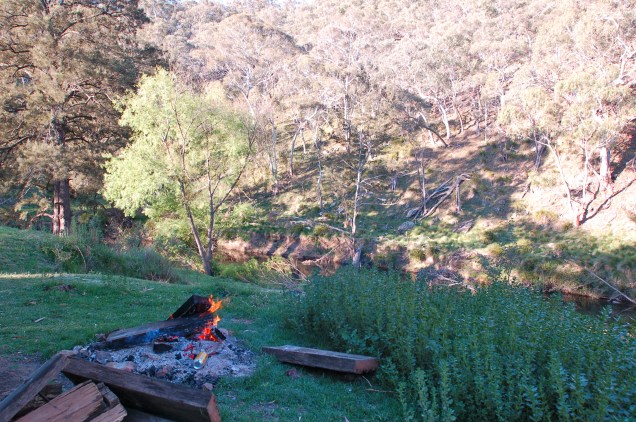
And don’t you just love camp food prepared in a camp oven and dining under the stars beside a crackling camp fire…
Now I must say, Janet and I both love experiencing different foods from around the world, and enjoy a night dining out. But it is hard to beat cooking up and dining on some camp grub!
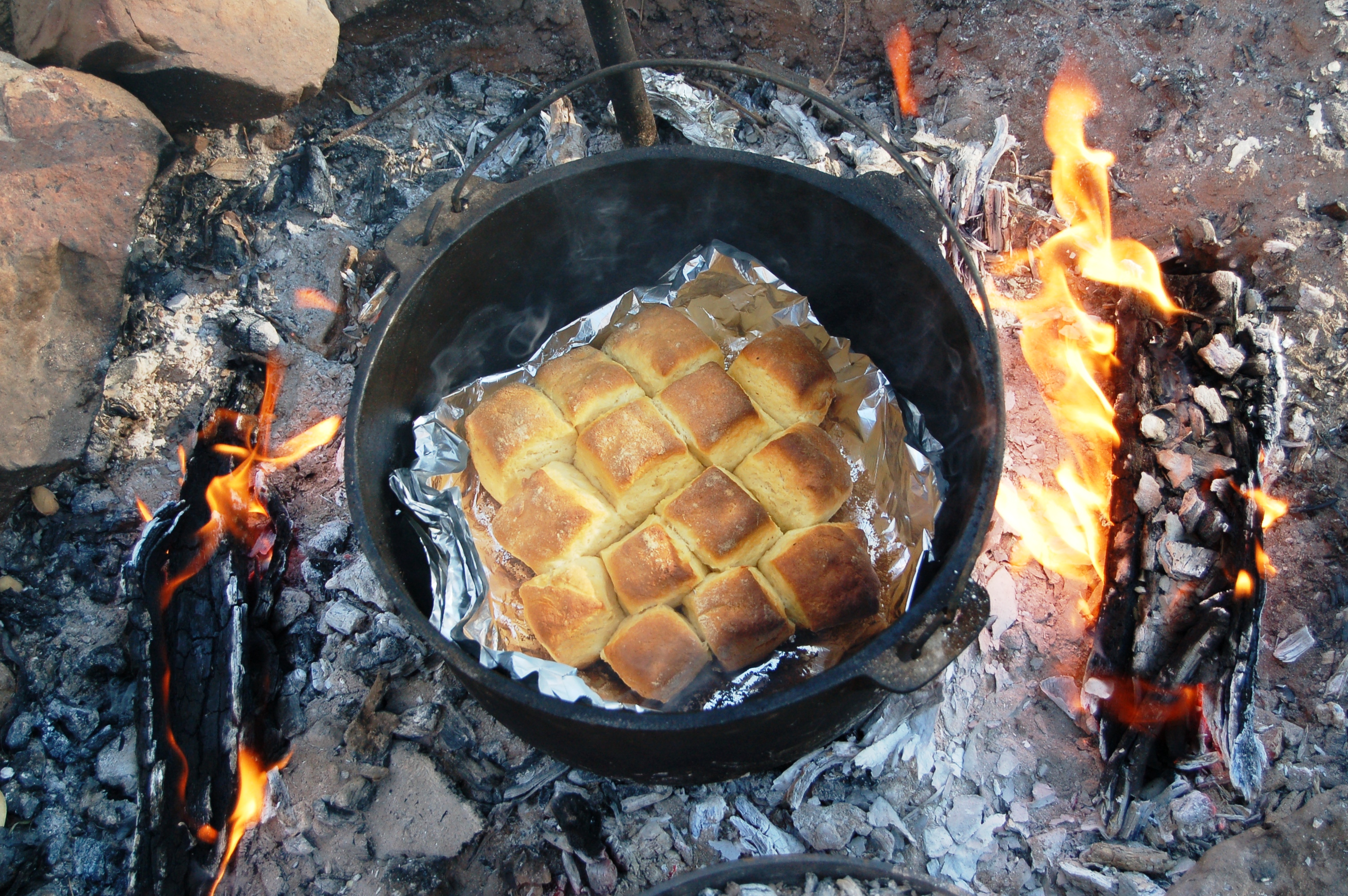
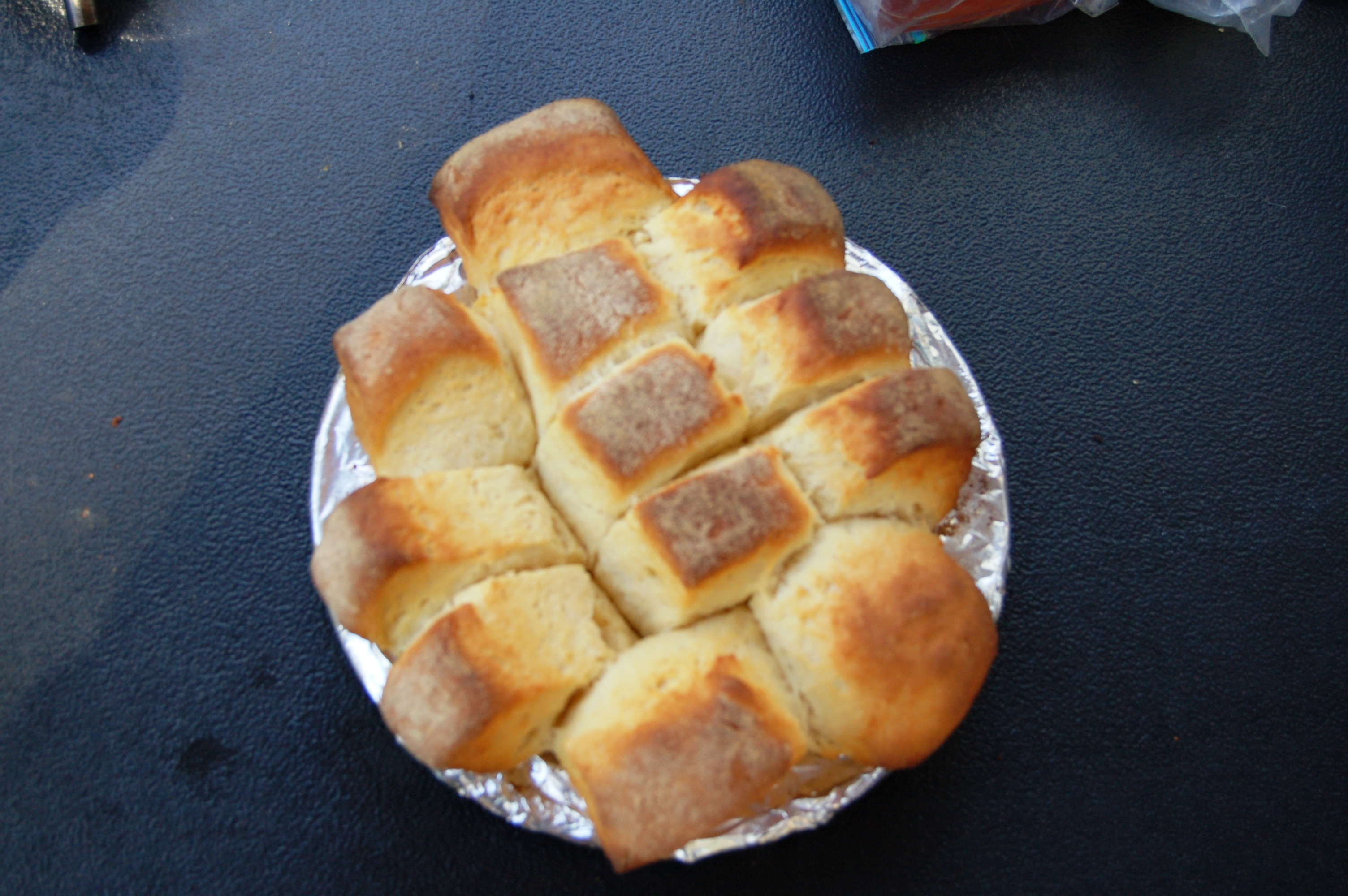
And no camping trip would be complete without Janet knocking out one of her (world famous) dampers. Lavished with Golden Syrup, or Cocky’s Joy, as it is commonly referred to, it is simply the Bees Knees. From the time it is pulled from the camp oven, to the time when the last piece is devoured, you won’t hear a whisper from anyone, just the sounds of the Australian Bush punctuated by the groans of delight as the Golden Syrup trickles down your hand…
Joining us for the weekend were our good friends The Todd’s; Bob and Annette, and David and Stephen. They’re like family to us and we’ve been travelling this great country of ours with them for as long as we can remember. A work colleague of Bob’s also came along to experience the Australian Bush…
The Todd Boys, The Boys, as we affectionately know them, are like brothers’ to our son TomO, and talk about being as thick as thieves.
Apart from growing taller, The Boys and TomO haven’t changed much. Although, the conversation seems to have moved from toy cars and teddy bears to girls these days…
Bob and I go back a long way…I even got to spin a few tales about him in my role as “Best Man” on their wedding day.
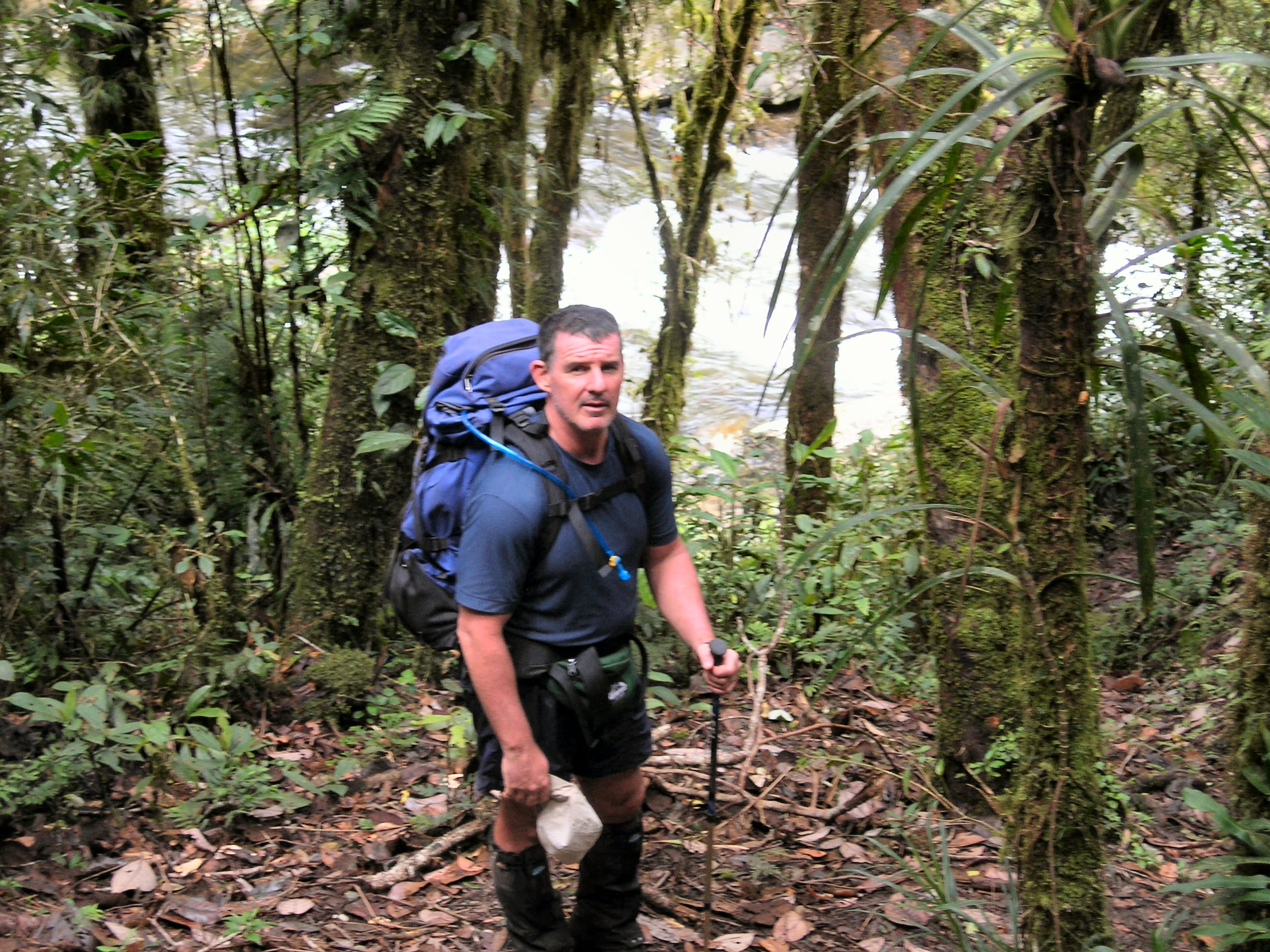
Together, we’ve cut a path along the Kokoda Track in the wild jungles of Papua New Guinea and paddled the Papuan Coast extensively on our kayaks.
Strewth, we’ve even spent a great New Year’s Eve on the small island nation of Nauru, at the Nauru Phosphate Club, helping to de-stock the Nation’s supply of Foster’s Lager, but heck that is a yarn for another day, if I ever get around to remembering it.
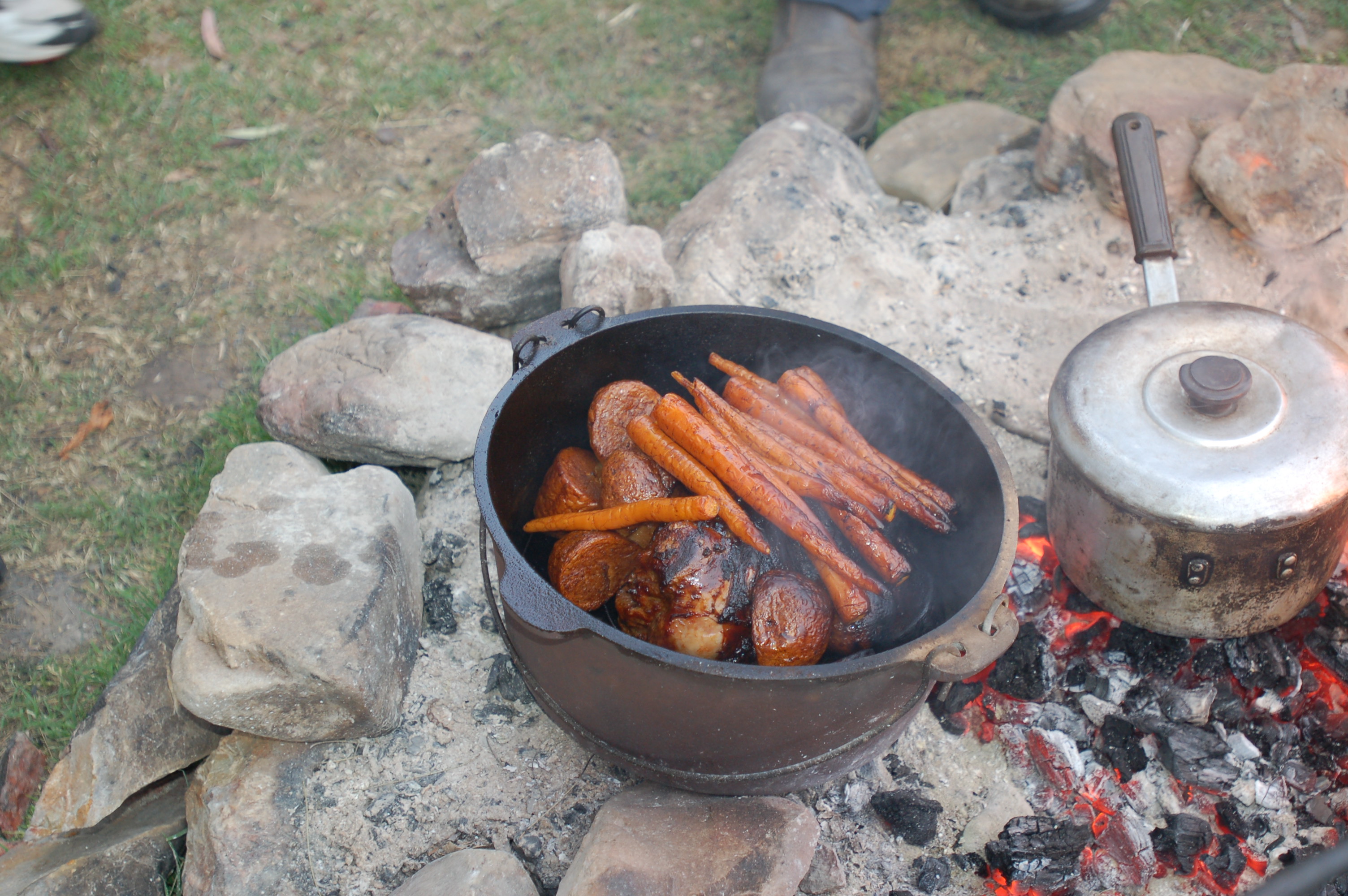
I’m sure Bob was a pyromaniac in another life-time, but rest assured he can set the best camp-fires ever and then cook up a storm in his camp oven. The Todd’s feasted on roast lamb and vegetables, while we settled for a good old rump steak on the barbie.
Now I must do a couple of call-outs here.
I have been fortunate enough to have found a fantastic blog called Picture Real Food, by Marisa, which has some wonderful recipes. This weekend I tried out her Bull’s Blood Mushrooms, and all I can say is if you are into mushrooms give this a go…and if you’re not into them still give it a go, because you’ll end up a convert!
The other call-out is to a mad-as-a-cut snake New Yorker who goes by the name of Icescreammama. Recently she had some really nice things to say about some Aussie blokeso I drank a toast to her on his behalf and the recent success she has had in a writing competition.
Geez, I actually had a couple of beers, a bit unusual for me ahead of my preparation for next year’s full-on mountaineering calendar.
Blow-me-down, I thought people like Icescreammama only existed on those American sit-coms you see on the Telly, when it is working. But there she is, larger than life. Mind you, I’m betting she is one of those New Yorkers’ that drinks cor-fee instead of coffee.
And did I get around to mentioning one of my favourite parts of any camping trip.
Brekkie!
And this is after we get our fill of vegemite on toast, after all it wouldn’t be Australian to leave it at home!
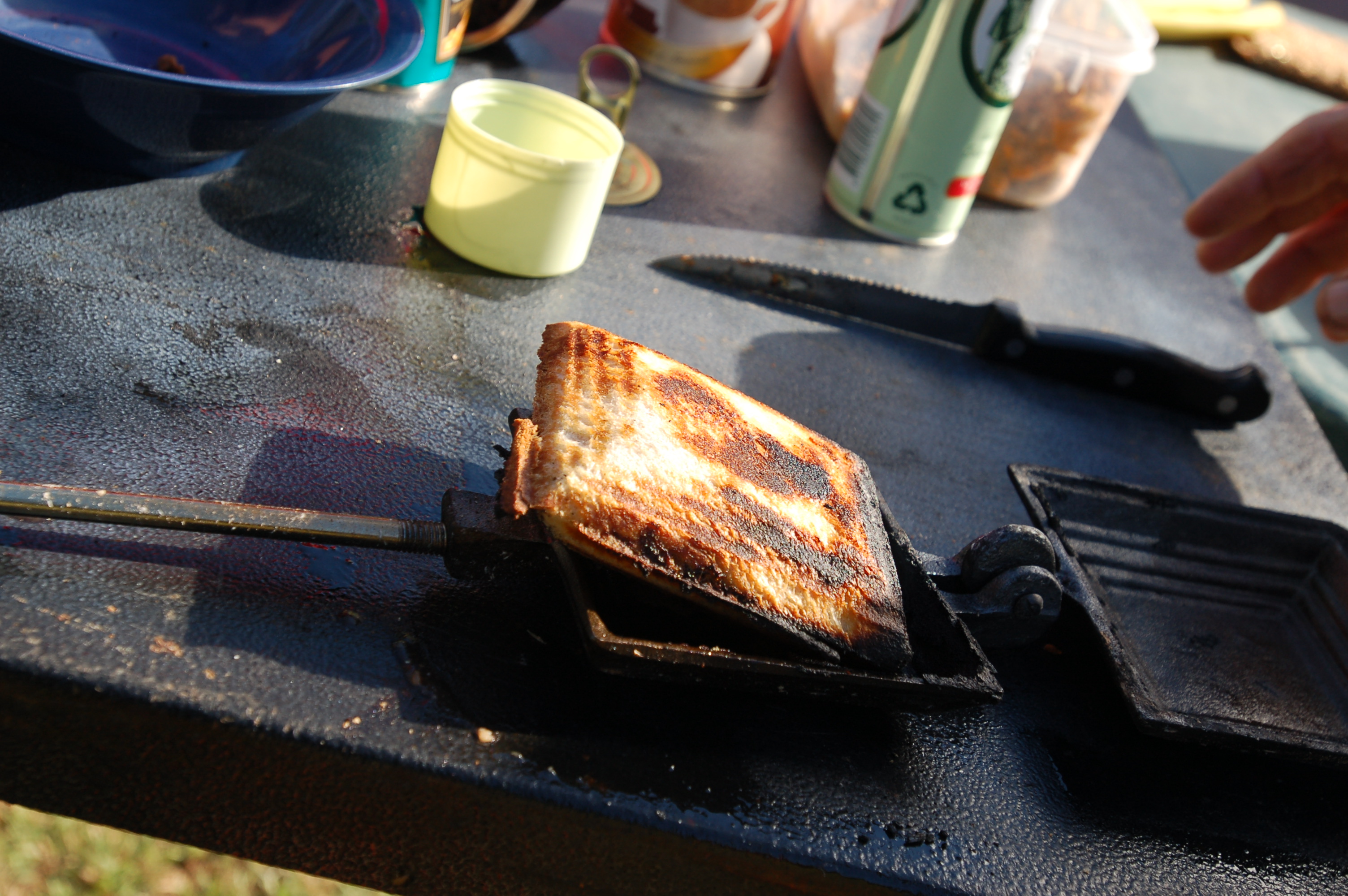
There is something that is good for the soul about a lazy start to the day, getting a fire going, and then throwing a couple of jaffle irons onto the coals with your favourite filling stuffed between two slices of bread!
Janet made up some savoury mince, and her jaffles were the ant’s pants; seriously to die for.
And no outing would be complete without someone falling into the water. Usually it is TomO, because he was a fish in a previous life, but this weekend it was my turn as I filled up the water bucket – it must have been those two beers I had the night before that gave me a wobbly boot.
Geez, you just gotta love getting “Out and About” – bring on life!
And hey!… Don’t forget to Like The Landy on Facebook to catch up on more photos and happenings while he’s “Out and About”…
Besides with only 29 likes he’s starting to think he’s more “off” than an “Outback Dunny” in the mid-day sun!
We just spent a wonderful weekend on the Central Tablelands area to the west of Sydney. Turon Gates, a private property that is dotted with numerous cabins and cottages, and a wonderful camping area was our destination.
We were intending to do some climbing and abseiling in the Blue Mountains over the weekend however my climbing partner was unable to make it.
We hadn’t been to Turon Gates for quite some time, so after TomO, our son, finished his Saturday sport at school we headed off in The Landy with the T-Van in tow.
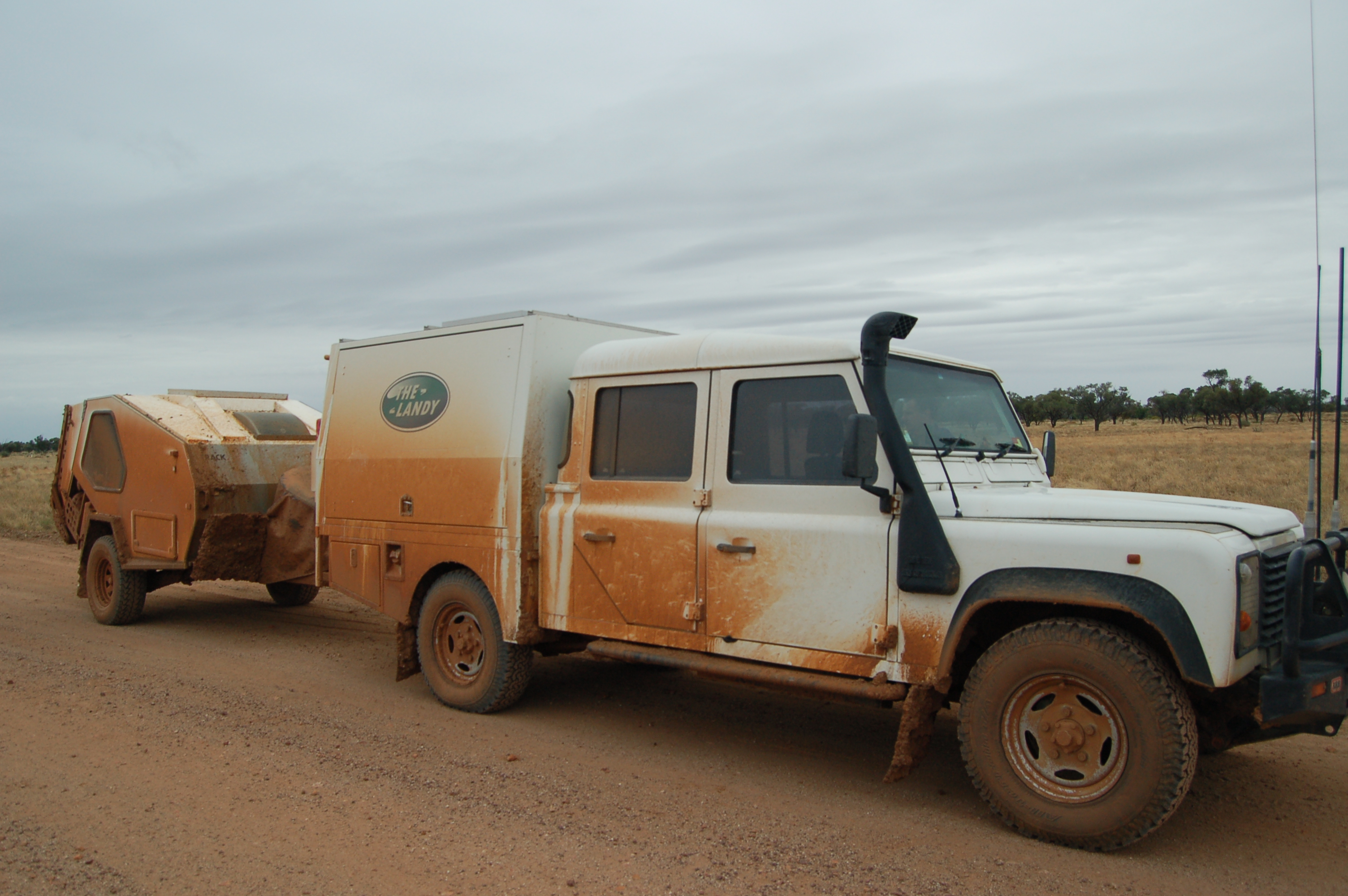
I’ve often been asked where The Landy name comes from, well it is a Landrover Defender that we have rebuilt for long-range touring in Australia. The T-Van is a rugged camper trailer designed for travel in extreme places, and it does live up to its claim, we can attest to that!
And The Landy is no speed machine, which suits us perfectly, so it was a slow drive up and over the mountains and towards the wine growing area of Mudgee.
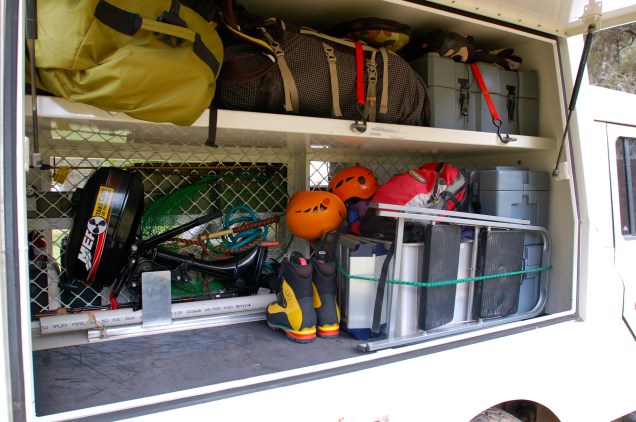
TomO wasted little time becoming acquainted with a group of kids who were there for the weekend and played a game of cricket while Janet, my partner, and I set up our camp. Mind you, that is a fairly quick affair as the The Landy is always in touring mode with everything stored inside, including a inflatable boat with a mercury outboard motor, and the T-Van is ready to sleep in with little set-up required.
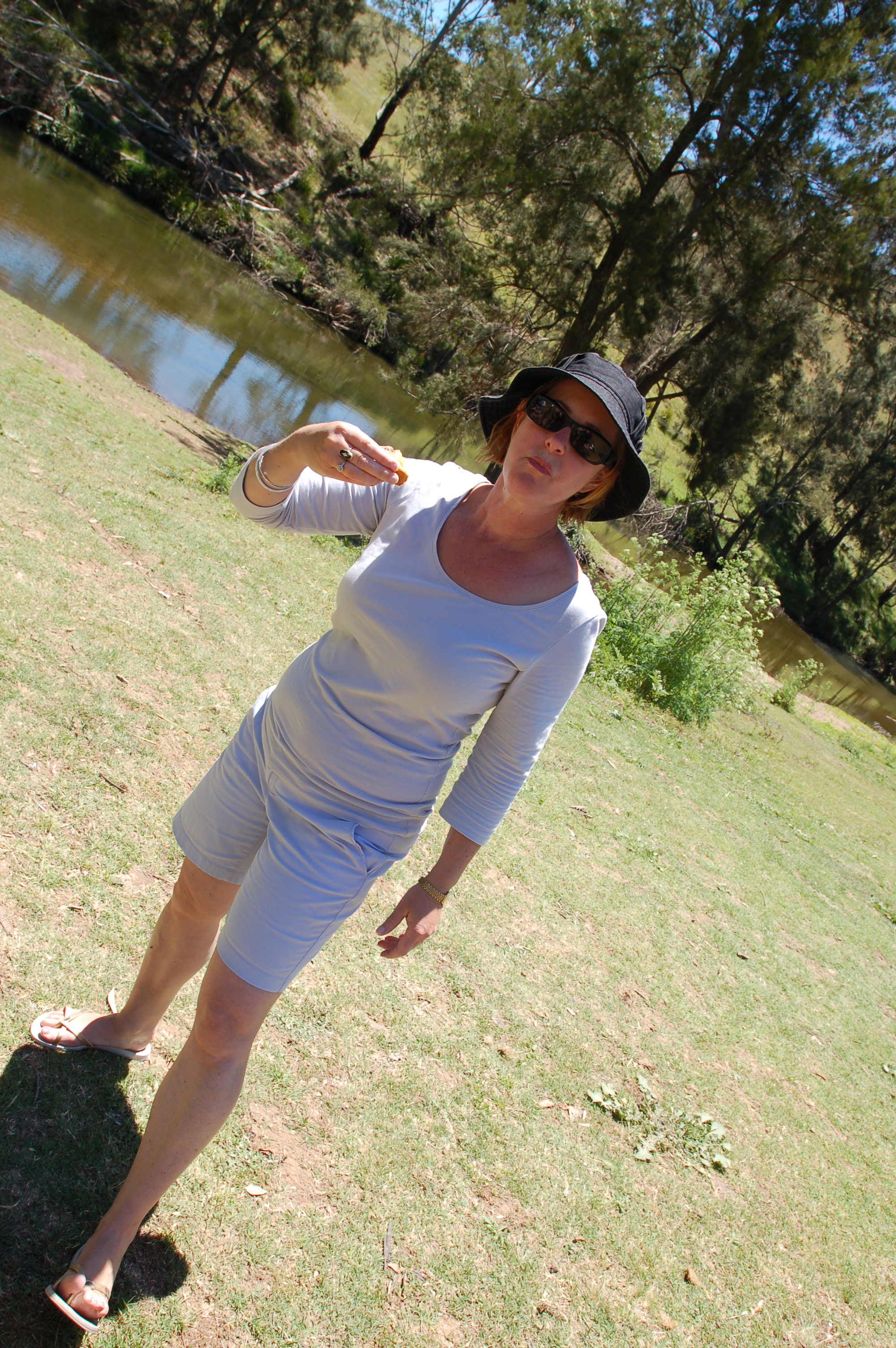
The Turon River meanders through the property and it wasn’t long before TomO was in the water beckoning me to join, which I did. It was refreshing to say the least.
Janet spent time sitting on the river bank watching and speaking with another group of campers who we joined for a few drinks and a camp fire later…
So, whilst we missed out on climbing we had a fantastic weekend out and about in the Landy, and climbing is on this coming weekend – for sure.
The Landy – Out and About had many emails of support this morning. I was a little surprised to find the inbox filled with messages…
I was even more surprised that one was from the good people at WordPress.com informing me that I had been Freshly Pressed!
I felt humbled…
There are so many wonderful stories on WordPress, many inspirational, plenty that are motivational, and of course there are those that give you a chuckle just when you need it.
It would seem unfair that anyone of these stories is singled out…
In fact, I have spent so much time reading them recently that I have a pile of books that I have put off reading, gathering dust in the study…
So to all, I simply say thank you!
In part, my blog is about my journey to climb an 8,000 mountain peak, the trials and tribulations, the warts and all account, but it is also an opportunity for me to provide a window into an averageAussie bloke’s day-to-day life.
The commas may not always be in the right place, or the grammar might be left wanting at times, but hopefully the story shines through…
I chose to share my story because the dream I have, my goal of high altitude climbing frightens me a little.
Who am I that I should dream of such an undertaking?
And there is nothing wrong with being a little bit frightened, but I am determined to give it my best shot, approaching the challenge in a logical way and seeking the assistance of those who have been there, who have the skills, to learn those skills, but above all else to have fun trying…
Since putting my story out there I have received many words of encouragement. This encouragement is the energy, the fuel that powers me on…
Many people are on a journey, pursuing their dreams and it has given me great comfort to know that others are scaling their own peaks, whatever they might be. It is the collective sharing of these stories that demonstrates loudly that ordinary people are achieving great things each and every day.
The legendary mountaineer, Walt Unsworth summed up many of us when he opined…
But there are men for whom the unattainable has a special attraction. Usually they are not experts: their ambitions and fantasies are strong enough to brush aside the doubts which more cautious men might have. Determination and faith are their strongest weapons. At best such men are regarded as eccentric; at worst, mad…”
That first kilogram of weight loss, or a new personal best in a running race, overcoming adversity, or baking the best cake you have ever made, these are the dreams of others, and they are no less or more significant than others, but the one thing these dreams have in common is they provide a starting point for us all to start our journey…
And for many of us the greatest support we receive is from our families, encouraging us to find the greatness that lies within us all.
TomO – Welford National Park
In the words of someone who inspires me, TomO, our 12 year old son. On taking my place on the start line in the Coast-to-Coast adventure race across New Zealand earlier this year, he took my hand and simply said – Dad, just embrace it!
Blue Winged Kookaburra, Bowthorne Station, Gulf Savannah Land
There is a lot to like about our island continent, Australia.
Beaches that are counted among the best in the world, the brilliant red colour of the Outback set against a rich blue sky.
Our unique wildlife, kangaroos bounding across wide open plains, koalas sleeping in a lonely gum tree, and even a crocodile here and there…
But don’t worry, I’m not writing an advertorial for our local tourism authority, besides, I think Australia does a good job of selling itself…
No, what I am writing about is the world’s best alarm clock.
There is no need to set it, it comes in a range of colours, and is mostly uniform in shape and size…
No snooze button on this model though…
It does not make the usual mind-numbing BEEP…BEEP…BEEP, or gently awaken you to the sound of your favourite music.
But it will awaken you to the sounds of jovial laughter, perhaps leaving you to wonder whether you are still in that bar you were going to leave before the stroke of midnight…
The Shed
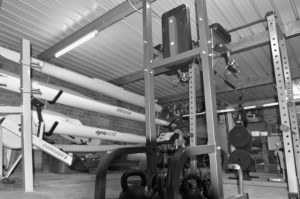
As the first sign of light began to show in the eastern sky, I wiped the sleep from my eyes and headed for the shed, my predawn exercise workout beckoning.
And that alarm was still laughing, mocking me, seemingly taking pleasure that it had dislodged another from the dreamworld that we all try to hold onto for those extra few minutes.
Yep, natures alarm clock, Australia’s own Kookaburra – you’ve gotta love ‘em…
(The one pictured is an example of a Blue-Winged Kookaburra photographed by Janet, my partner, on Bowthorne Station in the Gulf Savannah of Northern Australia.)
I’m sure much can be said and written about someone who has two Landrover Defenders, and I’ve had a good chuckle at the usual Landy jokes that frequently come my way!
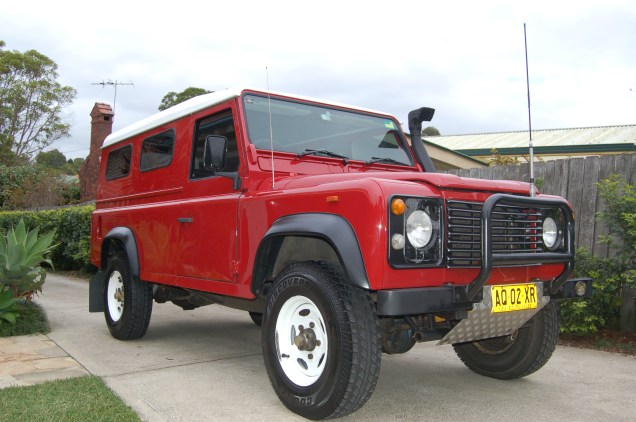
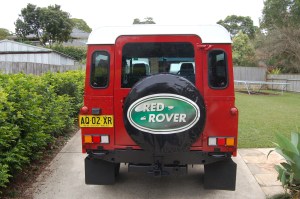
But after my Defender 130 Twin Cab, ‘The Landy’, was overhauled and configured for long-range remote touring in 2006 my attention turned to another project. I was actually in need of a vehicle to drive to work, so I decided, much to the consternation of Mrs. Landy, to buy a Defender 110 in need of work, but adequate for the job until I got around to it.
In 2007 I settled on a 1994 Defender 200 TDi that was in reasonable working order, and over a period of time simply drove it to find out what needed to be done and what I wanted to do with it. This was the three door Panel Van style Defender, as distinct from the usual five door Station Wagon format; it had three seats in the front and not one piece of computer controlled equipment!
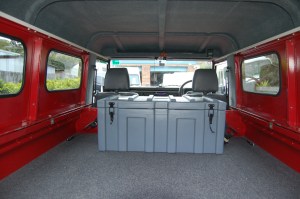
Cavernous
The rear is cavernous and consequently Red Rover spent many weekends over the past four years transporting garden rubbish to the local refuse point, an important fallback point for both vehicle and myself when the time came to discuss finances for the overhaul…
Now Mrs. Landy quite enjoys driving ‘The Landy’ and does so frequently, however when it came to ‘Red Rover’ she suggested that driving a tank would be easier and would save having to do strength-training just to enable her to depress the clutch, or wearing ear muffs to stave off the early onset of deafness. I was tempted to point out the onset of deafness had indeed commenced as whenever we discussed ‘the overhaul’ it appeared to fall on deaf-ears, however not being one to push my luck I settled on highlighting an overhaul would fix all those issues…
Fast-forwarding to 2011, the time had come to ‘update’ Red Rover and after giving it much thought and putting aside many of the ‘ideas’ I had for it, I settled on keeping it as original as practical. So it was off to Bruce Davis Performance Landy’s, Sydney, for a complete ‘going-over’ and check-up.
As with ‘The Landy’ the brief was simple, ‘Red Rover’ had to be at a standard that you would be happy to take to any of the remote areas in Australia, with confidence…
The running gear and drive-line was overhauled, new Tough-Dog shock absorbers and maxi-drive axles were fitted to replace the standard issue. All hoses were replaced, the radiator overhauled, a Safari Snorkel and front bash-plate added and two new seats to replace the ones that were falling apart. The centre seat was not replaced.
The engine was in good condition, and apart from fitting a new head-gasket late in 2010, little else has been done to it despite having over 330,000 kilometres on it today.
After getting the mechanical ‘nod’ of approval it was off for the cosmetic work, which included a respray, new door seals so I no longer need to wear wet weather gear when driving in the rain, and an interior make-over supervised by Norm from the Department of Interior, Sydney.
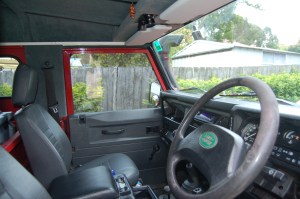
Trimmed out
For those not familiar with this model Defender the only trim it came with was a hood lining in the front seating compartment, other than that it was very ‘rural’. The middle seat has been replaced by a custom made console that also houses a GME 4400 TXUHF Radio, and an across the windscreen shelf roof console inserted along with map reading lights.
The rear was kept very simple; a floor put in across the wheel arches, with an under floor access section fashioned into it at the front. This was done to provide ease of access due to the depth of the rear area and the whole panel has been covered in marine carpet. The roof has also been lined providing some much needed insulation in winter.
A near new set of Cooper ATRs were fitted along with TPMS tyre pressure monitors. We have trialled the TPMS monitors on ‘The Landy’ for some time and are very happy with the product. And it even got a new set of LED taillights.
It has been pleasing to take the vehicle from its previous condition to something that presents well, and is capable of doing any tracks or touring we might throw at it (Anne Beadell 2012?). And I did suggest to Mrs. Landy that it could play ‘wingman’ to our Defender 130 (The Landy) on our trip to the Gulf Savannah that commences in late June. However, whilst casting an eye of approval over the final result, she did quip that whilst it no longer sounds or rides like you’re in a tank she thought it best to leave it at home, and with a wink quickly added it was far too early to expose it to the risk of getting a ‘scratch’…….
You can’t miss it on the road, fire-engine Red so be sure to give it the ‘Landy Wave’ if you’re passing!
‘The Landy’ was packed, the Tvan attached for its first extended trip, and we were ready to head-off on another northern adventure and whilst it seemed like an eternity since our last trip north, in reality it had only been twelve months…
Thomas,Tomo (the walking hat,) gave the grandparents a lasting hug, Janet was seen giving last minute instructions to Milo, the wonder dog, and was heard to mumble something about making more sense out of Milo then she does me, most of the time anyway, and I did a final check to make sure the Tvan was in fact attached… and with the usual puff of smoke The Landy chugged to life, seemingly to the annoyance of a flock of cockatoos’ nestling in the tree opposite who protested in a most vocal way.
The drudgery of the freeway to the north-west, the escape route from suburbia, soon gave way to the foothills of the Blue Mountains and as we settled into the dawning moments of our sojourn we began to reflect on what it must have been like for the early explorers’ as they made their way westward, journeying on foot, horseback, and bullock dray. These days the trek over the mountains is done mostly in the relative comfort of a modern vehicle, although Janet was heard to whisper, under hushed breathe, something about there being little difference between a bullock dray, and The Landy.
Progressing westward my thoughts crossed to the characters that have passed this way in days long gone. Who were they, what took them this way, and did they find what they were looking for? Of course the obvious and famous were at fore of mind, visionaries such as Blaxland, Lawson, and Wentworth, three intrepid and famous explorers who helped open the way west. But what of the others, people who have lived in this rugged land, those who visited fleetingly, those who never left…
With this in mind I vowed to spend time looking for those characters that have enriched the Australian Outback, who have helped define Australia’s identity, and that would mean visiting the social centre of many towns and communities we would pass through, the local pub – all in the name of research, of course…
The first day was spent travelling on the black-top via the towns of Lithgow, Ilford, Mudgee, Dubbo, Narromine and finally to Nyngan. Passing Narromine I recounted it is often referred to as the town of Champions being the birthplace of Olympian Melinda Gainsford-Smith, and cricketer Glenn McGrath. On a previous trip to the Corner Country we stayed at the caravan park located on town’s substantial airfield. The airfield, established after World War 1, is home to the oldest rural aero club in Australia and was used as a training ground for RAAF pilots in World War 2. Over the years it has counted Charles Kingsford-Smith, Charles Ulm, Chuck Yeager, Nancy Bird Walton, and Barry O’Malley as visiting aviators.
In 1835, explorer, Major Mitchell was the first European to document a journey along the Bogan River, describing the area around Nyngan as ‘a long pond, with many birds, ducks, and brolgas’. The local aboriginal word ‘Nyngan’ is said to mean ‘long pond of water’. In 1882 the town’s site was surveyed, and buildings from an earlier settlement at Canonba 30 kilometres away were moved to the present Nyngan Township.
Many will remember the notorious floods in 1990 that focused the attention of Australians’ on this rural township. Despite the laying of 260,000 sandbags around the town, it was to no avail and the entire population was evacuated to safety by army helicopters. And one of the helicopters used in the evacuation is usually located in the town’s main street, standing as a monument to the work it performed in helping this community, but for reasons unknown it wasn’t there on this occasion. Tomo has had countless photographs taken with it, and we had hoped to get another for the collection before heading to the local RSL to dine and drink a toast to our first night on tour.
Early morning Nyngan
Henry Lawson wrote (The Paroo River 1893), “Tis said the land out west is grand! I do not care who says it”. And with that resonating in my head we set off towards the Paroo River area and a camp near Hungerford in the Currawinya National Park.
Heading north along the straight road to Bourke we passed the small township of Byrock, a favourite place of ours, and we stopped for morning tea, but I’ll write more on Byrock later as we will be returning this way. In fact, we had planned to head further west, before turning northwards, taking in Tilpa, the Corner Country and Innamincka, but we decided against it due to the flooding in the region over the past couple of months. Mind you, we needed little encouragement to visit Hungerford and Currawinya.
Bourke has a very colourful history, and was once a major river port, and much of this is still visible today. You only need to trace the Darling River to see what a major feat it must have been for the river boats to ply their trade along its course. Henry Lawson once wrote, “If you know Bourke, you know Australia’’ and whilst we didn’t spend a lot of time here on this occasion it is easy to see what he was saying.
Of course, we’ve always said that when you cross the Darling River you’re in the outback and with that in mind we cheered in the outback as we crossed the river at North Bourke. Tomo had bought a new hat before leaving Sydney, so he christened it into the outback here! Along the dusty road we gave up counting the emus’ after a while, they were prolific!
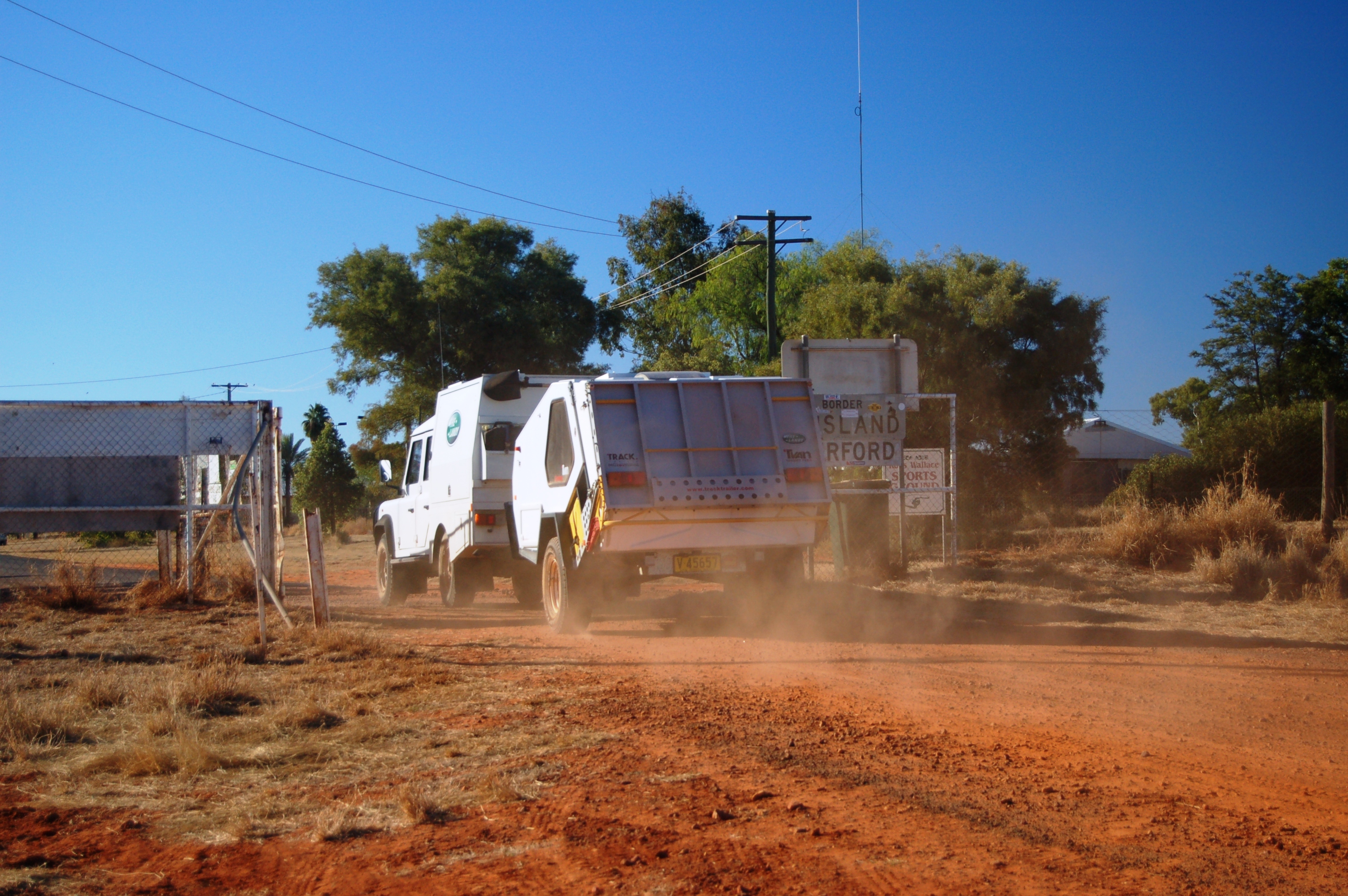
Crossing the border at Hungerford
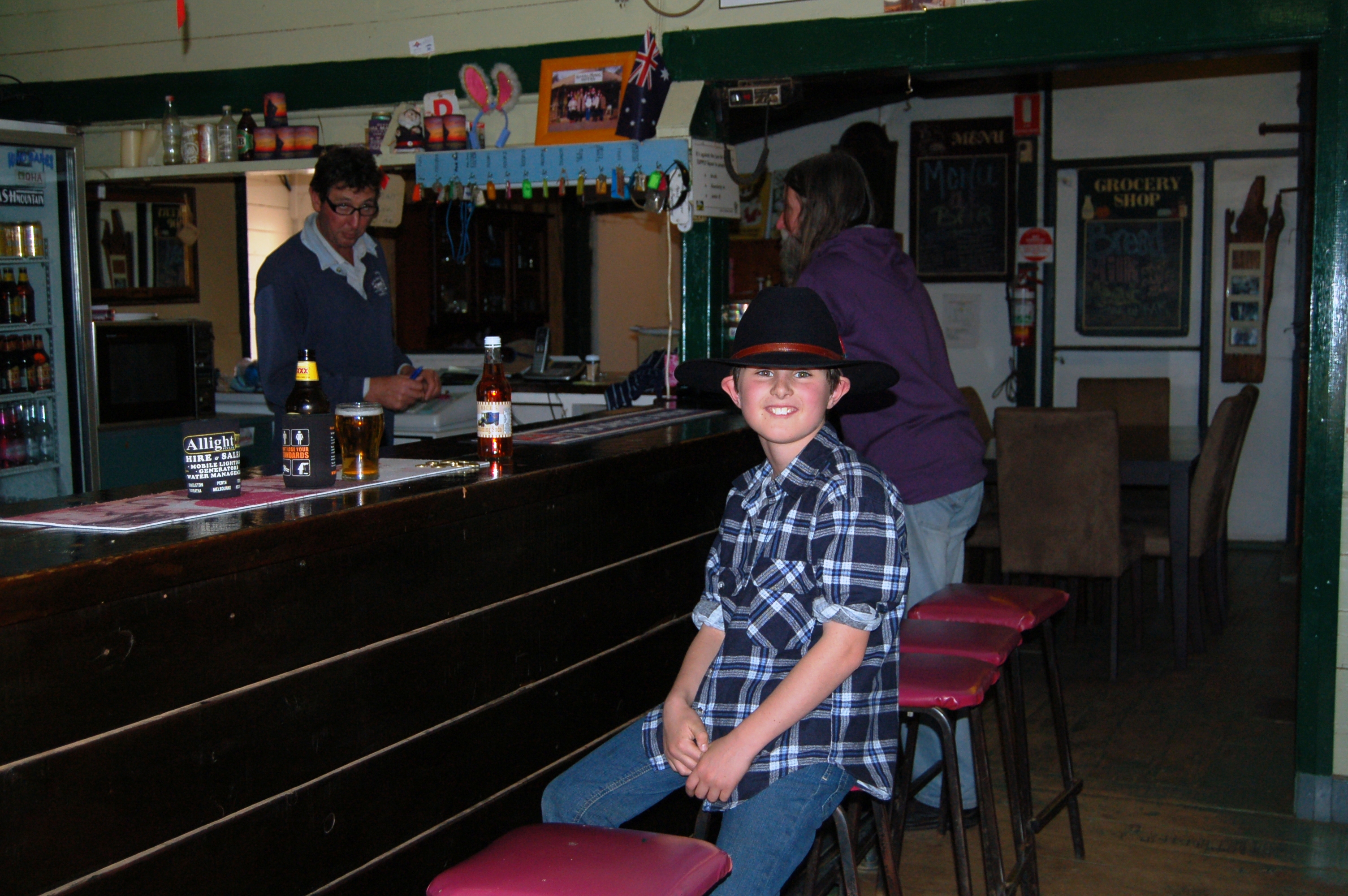
Pulling up at the dog-proof fence at Hungerford, Tomo jumped out of The Landy and did the honour of waving us through before running the last 100 metres or so towards the pub, The Royal Mail which was once a Cobb & Co staging post. Now the grandmothers may not approve, but Tomo has been a frequent visitor, with his parents of course, and we wasted little time in quenching our thirst after the long drive from Nyngan.
Even Henry Lawson has enjoyed a drink at the ‘Royal’ although his description of the township in ‘While the Billy Boils’ upon his arrival was far less enthusiastic then ours. And we were pleased to meet up with the publicans Mock and Sherrie, who had been here on previous occasions and it was Sherrie who had placed a photo of Tomo, the walking hat on the wall of the pub after a previous visit.
Tomo in the Royal Mail
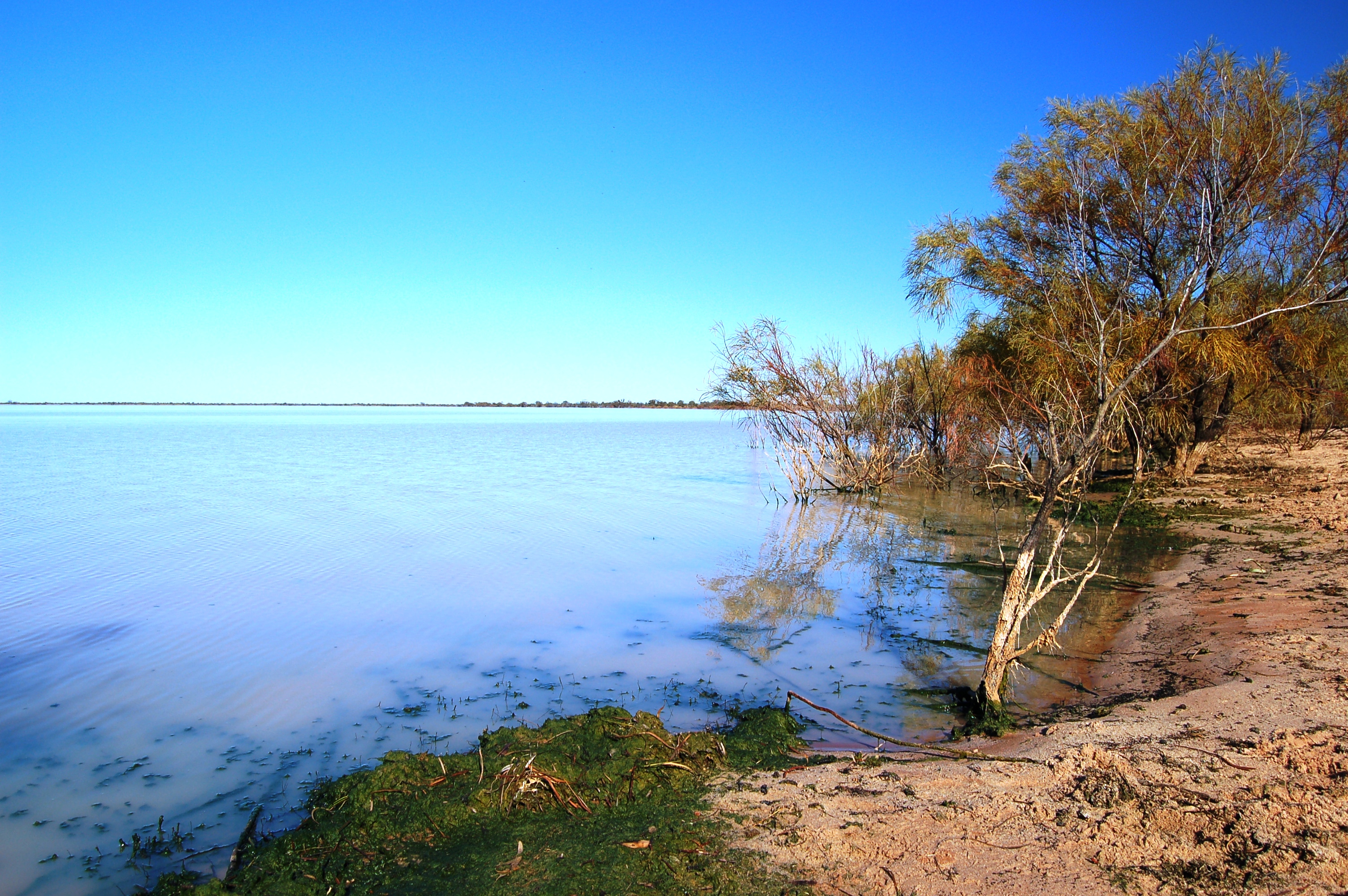
We planned to spend a couple of nights in Currawinya, and fortunately we were be able to visit the lakes, Lake Numalla, and Lake Wyara as the roads had just been opened after extensive flooding. Our first night was spent around the campfire eating one of Janet’s famous dampers and although it wasn’t a particularly cold night it was very pleasant sitting around the fire. We did throw in the yabby traps, but to little avail.
The dawn broke through the camper trailer signaling the start of a fine day, and one in which we would visit the lakes. After breakfast I headed off on the bike and under peddle power made my way towards the lakes, albeit in a round-a-bout way. Seemingly I did not take the correct turn and ended up close to the town before realising my error, and this added about 20 kilometres to my ride.
Janet and Tomo became a little worried when they didn’t pass me in The Landy as they made their way, and came back to look for me. I was very thankful for that as I was running out of water and needed something to eat, but finally I made it to Lake Numalla after riding about 70 kilometres in total. And I felt every single corrugation and made a note to myself to always run correct tyre pressures in The Landy to avoid making more corrugations!
Lake Numeral
After a couple of nights in Currawinya we bid Hungerford farewell until next time, and headed towards Thargomindah and the night’s destination a camp by the waterhole at Noccundra
It has been a while since we had passed this way and it was nice to reacquaint ourselves with the region. Thargomindah was the site of Australia’s first hydro-electricity system, driven by artesian water pressure and we stopped by to show Tomo as he was much younger on our last visit.
After spending some time in town we headed west towards Noccundra which is about 140 kilometres from Thargomindah. The last time we camped here it was on a ‘boys’ trip, two adults, and three boys under seven years old, and we experienced a very heavy dust storm. And previous to that, Janet and I flew here in our Piper Arrow aircraft, Foxtrot-Tango-Hotel, following a flying trip to the Gulf, landing right behind the pub. And I must say the airstrip is in much better condition today than it was back then!
The pub is built on Nockatunga Station and the town was established in 1882. It even has a link to the explorer Leichardt, with members of Andrew Hume’s expedition to find survivor’s from Leichardt’s 1848 expedition perishing from thirst to the west of Noccundra. We camped by the water-hole and enjoyed a warm shower and visit to the pub, before settling in for the night, with half the world’s population of field mice. Outback Australia is experiencing a plague of them presently and I awoke to one ‘snuggling’ up to me at around 1.30am in the morning. Janet was quite controlled and after about 10 minutes of frantic activity it jumped into her shoe making it easy to man handle it back outside.
We had a rather relaxed start to the next day as it wasn’t a long trip to Innamincka and a camp alongside the Cooper Creek. The road has changed significantly since our last visit and contains a lot of blacktop, a result of the substantial oil and gas development in the region.
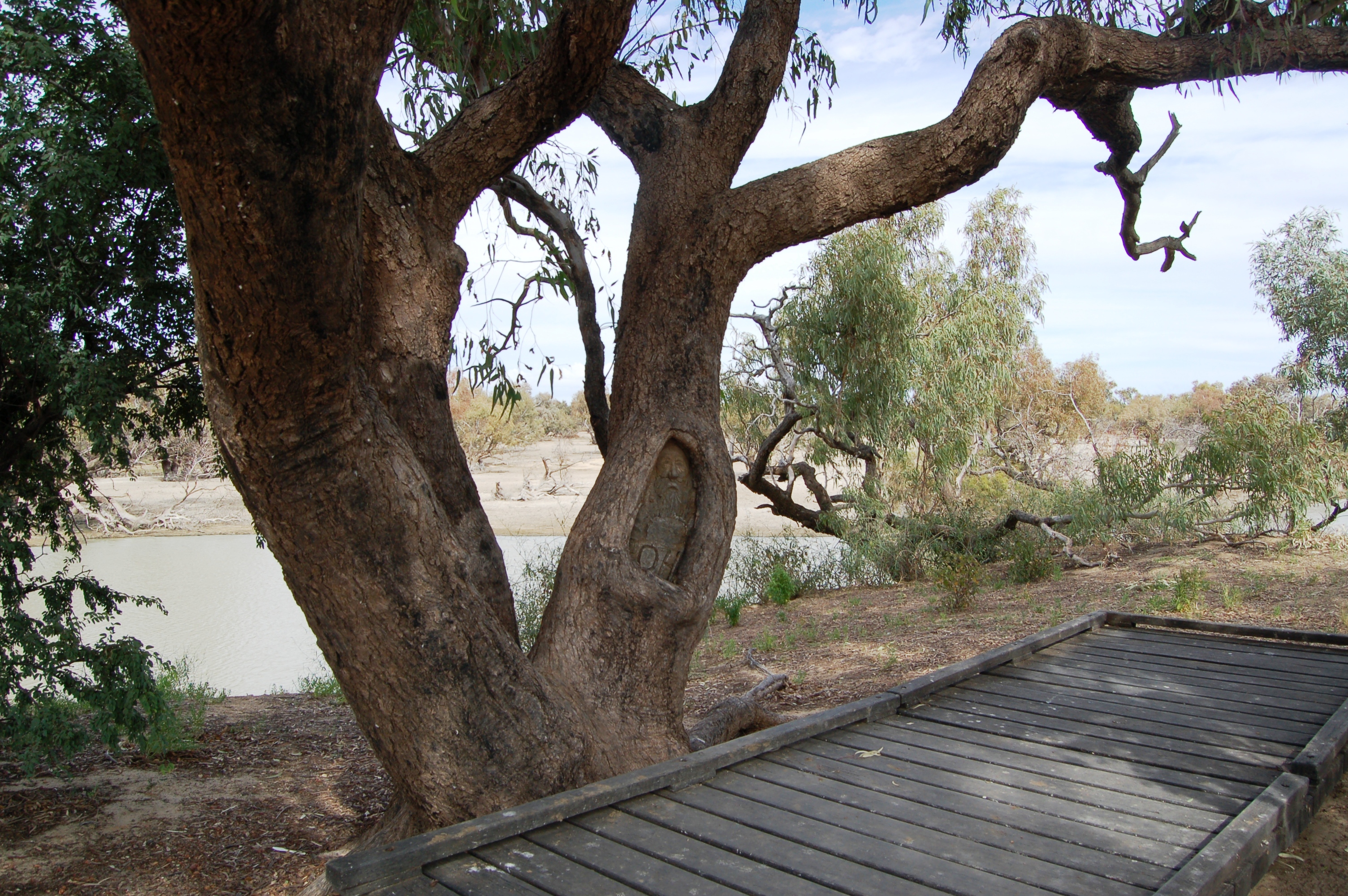
We stopped at the Dig Tree situated on Nappa Merrie Station in far-western Queensland on our way and had lunch. Of course the story of Burke and Wills is well known, and much text has been written over the years, some favourable, and other less so, but it is hard to not be in awe of what they achieved at the time.
The Dig Tree
The name Innamincka will be very familiar with outback travellers as today the township, which has grown in size since our last visit, is reliant on the tourist trade that is ushered in by the cooler months of winter. It might have almost been inevitable that the Innamincka region played a substantial role in many of the early explorations of the interior. The fact that it is on the way from east and south to the unknown north and northwest, with a virtually permanent water source, guaranteed the arrival of a number of expeditions to Inamincka. Charles Sturt became the first European to set eyes on the wetlands in 1844-45, and it was only fifteen years later that Burke and Wills died here. A fact that is hard to understand given the supply of water, and presumably food that would have been available to them.
We camped along the Cooper Creek just out of town, and we managed to put on a roast lamb dinner in the camp oven, washed down by a couple of beers, and in the company of some other travellers.
Apart from tourism, the oil and gas industry is playing a significant role in the recent development of this region, and this is quite evident on the drive north from Innamincka. We made an early start the next morning as we decided to head to Birdsville in one day to enable us to stay a couple of nights in the town.
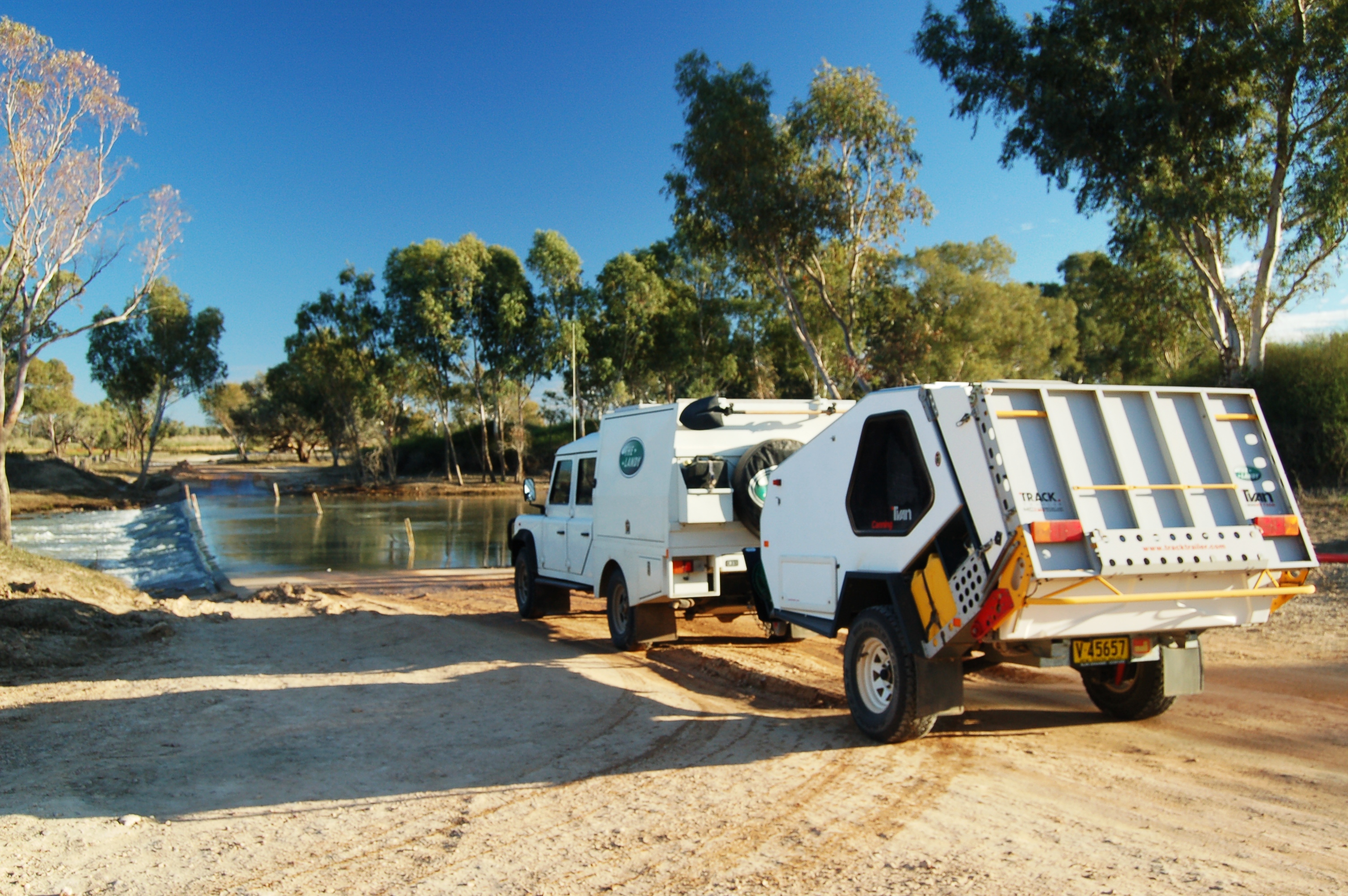
The Landy crossed the flooded causeway and headed northwards, but not before Janet and Tomo managed to get in a coffee and hot chocolate at the pub while The Landy was being fuelled. I must say I was a touch disappointed to see the pub going a little up market and in the process losing some of its rustic appeal, a product of changing times and the need to cater to a new age of tourism, I guess…
The Landy crosses the causeway at Innamincka
We had to turn off the Cordillo Downs road and head towards the border crossing at Arrabury as the northern section of the road was closed due to flooding which was of little concern for us as we had not been along the northern section of the Arrabury road previously and were looking forward to it. We passed Haddon’s Corner, the intersection of the Queensland and South Australian State border and truly, this is big sky country.
Big Sky Country
We encountered a slow trip along the Birdsville Development road into Birdsville from Betoota as it had become quite muddy due to a thunder storm depositing a significant amount of water on it the previous day. Needless to say The Landy was covered in the red stuff when we arrived at our camp alongside the Diamantina River.
And if it is characters you are looking for in Birdsville then there is only one place to head, The Birdsville Pub. In fact, speaking of characters, Tomo, the walking hat, found his first love here on a visit in 2003 at the tender age of three, oddly enough the daughter of the local policeman. And cross-my heart Tomo, this is the last time I’ll recount the story, well at least on this trip… we enjoyed a great meal and a number of beers before retiring for a very restful sleep.
The sun doesn’t appear over the eastern horizon until after 7 o’clock in far Western-Queensland during the winter months, and what a blessing, and change, to our normal routine at home. So it was another lazy start to the day before Tomo stirred us into getting up to greet the day, breakfast, and a walk around town.
And still speaking of characters, a visit to Birdsville would not be complete without stopping by the Working Museum which is owned and operated by John and Judy Menzies. The couple have collected a vast amount of gadgetry and items relating to life in the outback and brought it to life in a comprehensive and interesting way. John’s guided tour is well worth taking just to see him talk with such great passion of the items he has collected and restored.
Unfortunately, John is apparently closing the museum in ‘about’ three months time as he and Judy are ready to retire to Isisford and they have been unable to find a buyer to take over… this will be a great loss to Birdsville and everyone who has met John will attest to that.
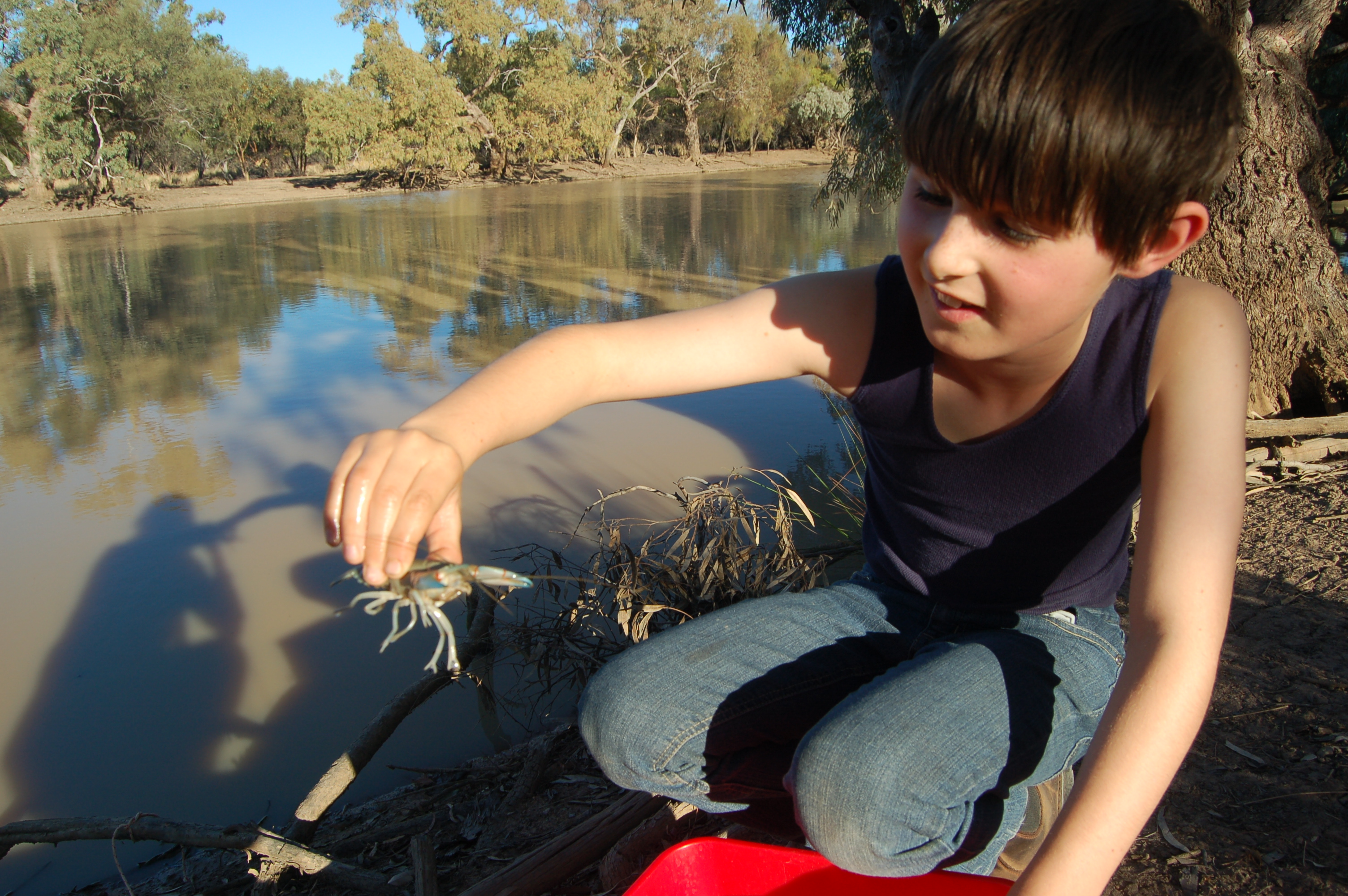
Before our walk around town Tomo and I set a couple of yabby traps down on the Diamantina River earlier, and typically, the yabby traps were empty apart from one lone yabby that was spared the pot on the basis it would be little more than an appetiser for one of us.
Tomo the yabby hunter
After dinner by the Diamantina River we headed to the pub for a couple of beers with the gathering locals and fly-in aviators. Tomo had made himself acquainted with a number of the commercial pilots who were either doing tours out of Birdsville, or flying in tourists. As we sat at the bar I gave up counting the number of pilots who walked past and said g’day Tomo, seemingly he knew them all, and had in fact managed to sit in the cockpit of about half of the planes parked on the tarmac.
Another character we were able to catch up with was Henry, a local boy who Tomo met on the infamous night that he chased the policeman’s daughter around the front bar (or was it she who did the chasing?). Henry was playing pool with his mother, Fiona, a number of locals, and the aviation fraternity. So we joined in, and Tomo played his first game of pool.
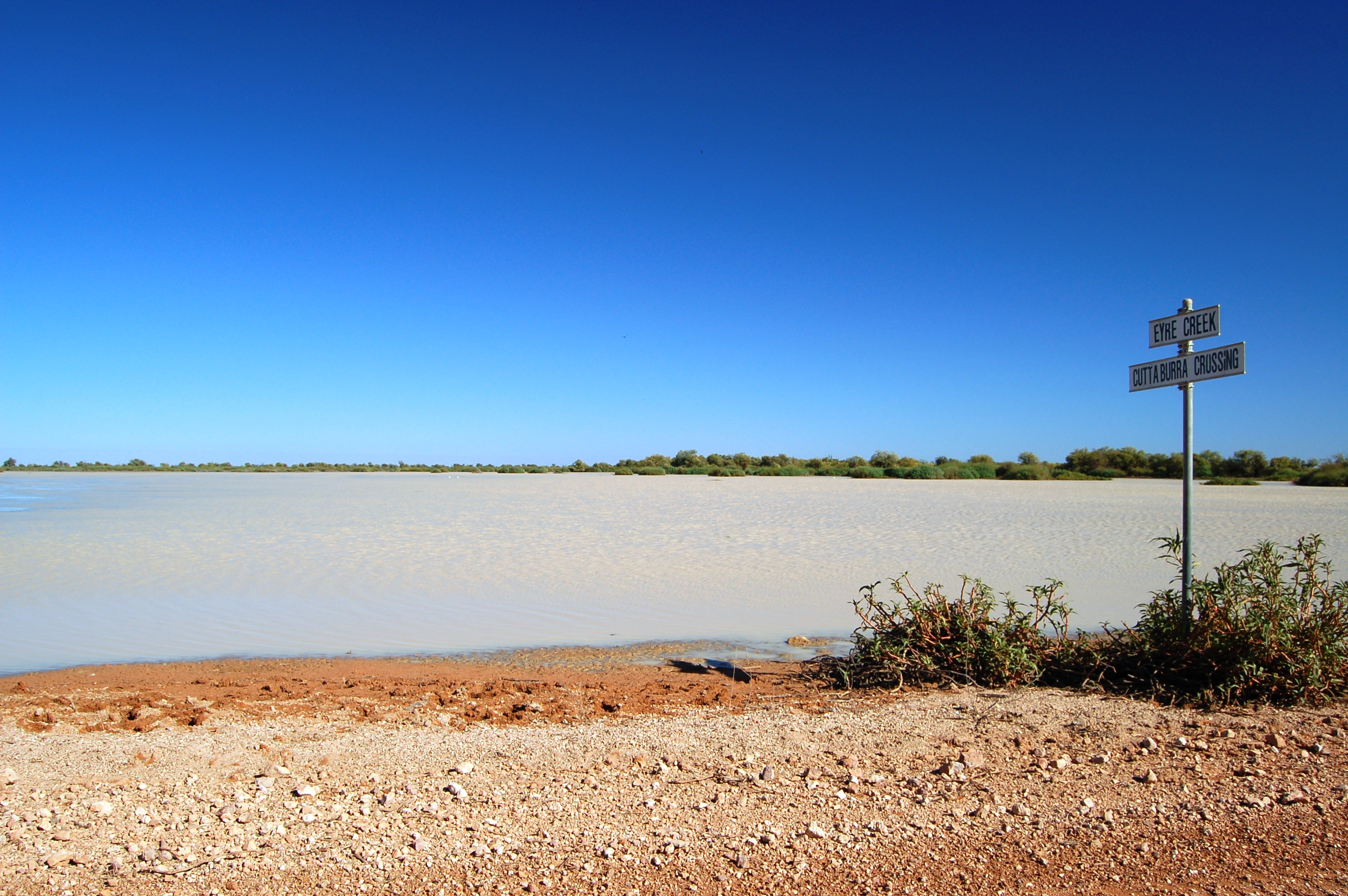
Reluctantly, we left Birdsville after a couple of fun days to continue our northward journey and today we were heading to Boulia. We had been looking forward to travelling north along the Bedourie road as we hadn’t been that way previously, and a highlight was crossing the Eyre Creek, which was teeming with bird-life and had not long been re-opened after flooding in the area.
Cuttaburra Crossing Eyre Creek,
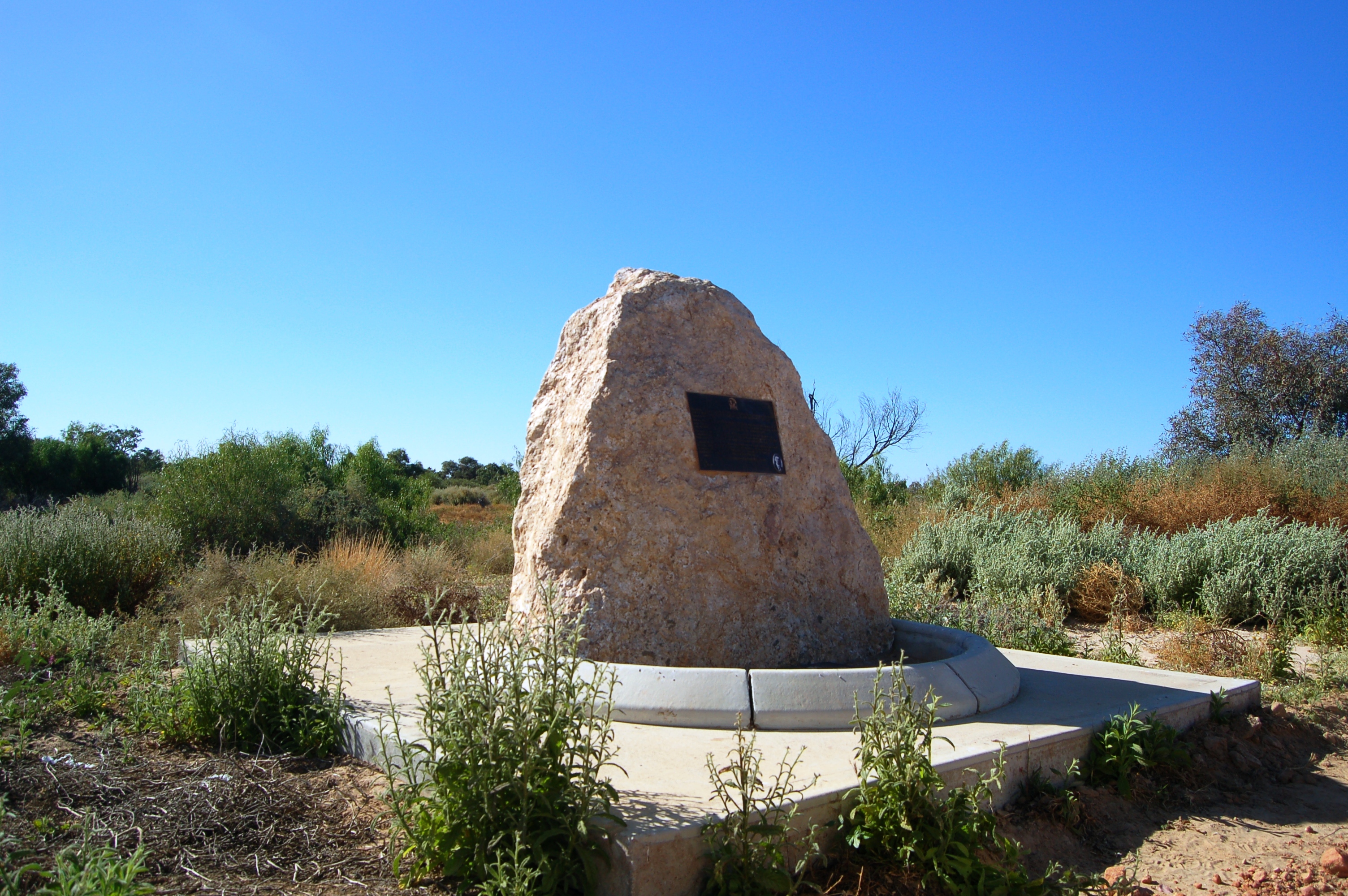
Travelling north we came across a memorial to WJS (Will) Hutchison who died nearby from drowning in 1920. The memorial was placed by the Coober Pedy historical society only a couple of years ago. Five years prior to his tragic drowning, and as a lad of 14, Will, along with his father discovered the first opal near Carryingallama Creek in SouthAustralia, it became known as Stuart’s Opal Range, later to be renamed Coober Pedy. Today, Will is recognised as the founder of Coober Pedy!
Will Hutchison Memorial
We had always heard Bedourie referred to in glowing terms from other travellers, but somehow we had by-passed the town previously. It is now the Diamantina Shire’s administrative centre and, not surprisingly, has a ‘Royal Hotel’. The Royal was built in the 1880s and apparently is little changed from its original state
Bedourie also claims as its own the famous Bedourie Camp Oven which is a metal dish and lid and was fashioned for use on Bedourie Cattle Station after the stockman found that the heavy cast iron ovens were too heavy and often broke when falling off pack-horses. Bedourie was playing host to a rodeo and gymkhana that weekend and as tempting as it was to stay we pressed on towards Boulia.
One thing that struck us on this trip is just how much greener the country is compared to last year, and the abundance of Mitchell Grass on the open plains. And this was very evident on the road north to Boulia. Banjo Paterson once wrote… “He sees the vision splendid of the sunlit plains extended. And at night the wondrous glory of the everlasting stars…” It isn’t hard to see what he was writing about.
Before arriving at Boulia we crossed the Georgina River where there was a plaque commemorating Eddie ‘Jolly’ Miller who has been billed as the last of the outback mailmen. And whilst I think a few have claimed this title it was interesting to read of one account of his trip from Boulia to Glengyle Station, located south of Bedourie. Eddie passed away in Redcliffe Queensland in 1991, coincidently my birthplace.
Our stop in Boulia was in the camp area alongside the Burke River. A very pleasant spot were Janet cooked up Tomo’s favourite dinner, spaghettibolognaise, while the boys’ took a ride around town on the bikes. It was a pleasant night spent in the company of a couple who had been following us north since Innamincka.
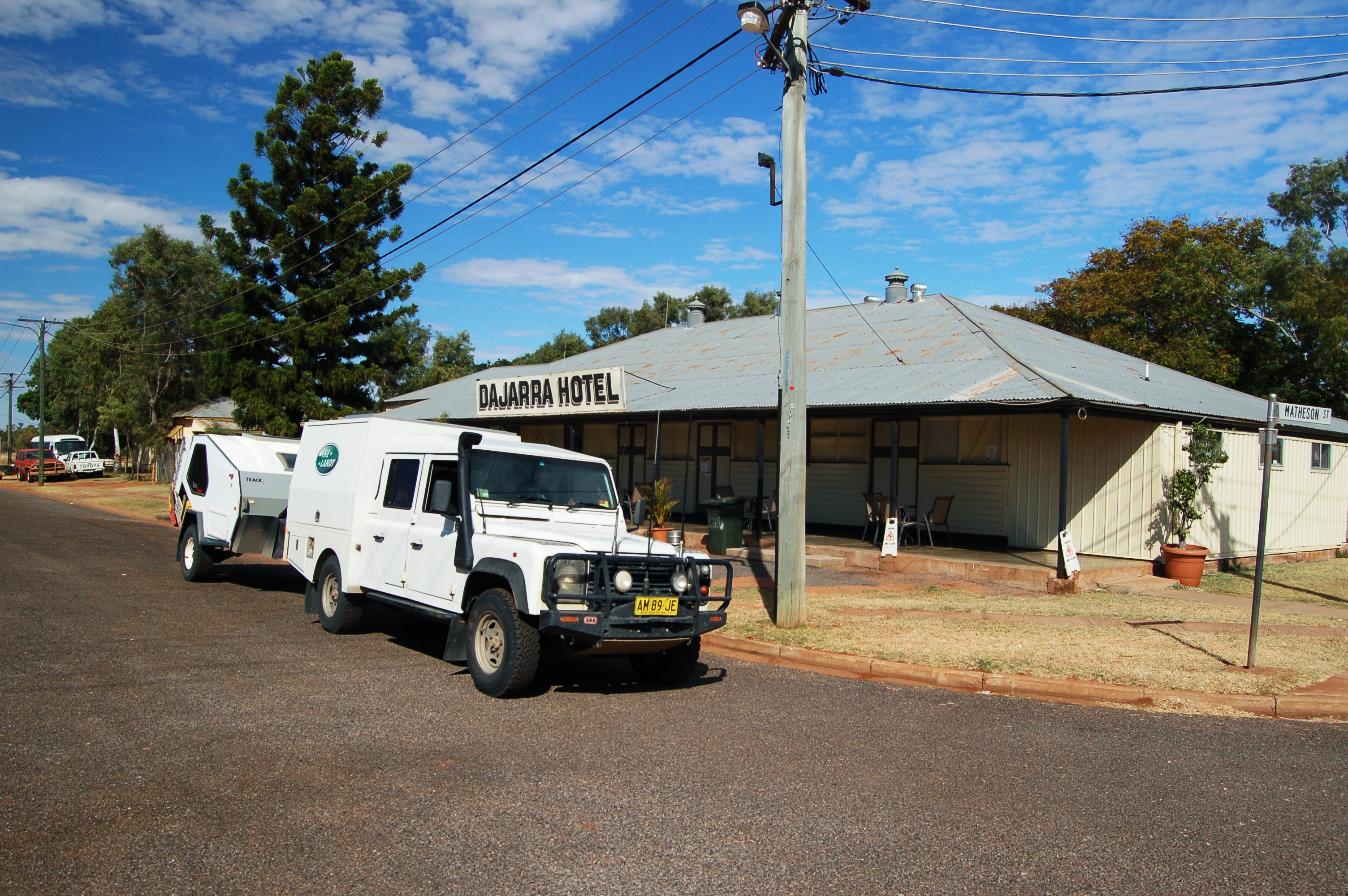
Last year on our exodus north we stopped at Dajarra, on a very cold day, and we thought this trip would be a good opportunity to spend a night there and explore it further. Its claim to fame is it was once the largest trucking depot in the world and was a hub for cattle trains from far and wide. However, it wasn’t to be on this trip either, as we had decided to head to Camooweal via Mt Isa.
Dajarra
Dajarra has a strong aboriginal population and native languages are taught in the local school and I suspect there are some gems to be found in this town, if you are able to spend the time to scratch beneath its surface.
We were edging closer to the Gulf Country and Camooweal, a town located on the far western, Queensland-Northern Territory border beckoned. From Mt Isa we travelled along the highway that was built in the Second World War, although we had considered coming north via Urandangi, a route we had taken previously, however the roadconditions were uncertain.
The explorer William Landsborough was apparently the first European to pass through the region, in search of Burke and Wills around 1862, and his glowing report of the region led to pastoralists establishing themselves in the area, and a town soon followed in 1884. Just to the south of the town is the Camooweal National park which protects a number of caves that date back to the Cambrian Period, over 500 million years ago!
After a couple of beers at the pub, a good meal, and restful sleep we awoke to a perfect day, one of great anticipation for all of us, especially Tomo, who had been looking forward to another visit to Lawn Hill National Park, and Adel’s Grove.
The area has been a favourite for Janet and me since we first flew Foxtrot-Tango-Hotel into Adel’s Grove from Burketown in 1997 and the drive north was through familiar country having driven it on two previous occasions, but you could never become blasé with the beautiful countryside, and before arriving at Adel’s Grove we took the time to stop for a swim at the O’Shannesy River.
O’Shannesy River
Boodjamulla, as it is known by the Traditional Owners, the Waanyi Aboriginal People, or Lawn Hill as it is more commonly called is situated in the remote north-west region of Queensland and takes in Lawn Hill Gorge and includes the World Heritage listed Riversleigh Fossil area. The gorge, nestled in the Constance Range, is fed by a number of freshwater springs, abounds in wildlife and vegetation and could only be described as an oasis in a scorched and barren land.
Adel’s Grove is situated adjacent to the park’s boundary and was originally gazetted in 1904 as a Miners Homestead Lease according to the information provided. In 1920 Albert de Lestang took up the property as an experimental Botanical Garden, and in fact our campsite was situated in the old Botanical Garden. Albert supplied many Botanical Gardens around the world with the seeds of the over 1,000 species of plants he produced in his nursery. Tragically, in the early 1950s fire destroyed the grove, Albert’s dwelling, and all his research papers.
Tomo and friends at Adels Grove
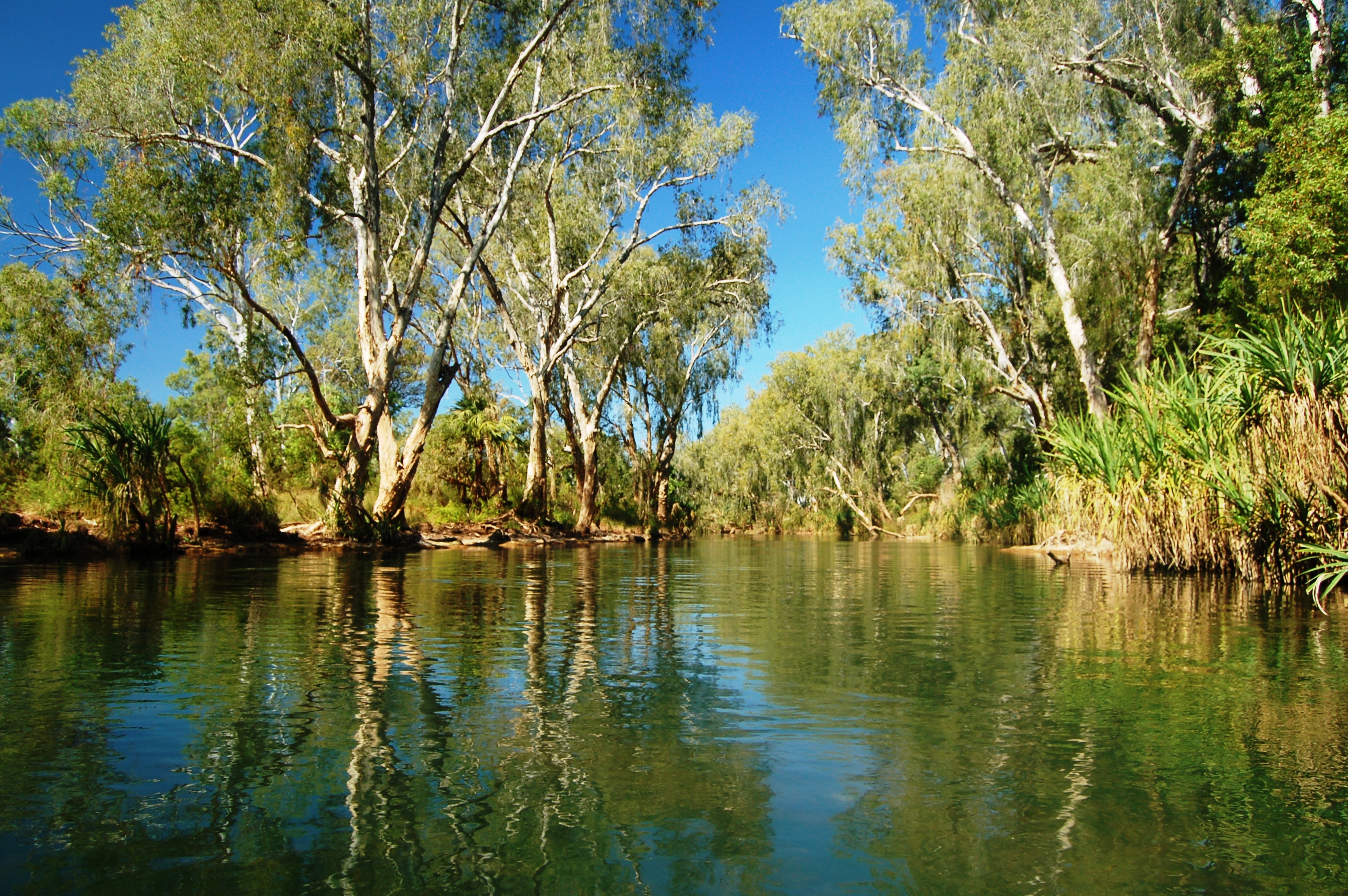
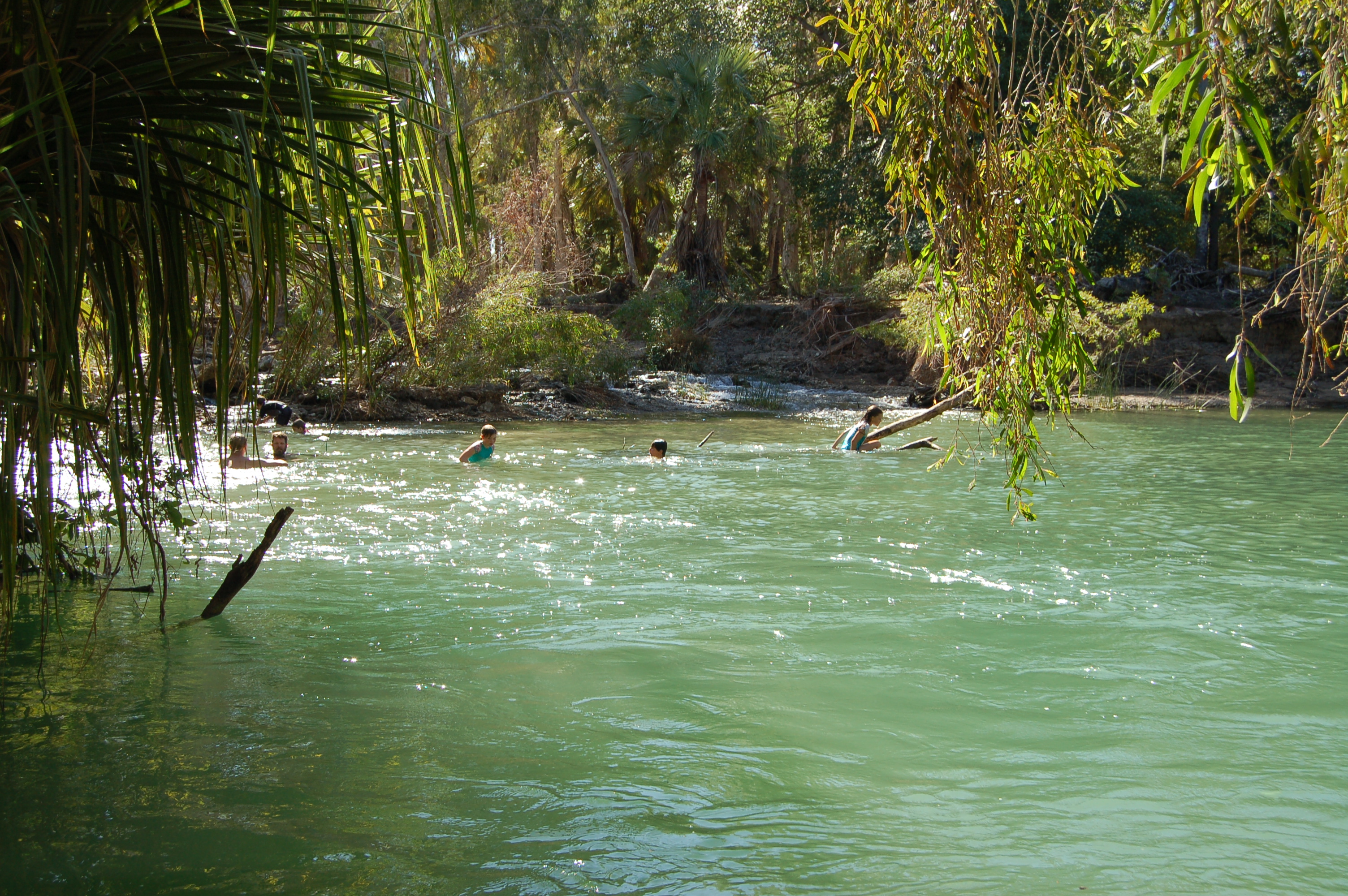
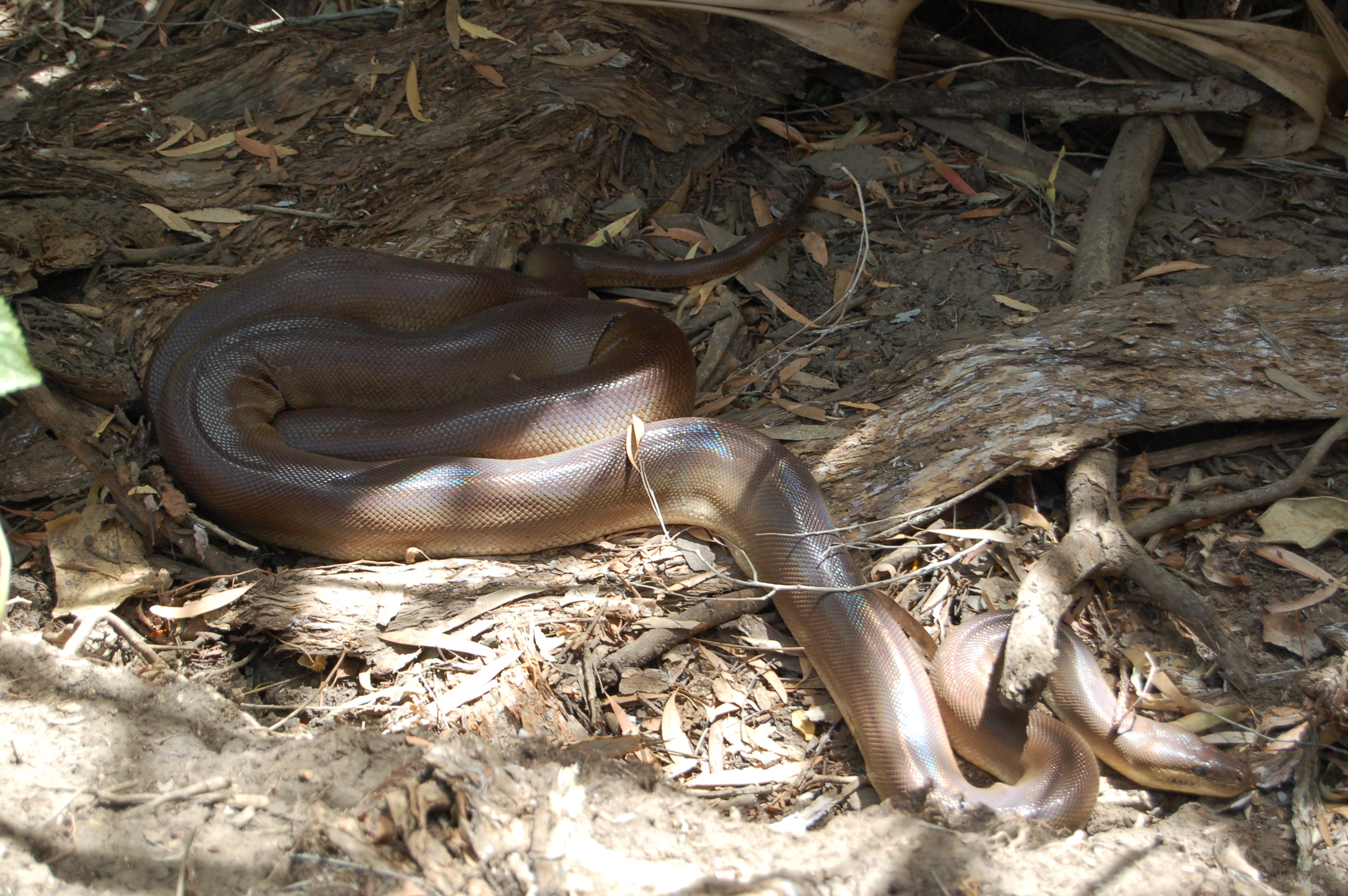
And after a couple of days of swimming, (and swimming), bike rides, walks, and camp oven roasts, we were not disappointed we had made the trip north once again. The weather was perfect, a lovely campsite just alongside Lawn Hill Creek. Our nearest neighbour was only about 5 metres away from us, but he (or she) didn’t make too much noise, although we might have actually felt a little easier if it did – it was in fact a four metre long olive python. It seemed more than content to simply laze about in the sun, occasionally moving towards the water; I knew just how it felt!
Olive Python
After a couple of days lazing about and soaking up the beauty of the area I rode down to Lawn Hill Gorge on the bike, Janet and Tomo followed in The Landy, and we took the opportunity to do a walk with a swim at nearby Indarra Falls. Back at camp, as the sun settled towards the distant horizon, the sounds of laughter and banter could be heard as visitors toasted another day in the Outback.
I had lost count of how many days we had been at Lawn Hill but found myself sitting around the camp fire, mid-morning, eating one of Janet’s delicious scones that she had just freshly baked in the camp oven…
Camp oven scones
Our visit to Lawn Hill was marked by an important event on the Rugby League calendar, one when State revelries come to the fore with the culmination of the State of Origin series, and for a change the final game was to be the decider. We joined many other travellers huddled into the reception and bar area of Adel’s Grove to watch the game on a big screen. And the Queenslanders were not to be disappointed with a convincing win over the Blues! Needless to say we toasted the victory with a few ales before retiring for the night.
Baz on his way to Riversleigh Fossil Site
And given I had toasted the previous night’s victory to the Maroon’s with a number of ales I thought it best to work it off with a bike ride to the Riversleigh Fossil site which is located about 50 kilometres from Adel’s Grove. Yes, more corrugations, and I must say it always seems as though you are into a headwind when under pedal power. None-the-less it was a great ride rewarded with glimpses of various birds and wildlife.
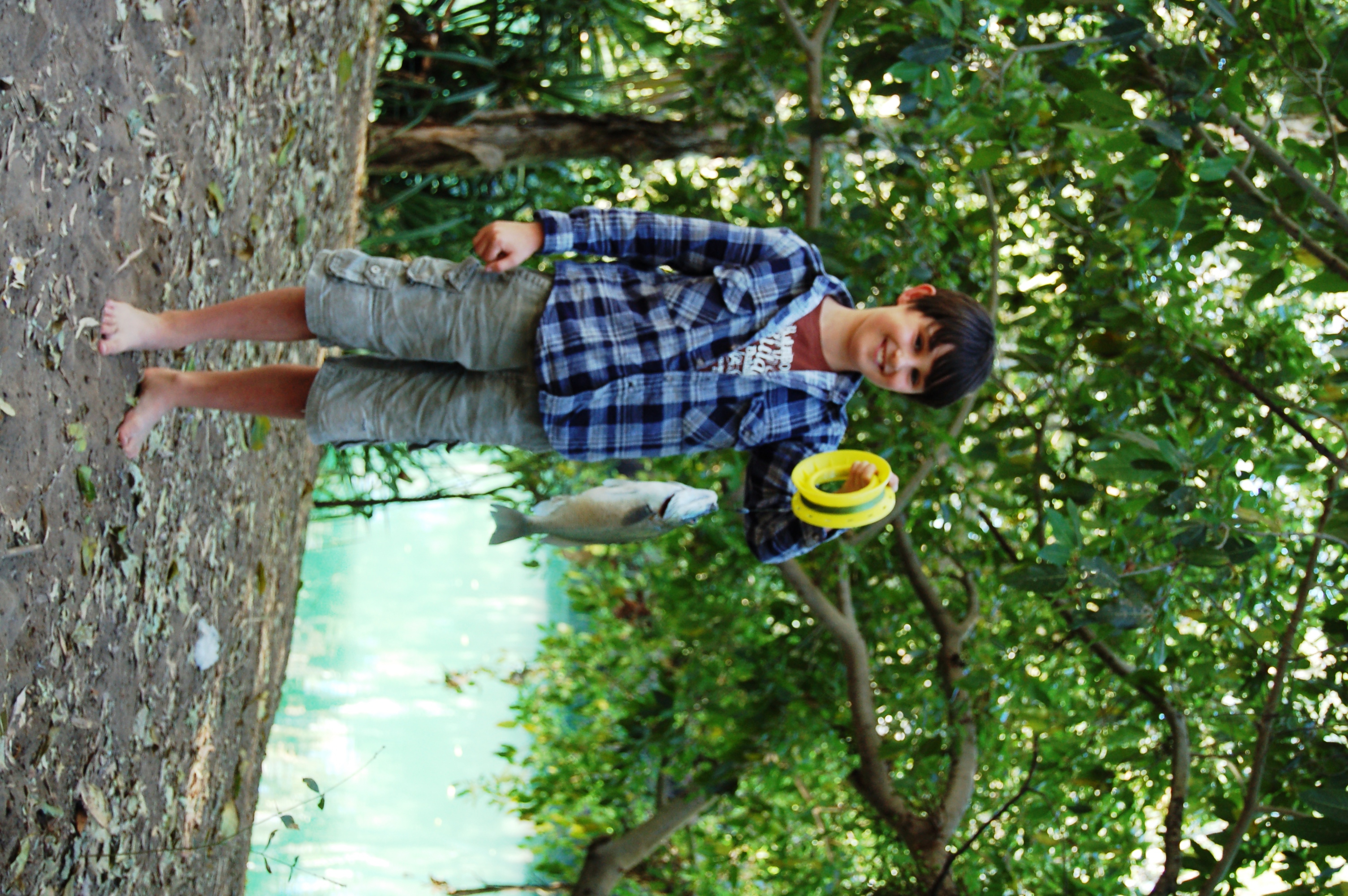
Janet and Tomo followed behind in The Landy and I was greeted with the news that Tomo had ‘hauled’ in an enormous Sooty Grunter, his first catch ever. The catch was heralded by much noise heard all over the camp, and proud Mum was there with the camera to record the event. After loading the bike into The Landy we headed to the O’Shannesy River where we wiled away the time swimming, fishing, and trying to catch those elusive yabbys’.
Tomo & his catch
Our last full day at Adel’s Grove started with a great treat for breakfast, the fish that Tomo caught the previous day was dispatched to the frying pan over hot coals and devoured by Janet and myself. Tomo passed on the opportunity declaring he would sooner catch them rather than eat them.
And that set the tone for the day as the rest of it was spent resting, swimming, and eating Janet’s scones that she expertly prepared in the camp oven. Surely this must be paradise!After six wonderful days at Adel’s Grove we reluctantly packed The Landy and said good-bye to some new friends and headed towards The Curry as I have often heard Cloncurry referred to, stopping for a while at Gregory Downsalong-the-way.
Gregory Downsis a small township and the pub is an original coach-house, a great place to stop and enjoy the atmosphere of the Gulf Savannah! On last year’s trip to the area Janet bought a cookbook produced by the CWA at Gregory Downswhich contained a wealth of information on the early days of settlement in this area. I recommend it to anyone with an interest in the life of early settlers in Outback Australia.
After exploring Gregory Downs we settled into the drive to The Curry. And speaking of explorers’ Burke and Wills passed this way on their trip to the Gulf of Carpentaria. Burke named the river, Cloncurry, after his cousin, the Lady Elizabeth Cloncurry. Ernst Henry is credited as the founder of the town, he came looking for grazing land, but found copper instead, and the town was established in 1876. The town has many pubs, and no doubt they have seen their fair share of characters over the years…
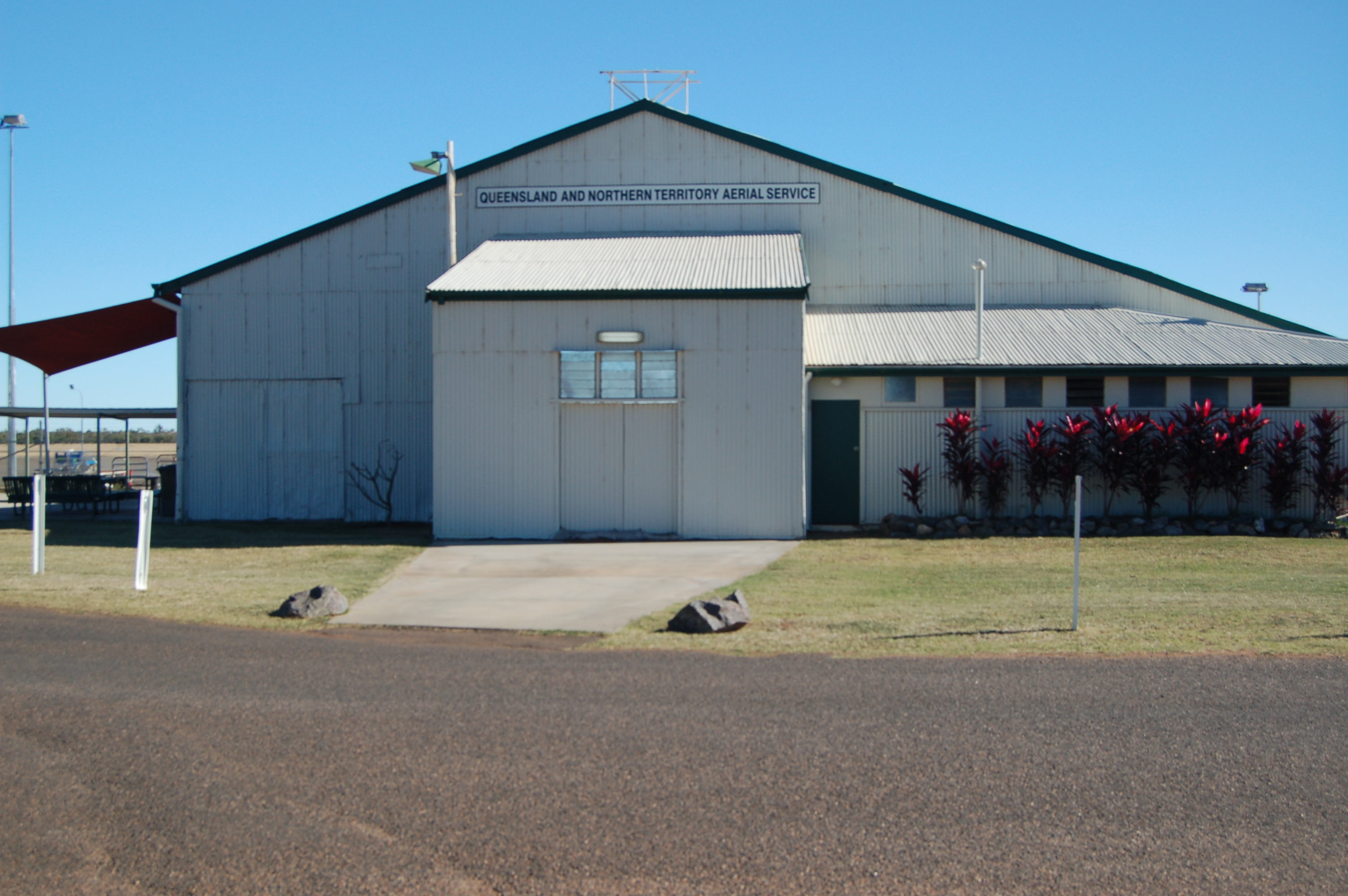
Qantas flew its first paying passenger, Alexander Kennedy, from Longreach to Cloncurry on November 23, 1922, and the original hangar is still standing with Queensland and Northern Territory Aerial Service emblazoned on the front. The town also boasts a museum to commemorate John Flynn of the Outback.
Qantas Hangar Cloncurry
We explored the town after a good night’s sleep and before heading towards the Blue Heeler pub at Kynuna for an overnight stop.
There are many Australians who have made significant contributions to society and a common theme amongst their ranks is they are usually people who never sought accolades for what they did. Often is the case it is years after their passing that the significance of their achievements are fully recognised. We were able to learn more about two such Australians on this trip, John Flynn, whose drive was instrumental in bringing medical services to ‘those of the outback’ and one of my favourite Australians, Banjo Paterson.
Cloncurry, the birthplace of what is today known as the Royal Flying Doctor Service, houses a museum that pays tribute to the man, his drive, and those who made the Royal Flying Doctor Service possible.
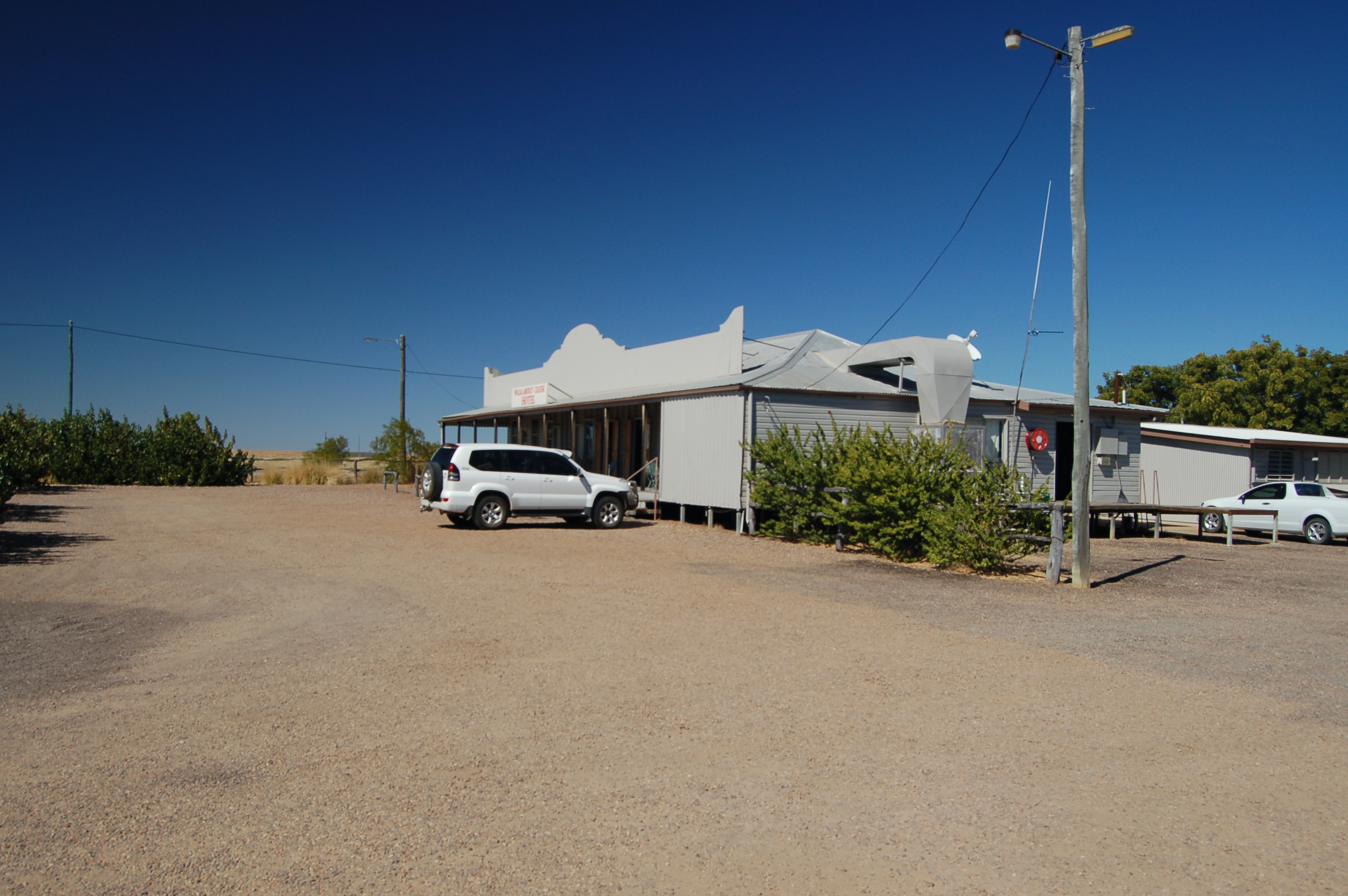
Walk-a-bout Creek Hotel
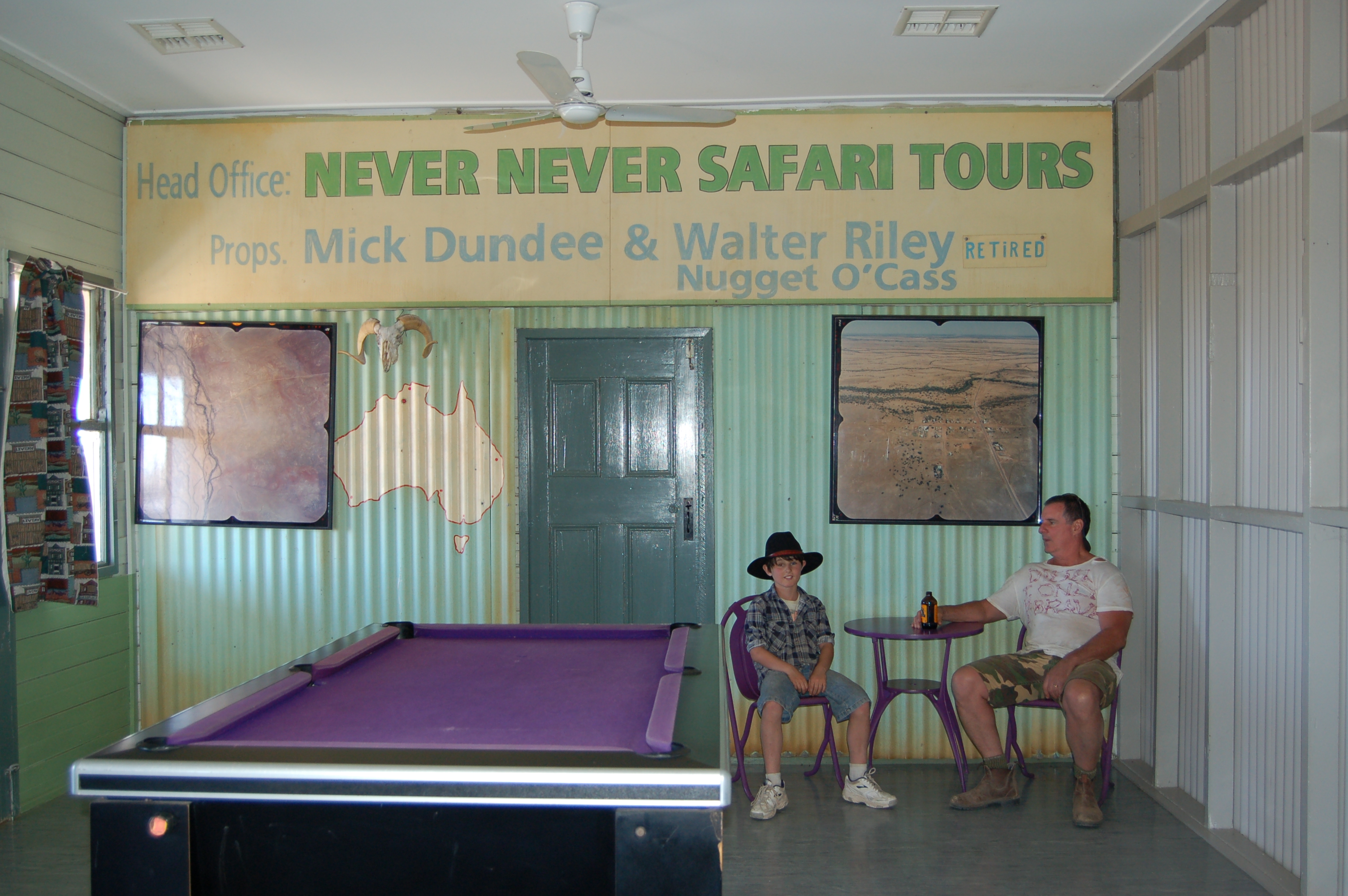
Travelling south we stopped in at the Walk-About-Creek Hotel at McKinlay for lunch. Crocodile Dundee fans will recall Mick Dundee and his mates, among them Donk, whose lives were centered on the pub. And we had a good chuckle as we walked through the pub picturing various scenes from the movie, reminded by the many photos on the walls.
Walkabout Creek Hotel
But Janet’s memories went back past the movie fame to when as a young girl (she’s still young), and along with sister Leah stayed on Wolseley Downs, a property not far from town. Apparently a book could be written on that period of their lives; needless to say it brought back many memories for her…
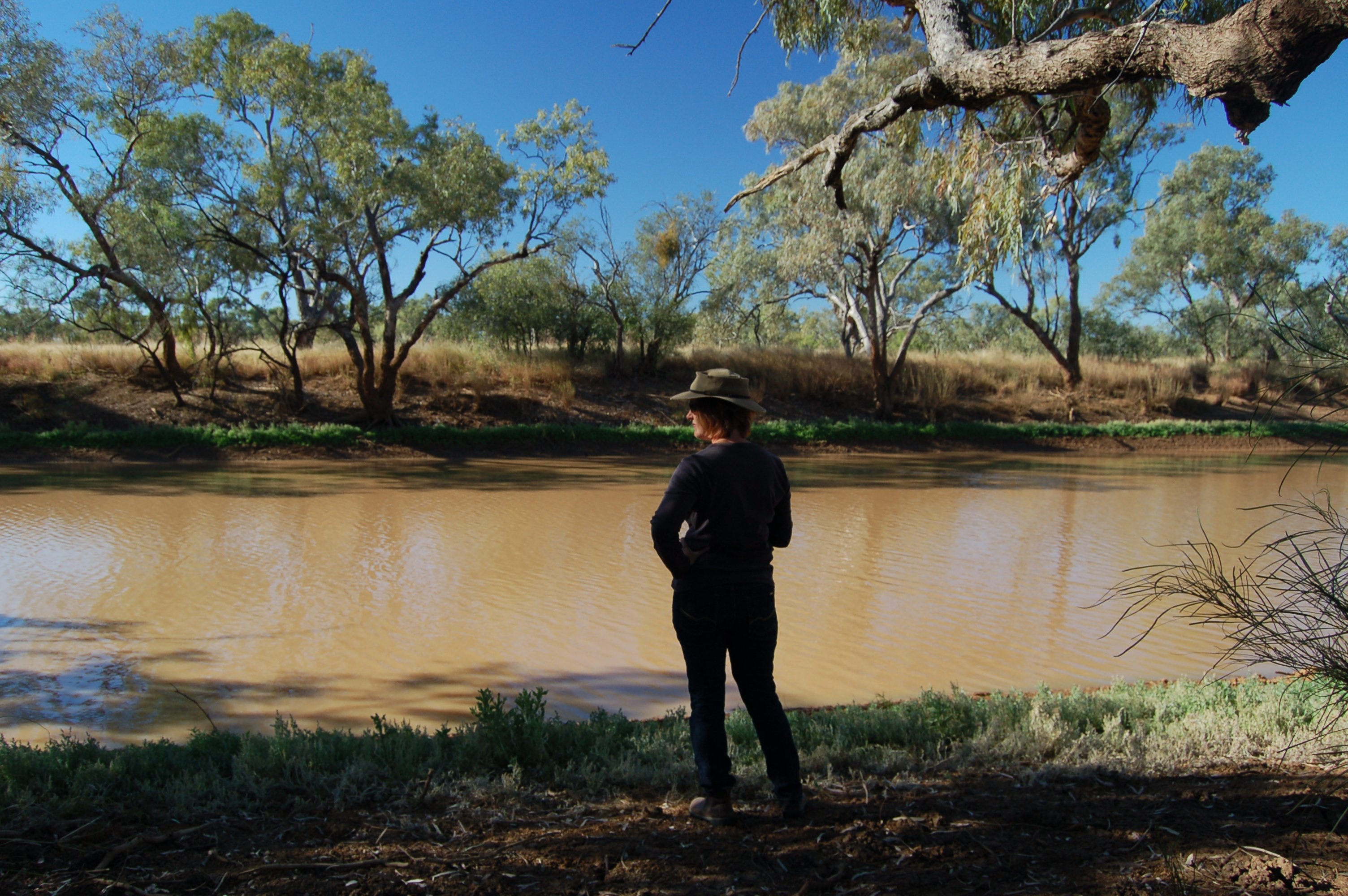
Speaking of memories, we visited the Combo Waterhole, which is located not far from Kynuna. Many (c’mon, everyone) will know that the Combo Waterholewas the scene at which the Swagman, with Jumbuck in his tucker bag drowned after being confronted by ‘the law’ in Banjo Paterson’s Waltzing Matilda, Australia’s unofficial National Anthem.
In part, it is as tale of a very dark time for the Australian Outback, when Australian’s were pitched against Australian’s during the great shearers’ strike in 1894. There we sat by that very waterhole singing Waltzing Matilda which I ‘m sure resonated through the Coolibah trees, witnessed only by the resident budgies who seemingly looked on curiously, but undoubtedly had watched the scene unfold many times before…
Combo Waterhole
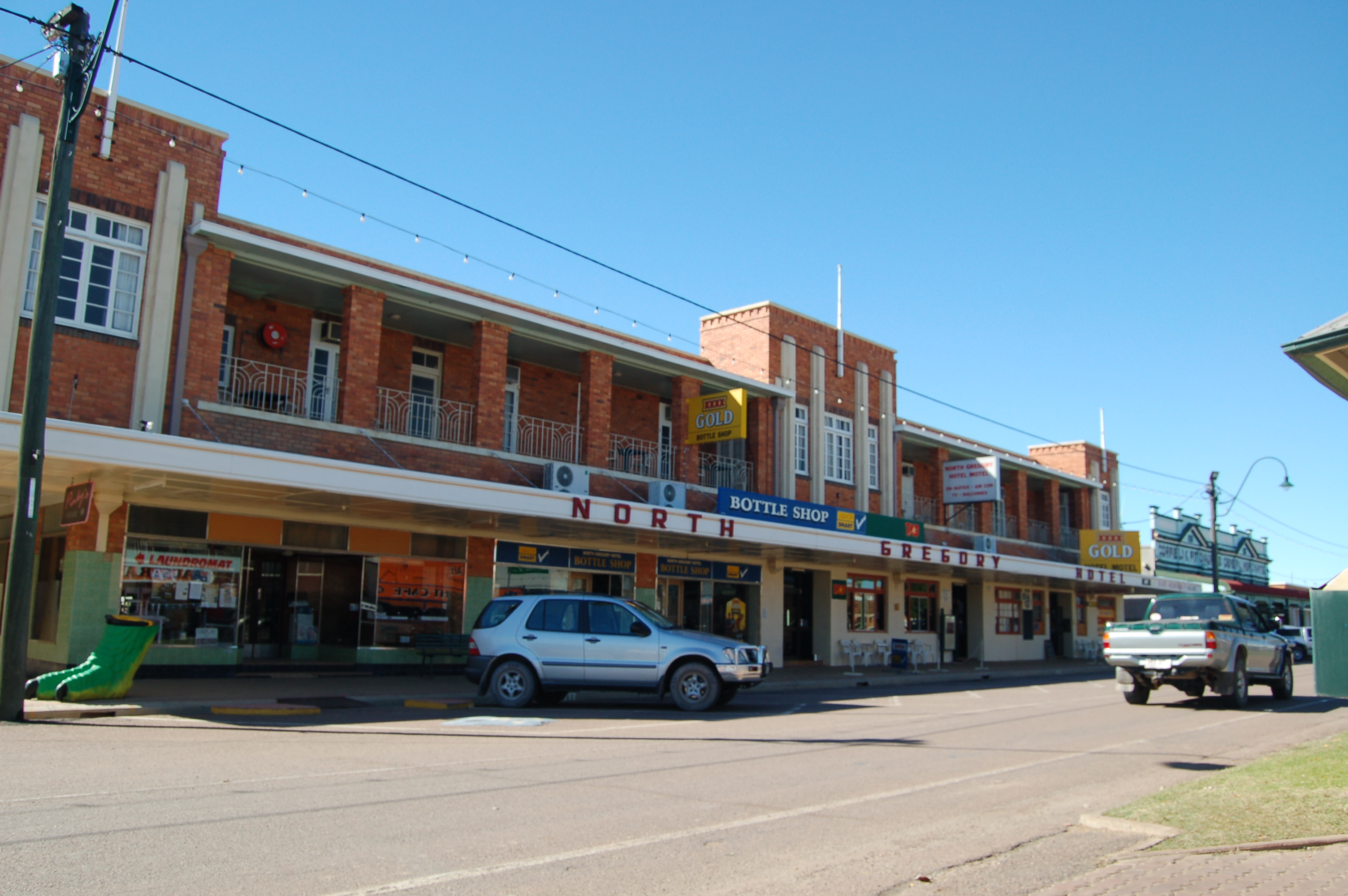
And as we settled into a sumptuous rump steak at the Blue Heeler we drank a toast to Banjo. Tomorrow, we would visit the North Gregory Hotel in Winton where they say Waltzing Matilda was first recited…
North Gregory Hotel Winton
What a steak it was, in fact so big it took a number of beers to wash it down, which was fortunate as we learned about the Dicks Creek Hotel ruins located on Bendemeer Station while we were dining. We were talking about outback history when a local, Ben and his partner Talia, overheard us and told us about it.
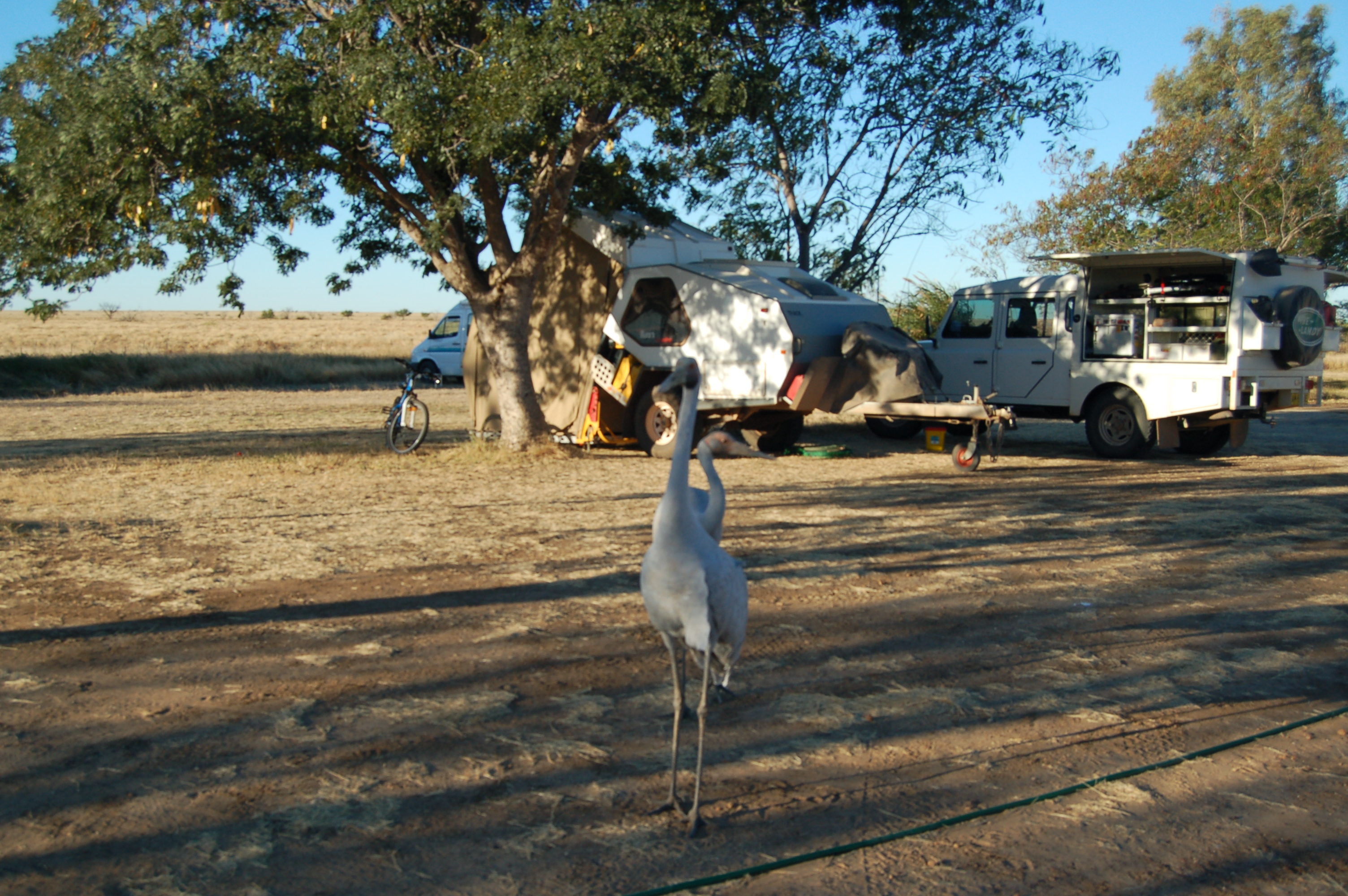
Ben is the son of the owner of Bendemeer and he suggested we take the stock route east towards Winton which starts near the Combo Waterhole, indicating the route will take us past the old Dagworth Cemetery before arriving at the Dicks Creek Ruins, which is on the road towards Dagworth Station. We enjoyed a good chat, and a few more beers, before retiring for the night, being careful to avoid the cantankerous, but more or less friendly Brolgas that were roaming the area around the pub earlier in the evening.
Brolgas at Blue Heeler Pub Kynuna
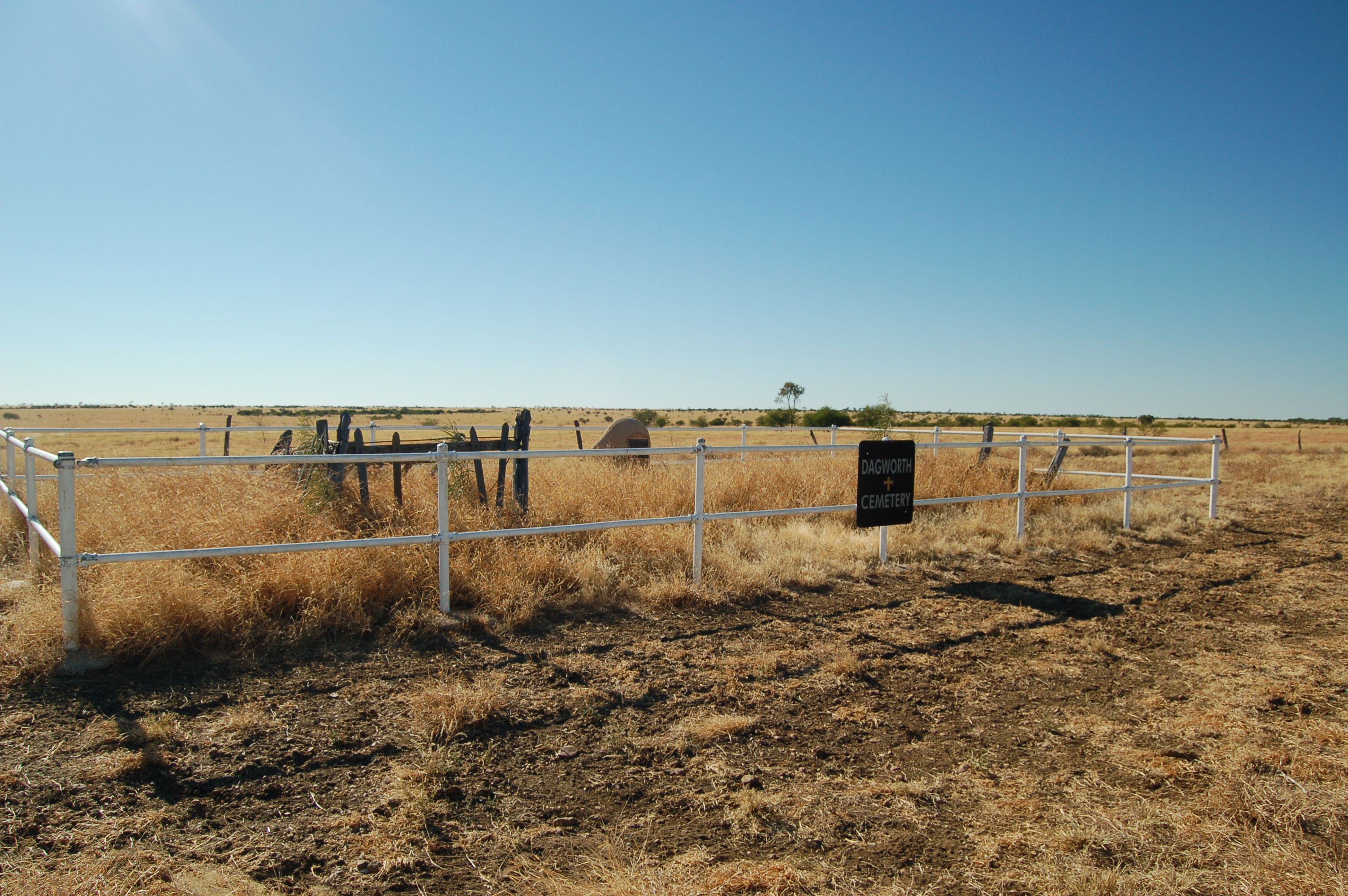
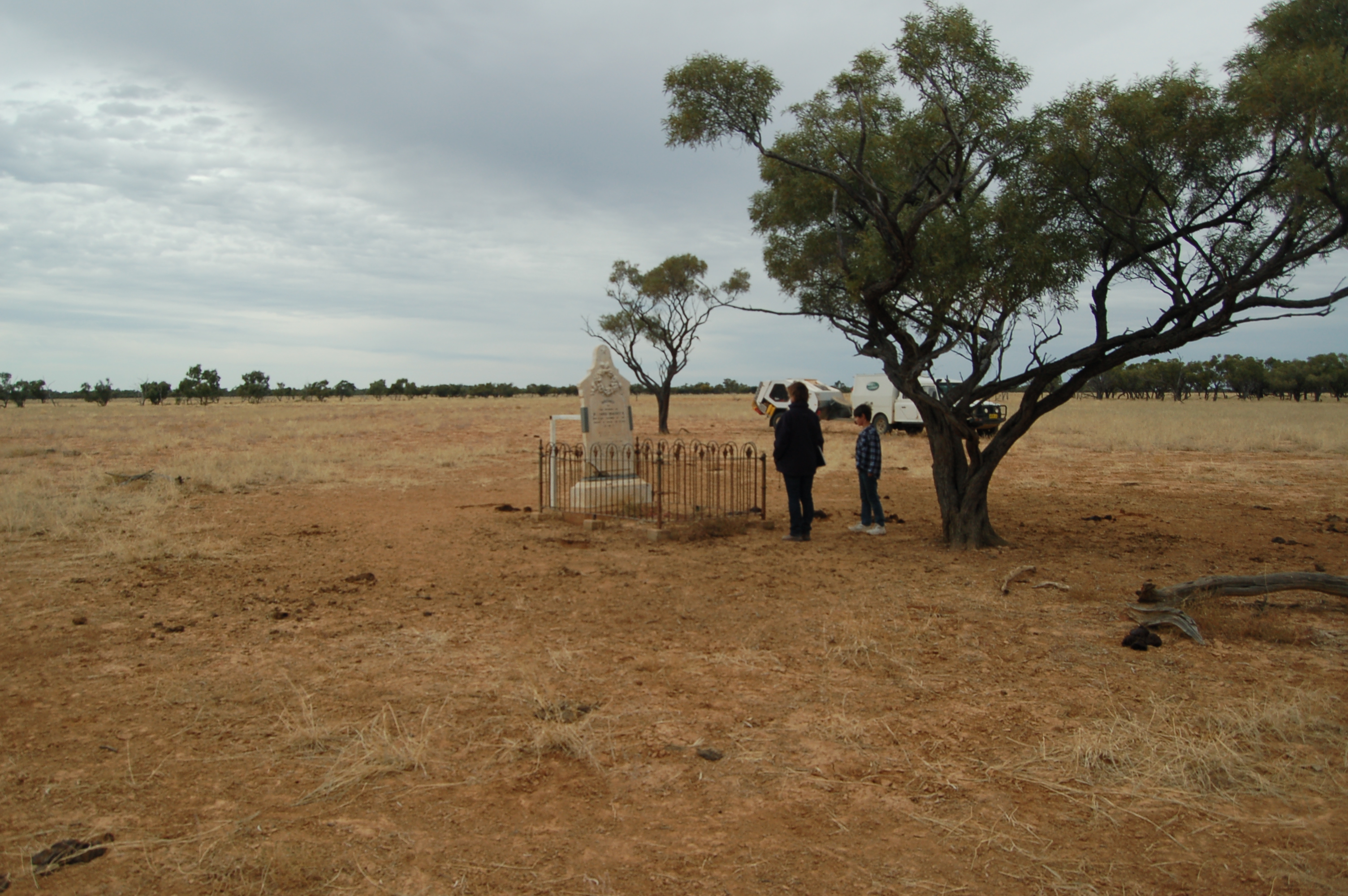
And a restful sleep it was before we headed off down the stock route towards Winton via the Dicks Creek Hotel ruins. About 15 kilometres along the route we came across the old Dagworth Cemetery which had six known people buried there. Tragically, the youngest was only twelve days old, a young girl, Catherine Sewell, who passed away on 23/01/1894, perhaps her death standing testament to the harshness of the Australian Outback despite its majestic beauty.
Dagworth Cemetery
After unsuccessfully trying to speak with Ben’s father on Bendemeer as we passed by the homestead, we headed about a kilometre on the track towards Dagworth Station where the ruins of the Dicks Creek Hotel stood clearly. We spent some time wandering about amongst the ruins (and bottles!), before coming across a plaque noting the last licensee of the pub.
Eventually we made our way to an outback favourite of ours, the town of Winton, where we visited the Waltzing Matilda Museum, the only museum in the world dedicated to a song, Banjo’s song, our Nation’s song.
Winton has quite a history, and certainly fits the bill of having quite a lot of characters passing through it over the years. During the 1860s a number of explorers passed through the region whilst in search of the ill-fated Burke and Wills expedition and Winton was originally named Pelican Waterhole, but later renamed Winton in 1879.
Another Winton character worthy of mention is James Francis ‘Gidge’ Taylor, the town crier. Gidge was given a retainer by Bill Evert, owner of the open air picture theatre The Royal to announce attractions of the night and it is said his imaginative description of the picture was often entertainment in itself.
And with a fresh brew of tea, we watched the sun head towards the western horizon, the sun-drenched red bull dust illuminating the western skyline in a blaze of red ochre colouring…
Our intention was to head towards Welford National Park after leaving Winton but not before a visit to the North Gregory Hotel were the first recital of Waltzing Matilda is said to have taken place in 1895. And what a magnificent night we had, a couple of beers, followed by dinner at the majestic Tattersall’s Hotel in the company of some fellow travellers’.
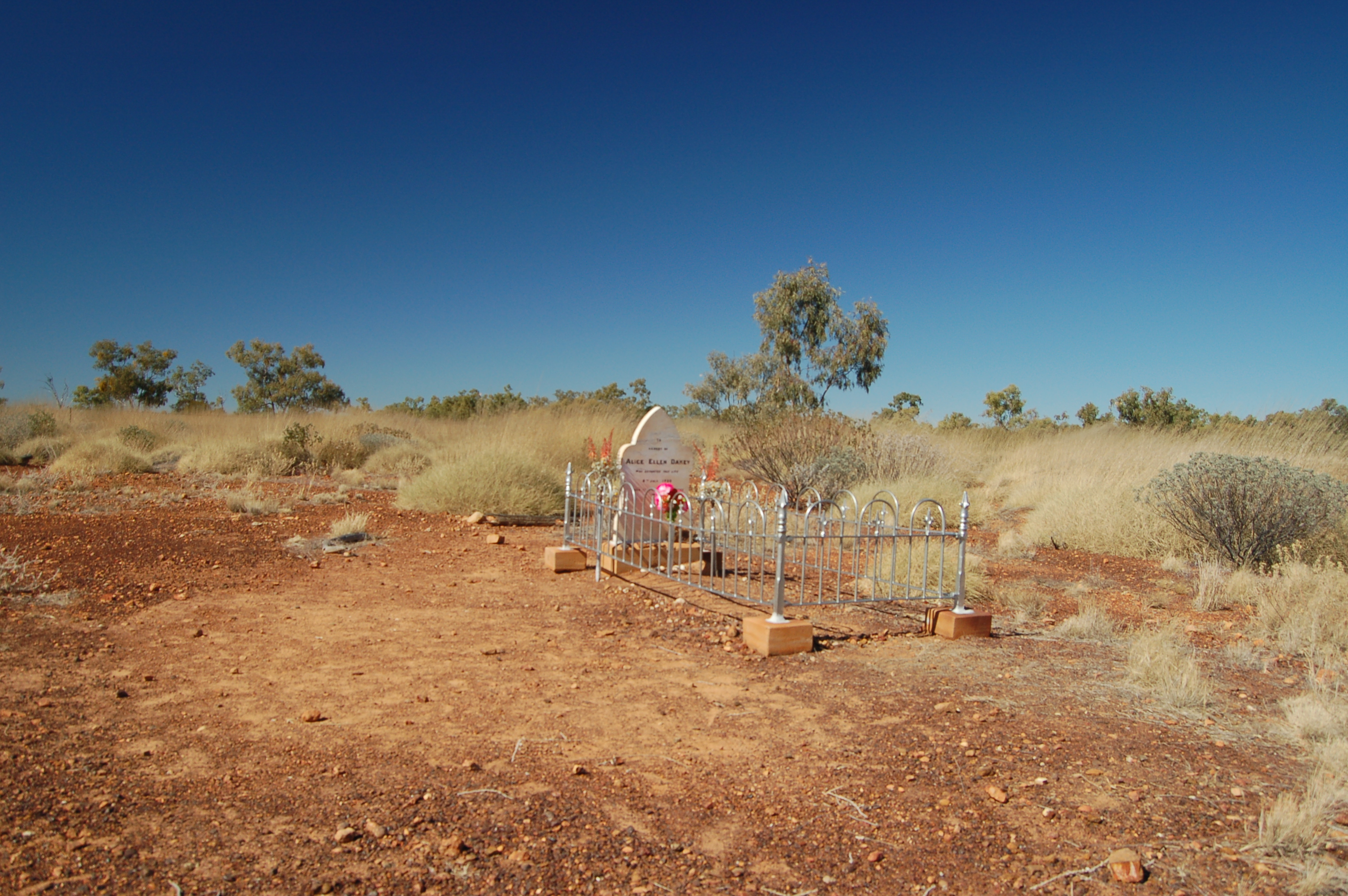
Bidding farewell to Winton we headed south towards Welford National Park a favourite of Janet’s, well all of us in fact. Along the way we detoured to Opalton, a small opal mining settlement approximately 100 kilometres south of Winton. We had a chuckle though as there was no-one about…We guess they were all underground! We also came across an old grave near Mayneside, that of twelve year old Alice Ellen Dakey, who passed away in July 1920. It was very well looked after and some-one had placed flowers recently…
Grave at Mayneside
We had a later departure than we had anticipated and with the detour to Opalton our arrival at Welford would be around sunset. And let me say it was a beautiful sight as the Mitchell Grass on the open plains changed colour with the advancing moments of sunset.
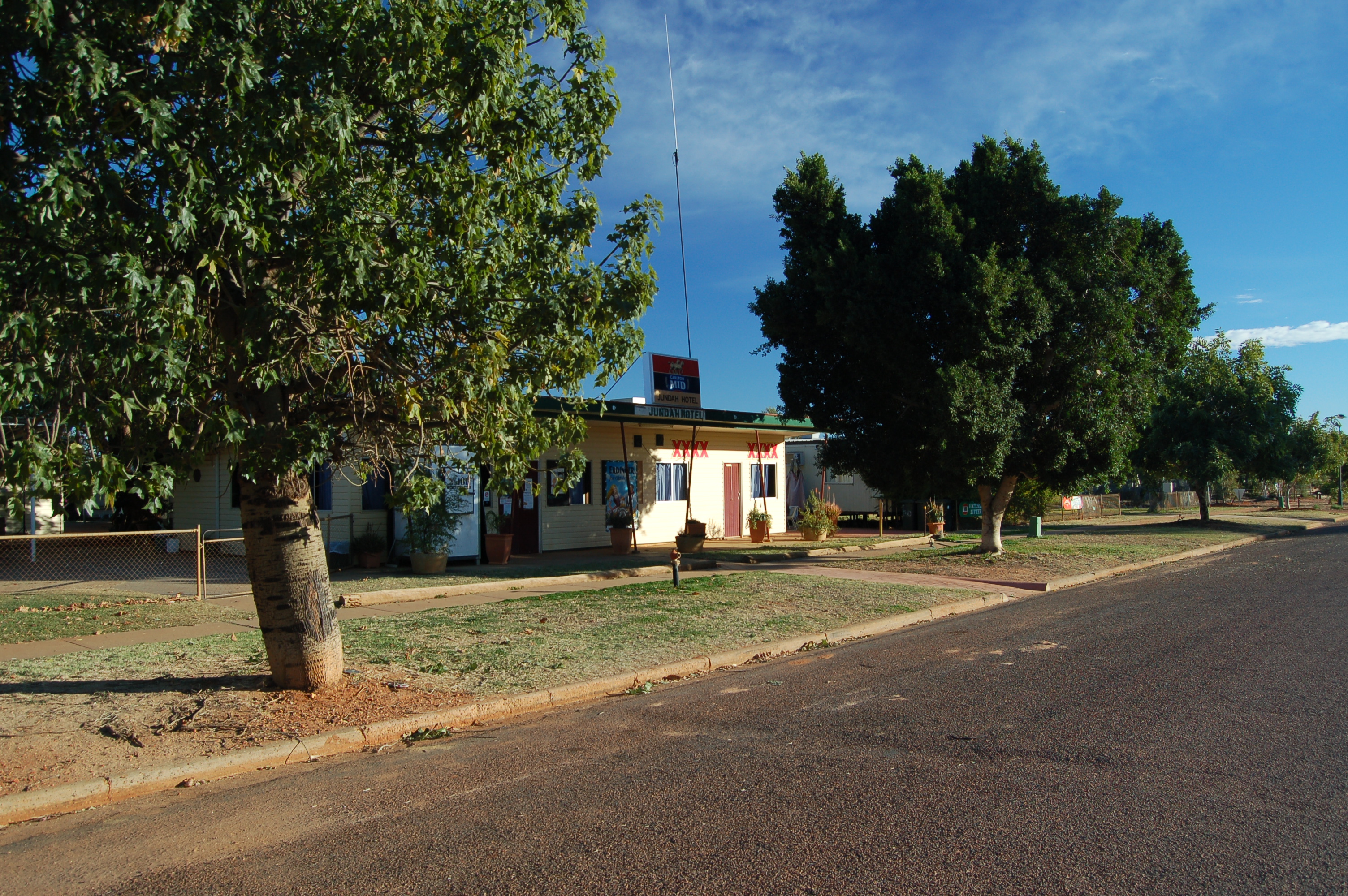
Our last visit to Welford was only last year, however due to the onset of rain in the area we didn’t camp at the park and headed to Jundah, seeking refuge in the pub. Now it is funny how things work out, but we had a very enjoyable stay at the Jundah Hotel. And like a magnet drawing us in, we stayed at the pub once again, after all we couldn’t resist with such a wonderful host, licensee Monique Rayment.
Jundah Pub
I encourage anyone who gets the chance to visit Jundah to do so, and be sure to call into the pub. Tomo had a great night playing bingo with the locals, and a game of pool later. Now I can’t say I’m a regular bingo player, and judging by the crowd you wouldn’t think half of them would be either, but there they were going at it harder than the old days of the 6 o’clock swill…
The next day after bidding Monique and the friendly township of Jundah farewell we made the short drive to Welford.
There are large permanent waterholes on the Barcoo River and these are a haven for wildlife, especially birds. And for those lucky enough, they say it is possible to see a yellow footed rock-wallaby sheltering in the rocky outcrops of the park. They have proved to be elusive on previous visits, but perhaps it will be a case of third time lucky.
Tomo, the walking hat, was immortalised in a Christmas card photo, many years ago on a previous visit, along the banks of a waterhole on the desert drive within the park. We did the drive before making camp, and another photo opportunity on ‘the tree’ beckoned. And Janet’s favourite, the rich red sand-dunes were a sight to behold.
Welford National Park
And as we sat alongside the banks of the Barcoo River, the fire was coming to life in preparation for a camp oven roast, the whistling kites soared overhead, and budgies flittered through the river gums in a brilliant display of colour.
For the first time on this trip we awoke to an overcast sky, and the possibility of rain. Despite this we had a camp fire breakfast of jaffles, baked beans, and bacon. Tomo is a big fan of bacon jaffles and just as we were breaking camp for our drive to Toompine some very light rain started to fall.
On our trip north last year we stopped at Toompine for afternoon tea, but vowed to work in an overnight stay at the South Western Hotel. It is the only building in the area and was a Cobb & Co staging post between 1884-1915. The town was originally called Thuenpin which is the aboriginal word for ‘leech’ and was named so by pioneer Pastoralist JD Steele who arrived in the area around 1875. The Survey Department later changed the name to Toompine.
Before arriving at Toompine we travelled to the site of Maggee’s Shanty and Richard Magoffin’s Grave which were not too far from Welford and just before the turn on to the Budgerygar-Thylungra Road. Those familiar with the writing’s of Banjo Paterson will recognise this is the place immortalised in his poem A Bush Christening. The grave of Richard Magoffin who perished in 1885 is nearby.
Magoffin came to Australia from County Down in Ireland in 1853, digging for gold in Victoria and fighting at Eureka. Later he settled with a brother at Chiltern, Victoria, before moving to Bourke, where they sank dams and ran a carting business before tough times sent them further north, to Queensland.
Richard Maggofin’s Grave
There was very little to see of Maggee’s Shanty, although a plaque indicated its site, but Magoffin’s Grave was very well kept. Our drive along the Budgerygar-Thylungra Road was pleasant and in keeping with our desire to travel the less traversed route. However, by now light rain was falling and it appeared it had been heavier earlier as the road was starting to feel like glue, initially, and a touch slippery later.
The Landy, with Tvan in tow, arrived in Quilpie covered in mud, and I was relegated to the duty of cleaning it while Janet and Tomo spent some time in town. Like many towns in this area there is an artesian bore providing water and there was a washing point just on the outskirts of town.
The Landy & TVan covered in mud
And just as the sun was disappearing below the horizon we arrived in Toompine, set-up the Tvan and headed to the South Western Hotel for a couple of beers and a hearty meal. The next day’s arrival was heralded with the pat…pat…pat of rain on canvas, although we had little reason to complain given the fabulous weather we had enjoyed on this trip.
We departed Toompine in the rain, but eventually, much later in the day, we caught glimpses of the sun as we headed towards the township of Bourke for the second time on this trip and before arriving at our destination of the Mulga Creek Hotel at Byrock.
Earlier we stopped at Eulo for a visit to the leather shop where Tomo purchased a leather pouch for his Leatherman tool, and The Landy got a whip, something that clearly amused Janet who suggested it might come in handy when the time came to cross the Blue Mountains once again. Tragically, not long after our return home we were saddened to learn that the general store in Eulo had burned down in a fire, a great loss to this small community.
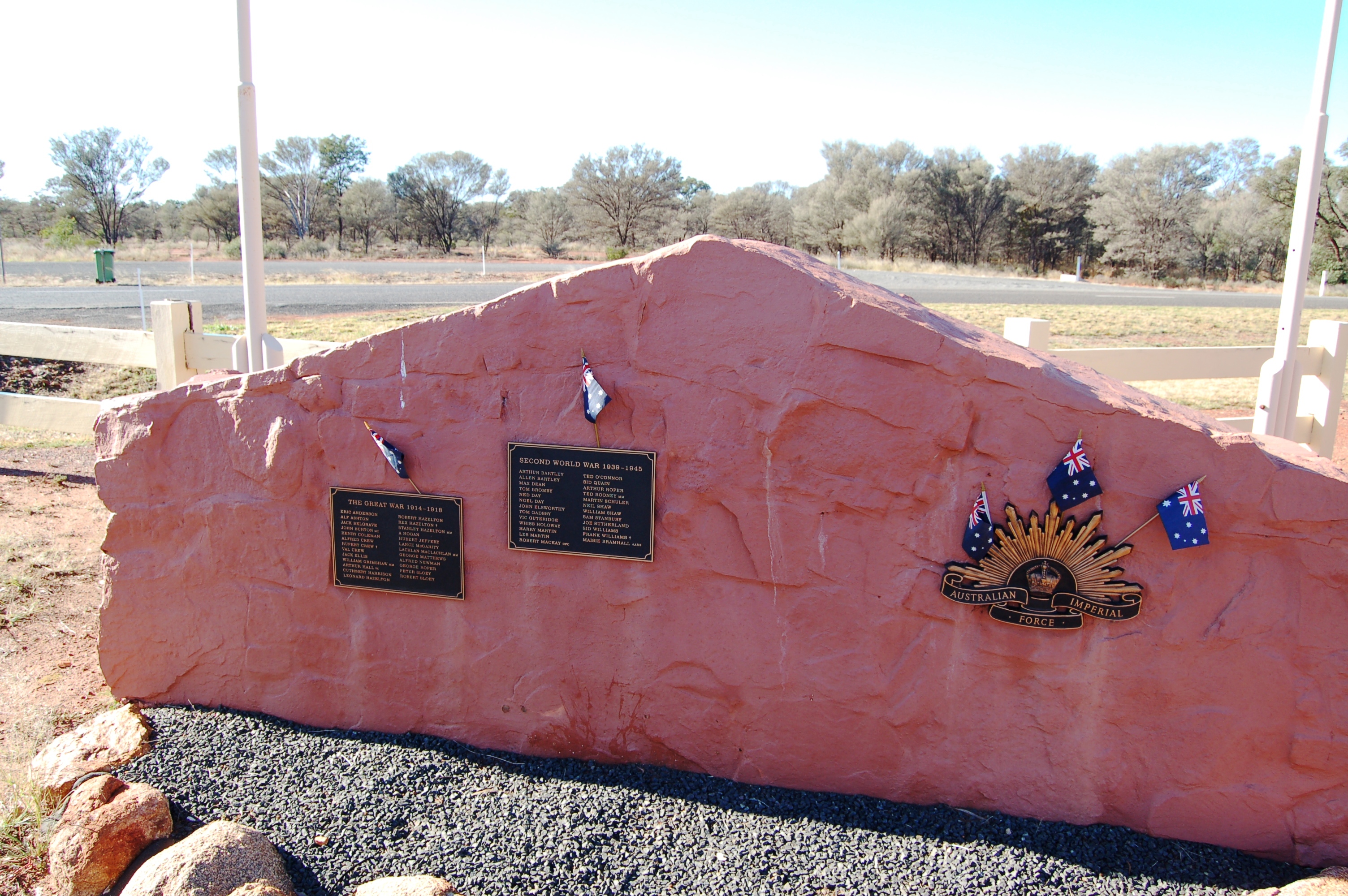
We have passed through Byrock on many occasions, and flown over it at other times, and whilst we have often stopped for a ‘cupper’ we wanted to stay for the night and enjoy the area’s hospitality. One of the things that had stood out for us on previous visits is its military history. The town counts a Victoria Cross, Military Cross, three Military Medals, and a Distinguished Flying Cross, as being awarded to members of its community for service in both World Wars.
Byrock Memorial
It seems no-one is quite sure how the town got its name, but it seems to have some origin in the near-by rock hole which is situated not far from the highway just north of the Mulga Creek Hotel. The local Nyamimba people referred to the rock hole as ‘bai’ and could be one explanation for the town being named Byrock.
As with many other towns, the coming of the railway in 1884 attracted people to the area and eventually the town boasted five hotels, a baker, butcher, and a number of other stores to support the 500 people living in the area, although the town did exist prior to the rail. Cobb & Co also ran a service to Bourke each week, and the journey lasted around 12 hours but must have felt like an eternity on the rough track. Janet mumbled something about The Landy and knowing how they must have felt…
Our evening was spent in the company of locals around a warm fire, having a few laughs and Tomo continued to perfect his pool playing talents. Eventually we retired to the Tvan and the patter of rain on the canvas during night.
Our last full day on tour would take us to the winery region of the upper Hunter Valley. And we had a great day travelling through some familiar and some less familiar places as we headed towards an overnight stay at Mudgee.
The Mudgee region is part of Wiradjuri country, and the Wiradjuri language group is the largest in New South Wales. Apparently, in Wiradjuri Aboriginal dialect, the word ‘Mudge’ means ‘nest in the hills’. And I must say after traversing the wide open plains country over the past three weeks it was a change for The Landy to be hauling itself over some hills, and no, the whip was not required, although Janet seemingly was poised and ready!
Wine, fine food, well we’ve had plenty of that over the three weeks we journeyed through outback Queensland and the Gulf Savannah, so it was fitting we celebrated our last night on tour in the fine food and wine country of Mudgee.
And as we headed home we began to recount the many memorable moments we enjoyed on this trip… the golden Mitchell Grass swaying in a light breeze, rich in golden colour as the last rays of a setting sun lightly touch its tips, the splash of colour as a flock of budgies sprint past, the sounds of the whistling kites overhead, and of freshwater crocodiles basking in the sun; the outback is truely alive!
As for characters, well we met some, learnt about many, and without doubt we had one travelling amongst our midst and who went by the name of Tomo, the walking hat…






















 Xplore