Increasingly, it appears these weight-restricting signs are appearing on our roads, especially in metropolitan areas where they are usually put in place by local government authorities.
In NSW the Roads and Maritime Services (RMS) look after major roads and local government authorities lesser local roads within its area.
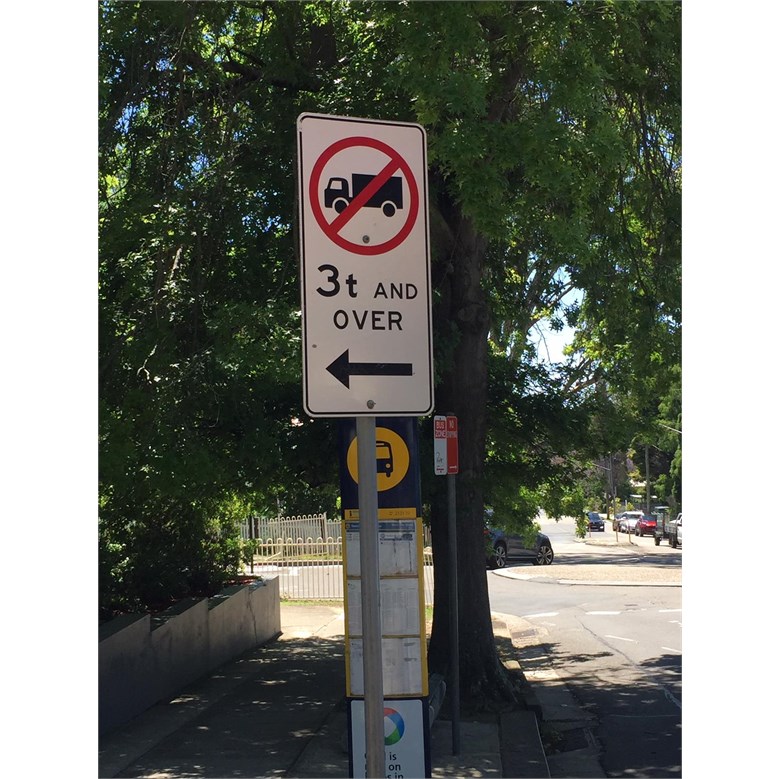
Many will be familiar with these signs restricting vehicles over 3,000kg (usually marked 3-ton) from travelling along a particular road or street. Usually the sign has a “truck” picture on it; similar to the one in the photograph possibly leading drivers to form an opinion it does not refer to standard SUV style vehicles.
And I must note that frequently these signs are not obvious, hidden behind foliage on a tree, which perhaps is another problem altogether when it comes to road signs…!
But what is the implication of these weight-restricted roads for today’s modern four-wheel drive vehicles?
A quick look at many of the popular four-wheel drive vehicles on the market today, including the Nissan Patrol and the popular Toyota 78 and 79 Series show that they all have a standard GVM in excess of 3,000kg. Put a couple of adults and some luggage in any of these vehicles along with a full tank of fuel and they will most likely be weighing in excess of 3,000kg.
And it is worth noting many weight-restricted roads have a “GVM Limit” of 3 ton, so the popular range of four-wheel drive vehicles I’ve noted are impacted, regardless of what they weigh in at on the road.
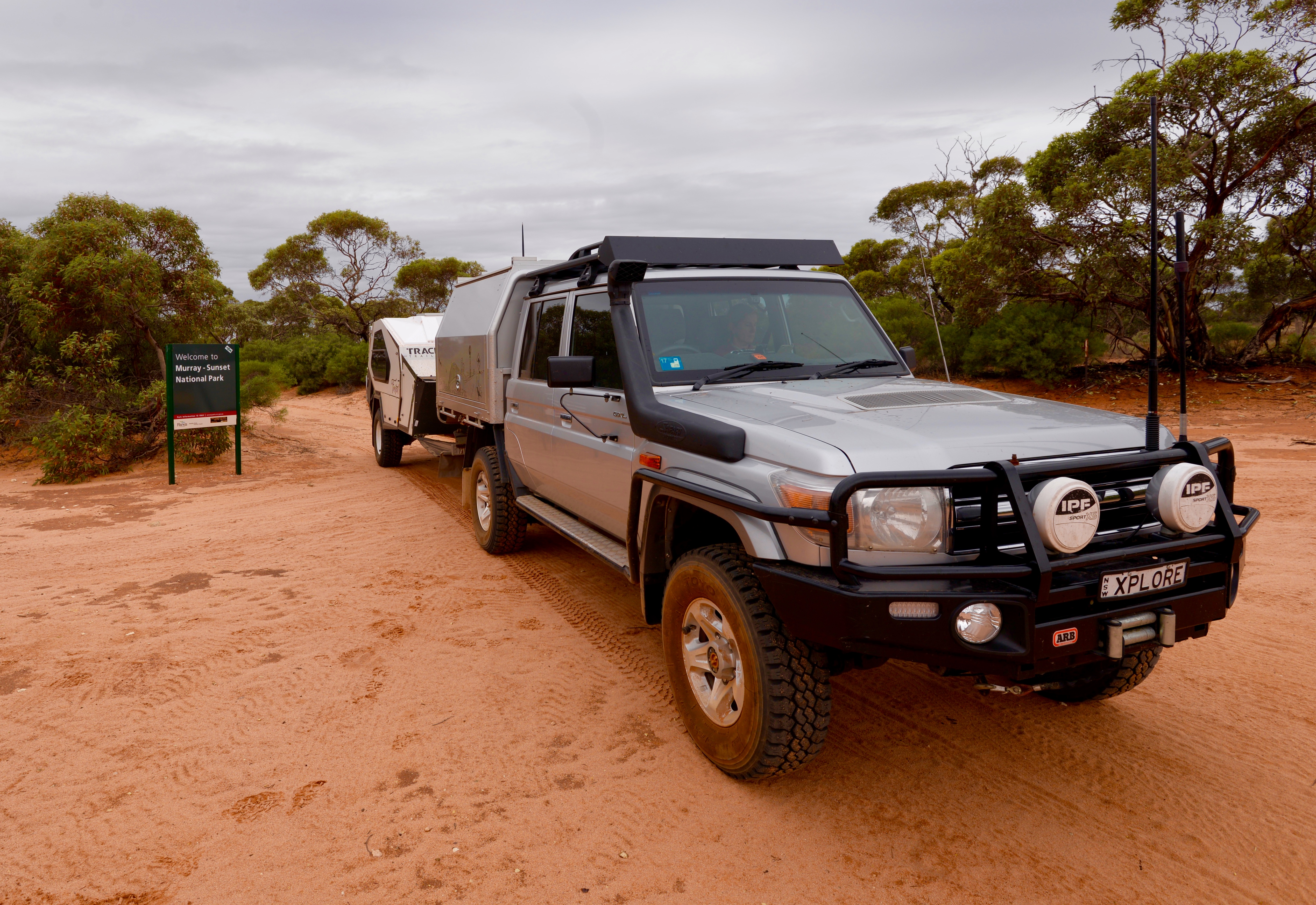
We have a Toyota 79 Series with a GVM of 3,780kg (standard is 3,300kg) and it usually weighs in at around 3,500kg in its touring configuration.
But, 3-ton means 3-ton even if it doesn’t look like a truck and more like a passenger vehicle.
Possibly many may be of the view that the sign does not refer to their vehicle and be travelling on them unaware of the implications it might have, especially in the case of an accident.
Perhaps others simply ignore the directive.
If you have comprehensive insurance on your vehicle, and who doesn’t these days, you will find that one of the first things it will say in the PDS is that you are “covered anywhere you are legally entitled to be”.
And it pays to reflect on that statement – anywhere you are legally entitled to be…
The implication for those with vehicles weighing over 3-ton or with a GVM in excess of 3-ton is that travelling on a weight restricted road might void your ability to make an insurance claim if it relates to an accident on that weight restricted road.
I am insured with the popular four-wheel drive specialist underwriter, Club 4×4, and I have confirmed with them that my interpretation is correct – if you are not legally entitled to travel on a road due to it being weight restricted you will be in breach of the terms and conditions of the policy.
Now maybe that interpretation is the default position from the insurer in the first instance, but the implication is clear, a claim might be denied…
And given underwriting standards and interpretations of terms and conditions are fairly standard across the automotive insurance companies you will find they’ll all mostly likely arrive at the same conclusion.
Now there might be a couple of caveats on that view depending on the specific circumstances, but it is usually with great certainty that whenever “grey area meets legal implications” it will cost you money to prosecute your case.
Local government authorities when restricting roads and streets to weight are required to provide an alternative for vehicles in excess of the weight restriction. I live in an area of Sydney that has numerous 3-ton weight-restricted roads and there are alternatives.
But it is a minefield of sorts, especially if travelling in areas you are less familiar with. And a review of a number of GPS mapping systems highlights that none appear to give the user an option to avoid weight-restricted roads, at least not in the systems usually associated with SUV type vehicles.
As with most things in life, it is never a problem, until it becomes a problem.
It is unlikely you will be booked by the local government authority enforcement officers or police for travelling along a weight-restricted road in your four-wheel drive vehicle if the tare weight is under 3-ton. After all, it would need to be weighed to determine if it is under or over. But if you are involved in an accident where there is an injury, or worse, the vehicle may be put over the scales and you may find you will face a charge of negligence if over 3-ton, depending on the circumstances, which is not a traffic violation but a criminal charge.
The question needs to be asked is why are there an increasing number of weight-restricted roads being introduced, maybe it is time for the four-wheel drive lobby groups to become active in this regard.
Perhaps many are blissfully unaware of the implications of weight-restricted roads, especially with regard to insurance and personal liability – but 3-ton, is 3-ton, regardless of the vehicle you are driving, it doesn’t apply to just trucks, so keep an eye out for those weight-restricted roads….
About us…
We have always loved the colours of the Australian Outback, the ochre red earth touching a deep blue sky on a faraway horizon; and the fabulous coastline of our sunburnt country, where a golden sandy beach is washed over by a turquoise blue sea; and the characters you meet in a quiet country pub, where it is nothing flash, but you are enriched by the encounter…
A couple of years ago we decided that after many years of paid and unpaid work that it was time for us to “graduate from work” and re-enter “the classroom of life” where an education is guaranteed and all that is needed is an open mind.
Located on the picturesque Eyre Peninsular a short drive from the fishing community of Streaky Bay, Murphy’s Haystacks stand proudly in an ancient landscape framed by a deep blue sky.
Some might say that they look like “molars”, well perhaps a dentist might, in fact they are known as Isenberg’s, which are best described as a hill that looks like a rocky island rising from the sea.
So, how did they get to become known as Murphy’s Haystacks?
Folklore relates a story of a Scottish Agriculture expert who proclaimed that to grow good hay farmers needed to harrow their land for the best result. While travelling by coach he noticed the rock formation in the distance and advised his fellow passengers that this farmer harrowed his land to produce so much “hay”.
The rocks, being on Murphy’s property, became known as Murphy’s Haystacks and passing coachmen described them as haystacks to their passengers from that day onwards…
About us…
We love the colours of the Australian Outback, the ochre red earth touching a deep blue sky on a faraway horizon; and the fabulous coastline of our sunburnt country, where a golden sandy beach is washed over by a turquoise blue sea; and the characters you meet in a quiet country pub, where it is nothing flash, but you are enriched by the encounter…
A couple of years ago we decided it was time to “graduate from work” and re-enter “the classroom of life” where an education is guaranteed and all that is needed is an open mind.
If you travel the breadth of Australia, across its vast open plains and wide-open skies, you are bound to experience plenty of Diesel and Dust…
And doing it in summer you can experience some extremes of temperature and just recently we recorded an outside temperature of 50 degrees Celsius.
So with those types of temperatures we decided it best we lay up somewhere cool for a couple of days and there has been no better place to do that than Burra in South Australia
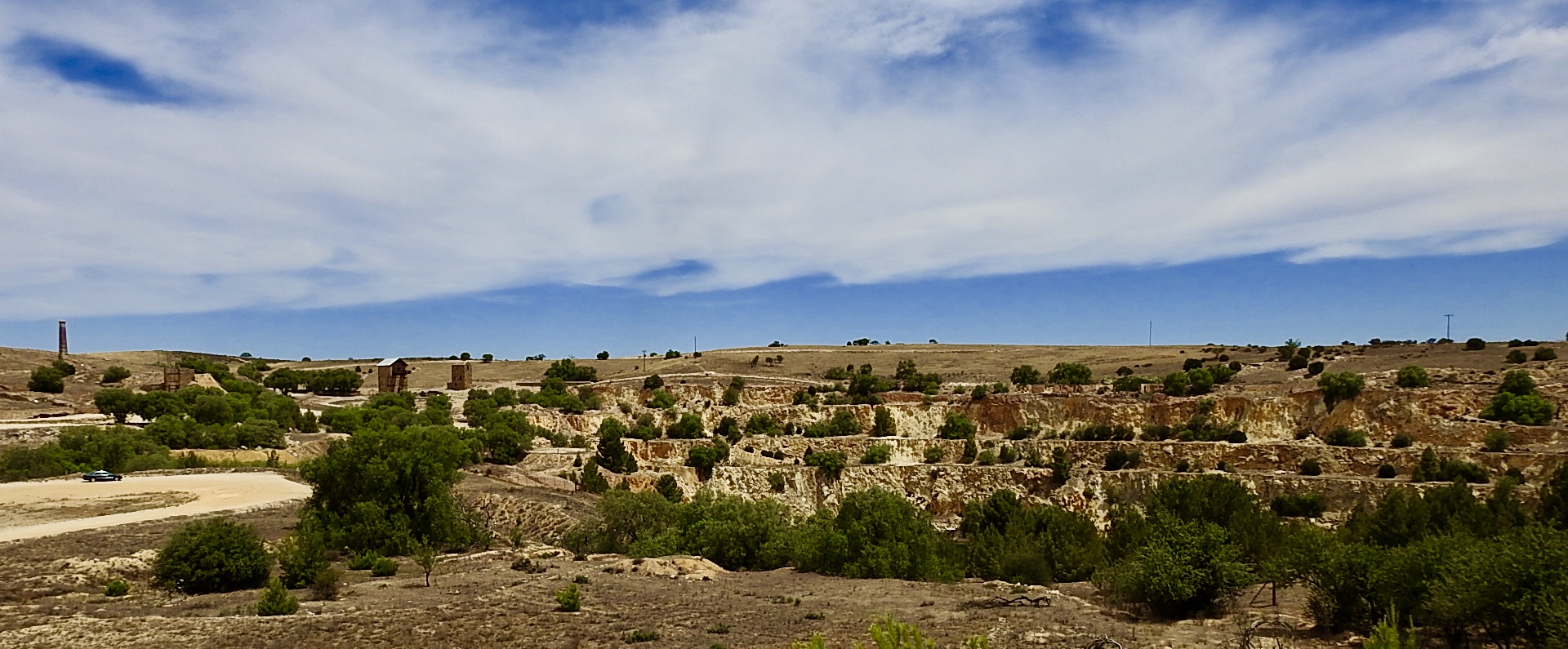
Burra, or Kooringa as it was originally named, was Australia’s first surveyed mining town. And in the early 1850s it was Australia’s largest inland town and boasted the famous “Monster Mine” which was established after shepherds discovered copper in the rocky outcrops near Burra Burra Creek.
History doesn’t record the shepherds as becoming rich from the discovery, but it certainly made its many shareholders wealthy over time.
Speaking of time, it has almost stood still in Burra, which is now on the Register of the National Estate and many of its buildings are listed on the Heritage Register.
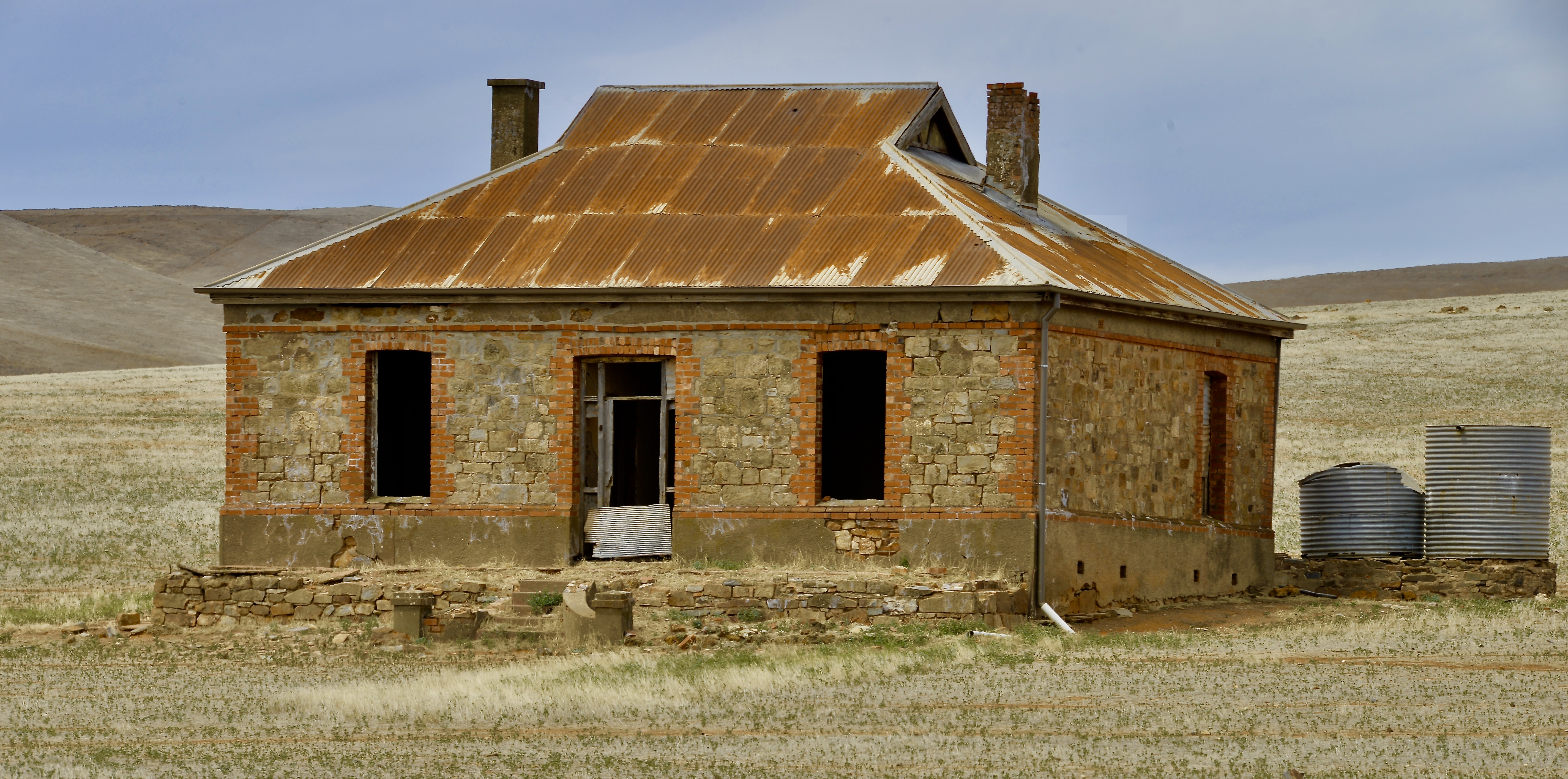
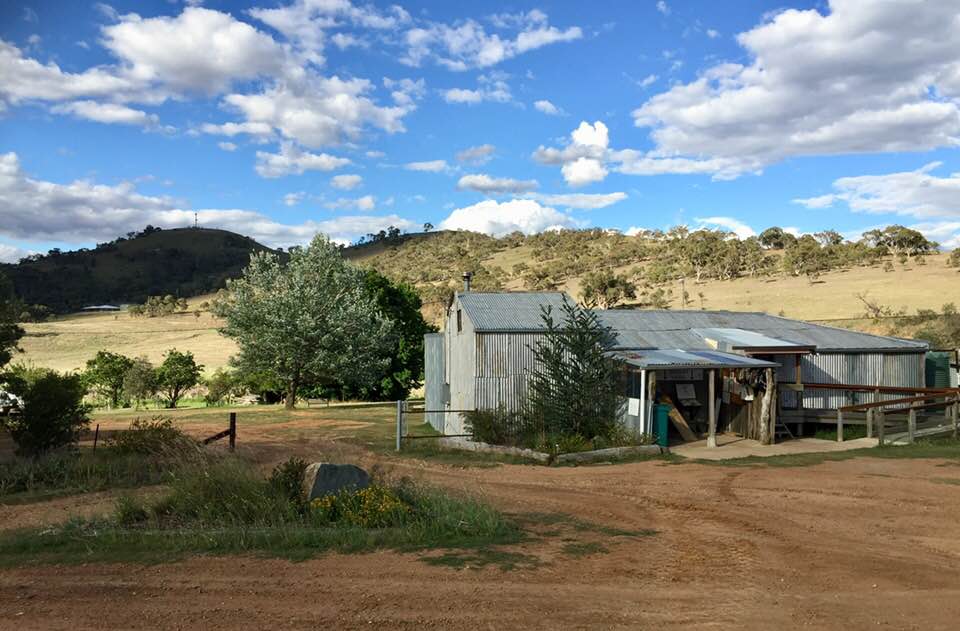
And the fans of the Australian Rock Band Midnight Oil will recognise the “Old Burra Homestead” which proudly stands in a paddock on the outskirts of town.
Diesel and Dust, hey we’ll take that any day.
About us…
We have always loved the colours of the Australian Outback, the ochre red earth touching a deep blue sky on a faraway horizon; and the fabulous coastline of our sunburnt country, where a golden sandy beach is washed over by a turquoise blue sea; and the characters you meet in a quiet country pub, where it is nothing flash, but you are enriched by the encounter…
A couple of years ago we decided that it was time for us to “graduate from work” and re-enter “the classroom of life” where an education is guaranteed and all that is needed is an open mind.
Catching a wave is usually associated with a trip to the beach during our long, hot and lazy Australian summers.
But this is one Wave that no surfer can ride; in fact you won’t even find it rolling in off the ocean.
This “Wave” is situated in the wheat belt growing region of West Australia and is quite a remarkable rock formation in the Australian bush. It stands at 15 metres tall and 110 metres long and whilst you can’t “ride” it water still was a major contributor to its formation.
Tiny lichens, moss, and algae resulting in a marvelous contrast of orange and black produce the colour in the rock estimated to be thousand’s of millions of years old.
Wave Rock is part of the Hyden Rock formation and is well worth the visit, but hey, just a tip; leave your surfboard at home…!
Photos: Baz and Janet-Planet, Out & About in the Australian Outback…
About us…
We have always loved the colours of the Australian Outback, the ochre red earth touching a deep blue sky on a faraway horizon; and the fabulous coastline of our sunburnt country, where a golden sandy beach is washed over by a turquoise blue sea; and the characters you meet in a quiet country pub, where it is nothing flash, but you are enriched by the encounter…
A couple of years ago we decided that after many years of paid and unpaid work that it was time for us to “graduate from work” and re-enter “the classroom of life” where an education is guaranteed and all that is needed is an open mind.
This wasn’t an encounter with the fire-breathing type of dragon ready to flash fry you you with a quick burst of flame.
No, this was an encounter with a rather cute reptile, aptly named the “Ornate Dragon”, that is barely bigger than the size of your foot and unlikely to do you any harm. We came across this wonderful reptile whilst visiting Wave Rock during our recent travel in West Australia.
Mind you, it took some skill and patience to capture them on camera as they scooted across the rock at a great pace, stopping only momentarily to bob their head up and down as well as doing some push-ups.
The head bobbing and push-ups are part of its mating ritual and from all the head bobbing and push-ups we observed there was little doubt the mating season was in full swing…
About us…
We have always loved the colours of the Australian Outback, the ochre red earth touching a deep blue sky on a faraway horizon; and the fabulous coastline of our sunburnt country, where a golden sandy beach is washed over by a turquoise blue sea; and the characters you meet in a quiet country pub, where it is nothing flash, but you are enriched by the encounter and the banter…
In 2017 we decided that after many years of paid and unpaid work that it was time for us to “graduate from work” and re-enter “the classroom of life” where an education is guaranteed and all that is needed is an open mind.
Last week we spent a few days at a Bush Heritage Australia conservation property, Scottsdale Reserve, which is located approximately 70-kilometres south of Canberra on the Monaro Highway.
And the weather was much warmer than the last time Baz was there in August when temperatures plummeted to minus 10 degrees. This time around the days were warm and the nights balmy…
Our assigned task was weed control, spraying fields of St John’s Wort that are now starting to flower. However, sporadic rain showers slowed this job down.
Mind you rain is most welcome on Scottsdale as it has been in drought for sometime.
So while Baz was out in the Polaris spraying weeds, I got to have a Master-class in propagating two types of Eucalyptus trees (Eucalyptus Bridge Siana and forgot the other one…oops)!
The propagation process entails looking under a microscope to see how many seeds are mixed in with the chaff, which in turn determines how big a scoop of seeds/chaff go into the potting tray.
I had no idea the seeds would be that microscopic, so it was a very small scoop…!
The trees will be planted on the property sometime over the next couple of years…
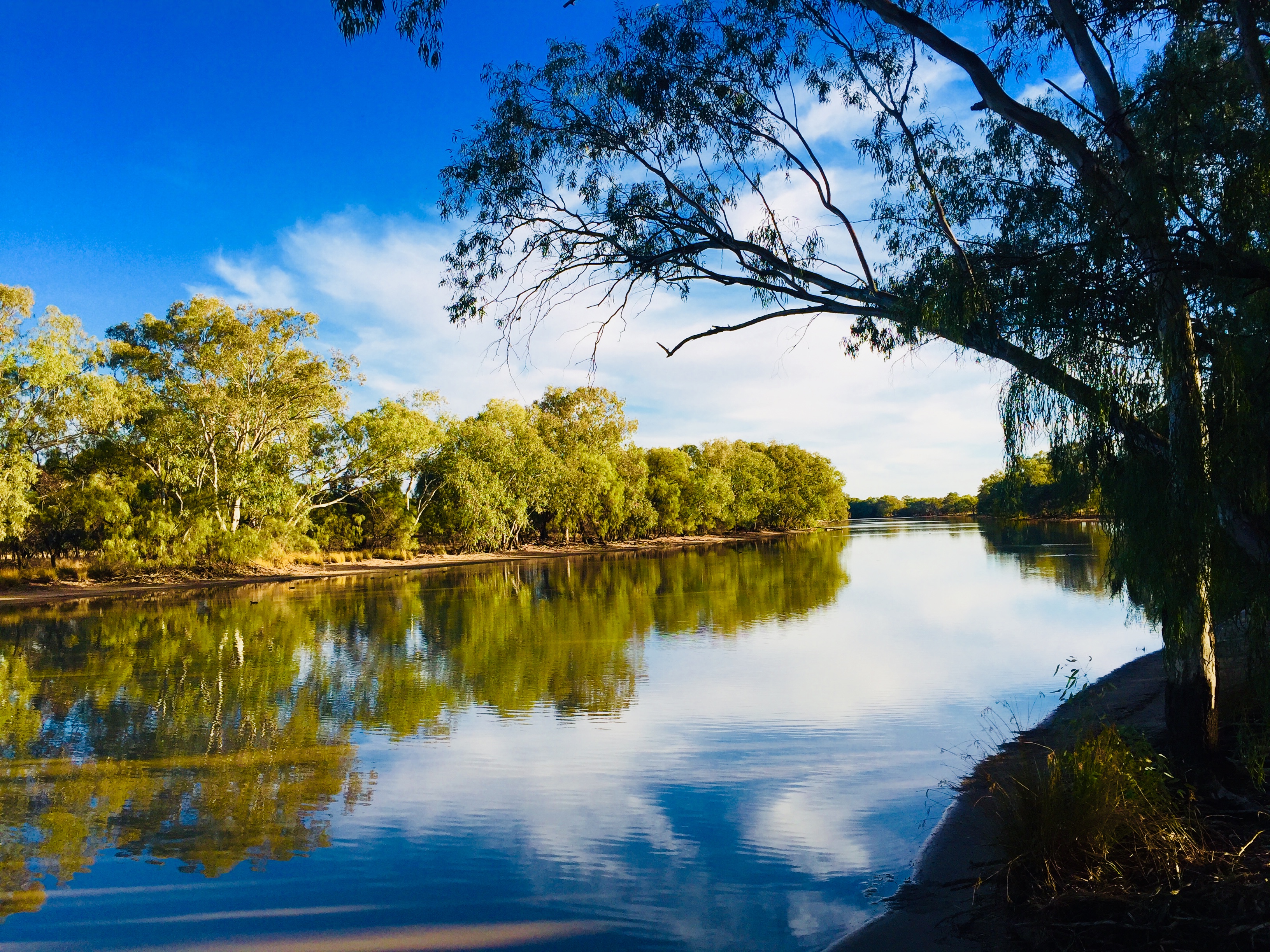
Late in the day, just around dusk, we made our way to a beautiful spot on the Murrumbidgee River, which the property fronts, to see if we could spot a Platypus, or two, but to no avail on this occasion, they didn’t want to come out and play. But we saw turtles, water rats and some big Murray Cod!
A great and fun time to spend a few days helping out the environment!
And hey, you can read some more about the work Bush Heritage Australia does, here.
Photos: Janet-Planet & Baz – The Landy, in Australia’s Alpine Region…
Isn’t that the beauty of life, ever evolving as we weave our own tapestry; a mosaic of our lives taking turns that one could not even imagine just a few years ago…
This week I am heading down to Scottsdale Reserve, a property owned by the conservation group Bush Heritage Australia to assist in a scientific study. Situated about 80 kilometres south of Canberra, Scottsdale borders Australia’s Alpine region and the mighty Murrumbidgee River runs through the reserve.
Each year a count is undertaken of the platypus population on this stretch of the river and involves sitting on the riverbank at dawn and dusk to “spy” this shy and unique mammal. And yes, it will be cold with minimum temperatures forecast to be as low as -7 degrees next week so I’ll be sure to pack my Driz-a-bone to keep me warm and the frost at bay…
So what took me from currency trader to counting platypus?
Well a love of the bush, the outdoors has always been my thing so it is no surprise that like a vortex the bush sucked me in once I“graduated from work”.
And hey, you’ll hear no complaints from me on how my tapestry; my mosaic is working out.
Sitting on a river bank counting platypus is timeless and without a doubt better for the soul than sitting in a trading room where fortunes are won and lost in the blink of an eye as currencies flirt with each other on world markets.
That isn’t to say trading currencies wasn’t fun, after all I did it with some great people who have become lifelong friends, but counting platypus is more appealing and far less stressful than staring at a computer monitor with one eye on the clock, counting down the hours, minutes to the end of the trading session.
By the way, what day did you say it was…?
(Just kidding, of course I know what day it is – a great one!)
One of the great things about being “Out & About” in this great country of ours is you never know what you might see next…
Recently I came across a great bunch of blokes riding their “Postie Bikes” halfway across Australia in support of a number of charities.
And no, they weren’t delivering the mail, but riding the bikes on our dusty outback roads was clearly thirsty work that could only be quenched with a cold beer at the end of the day’s touring…
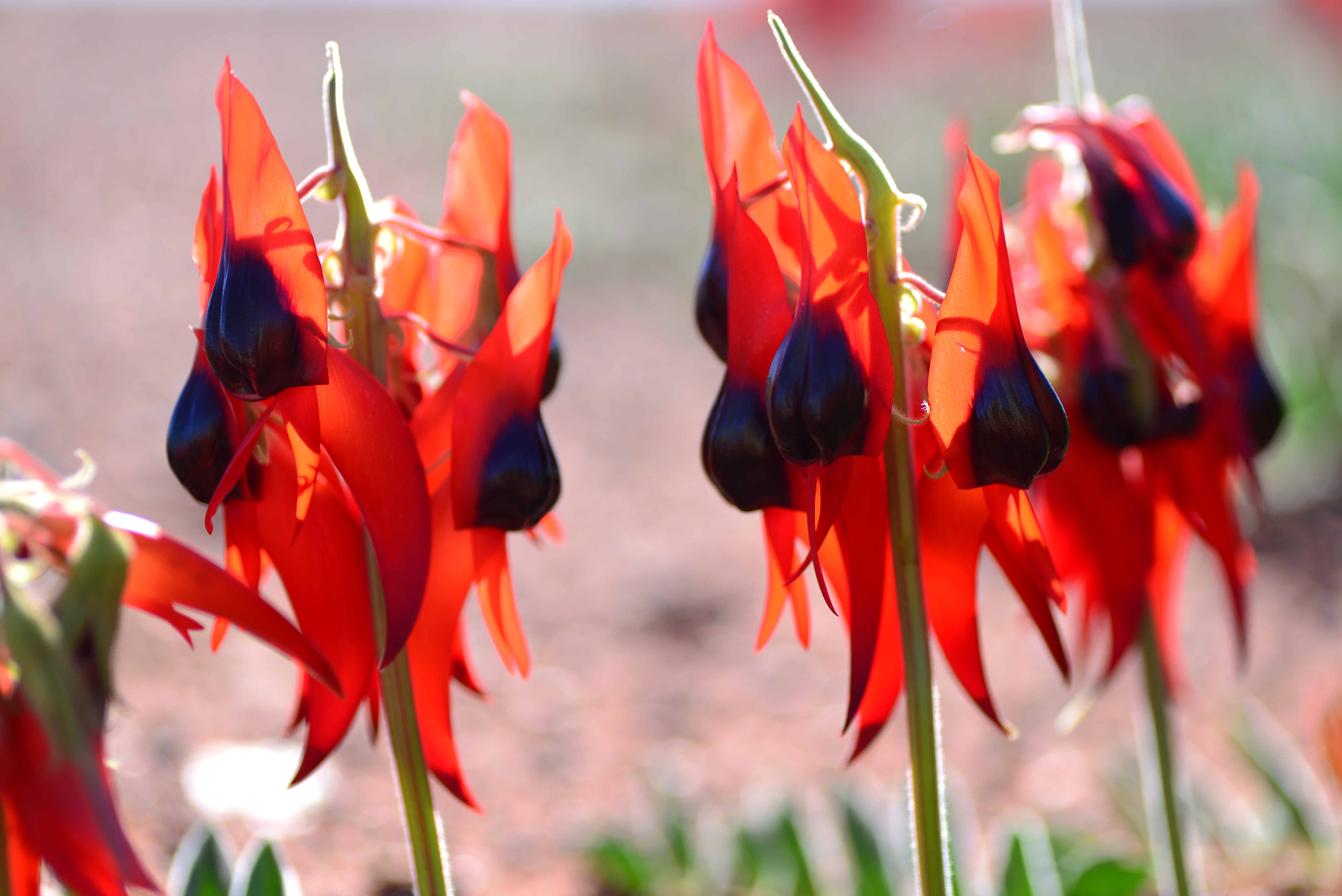
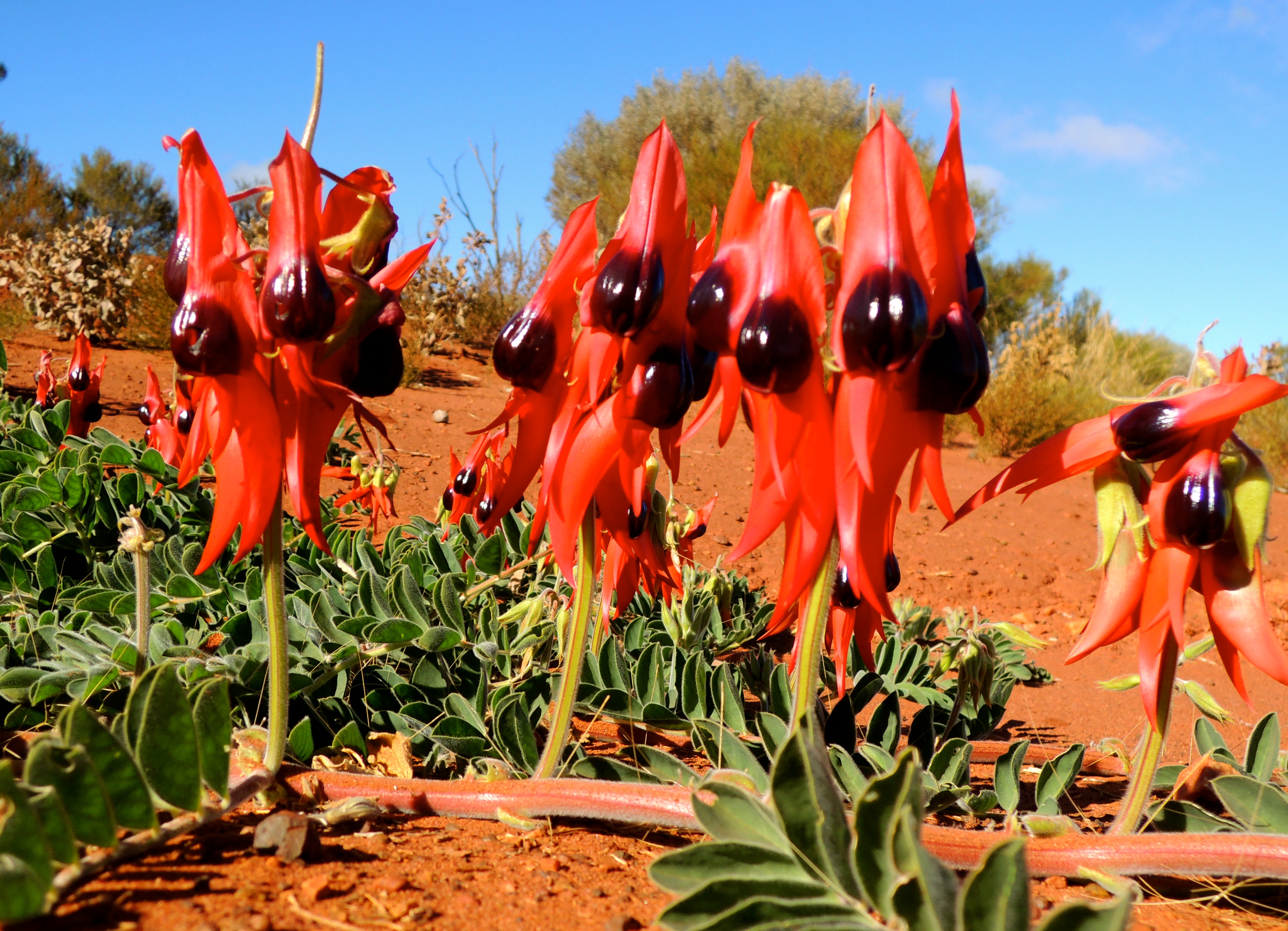
The origin of the Sturt Desert Pea, a magnificent Australian wildflower, is told by Aboriginal people in the following way…
A wonderful story that comes to mind each time Janet and I see this beautiful flower in the Australian Outback.
“A young and beautiful maiden was promised in “The Dreamtime” to a warrior who made a cloak of red parrot feathers. From a distance she would follow her lover in the tribal wars, faithfully roaming the trackless wastes to be near him.
Drought years brought famine to the tribe and the young warrior was one who went far afield in search of food.
During his absence the maiden kept lonely vigil, refusing to leave the place of farewell after the tribe had moved on. Their last view of her was of a red cloak surrounding her black head as she knelt on the ground.
Blue skies, the earthen coloured red soil of the Australian Outback, sunsets to dream of and three weeks in the Corner Country was an opportunity far too good to pass up.
So I didn’t..!
With my customised touring vehicle loaded with supplies and TVAN Firetail camper trailer in tow I headed to the far west corner of New South Wales – “The Corner Country”.
After two days and 1,300 kilometres of travel along bitumen and dirt roads I arrived at Milparinka, a ghost town just to the south of Tibooburra, the town that is often the hottest place in the state during our long summer months.
Now it would be easy to miss this gem of a town as you make your way north to Tibooburra, or south to Broken Hill along the Silver City Highway as it is off the main highway. But a detour to Milparinka, whose history is steeped in a gold discovery, is well worth the effort.
The Corner Country has been a favourite of Janet and mine for as long as we have been touring the Australian Outback. So when the opportunity came along to spend three weeks as resident Information Person and caretaker at the Milparinka Heritage and Tourism Association I jumped at it…
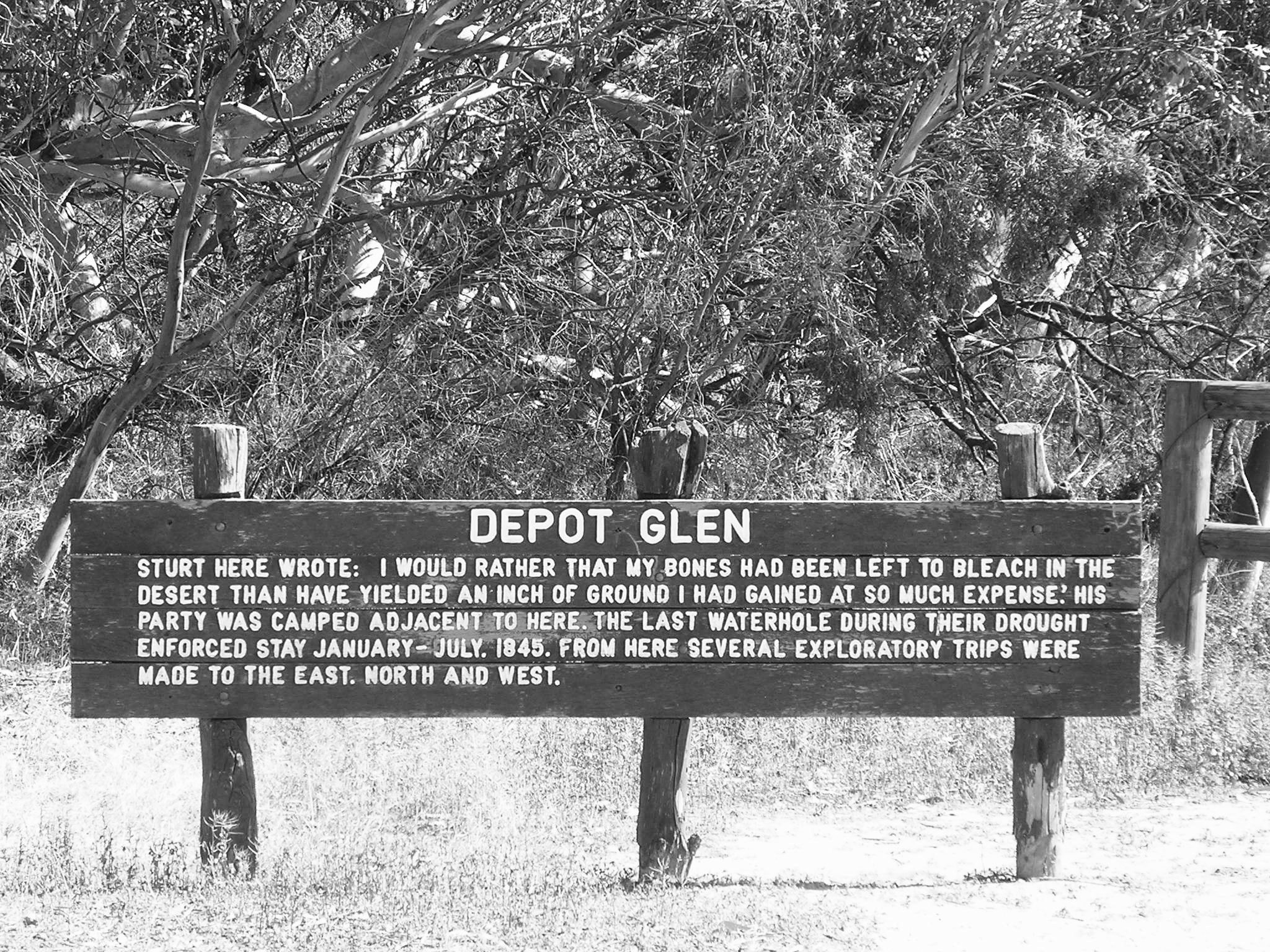
The area’s first recorded exposure to European’s was in 1845 when Captain Charles Sturt mounted his exploration of the interior expedition in search of an inland sea. He found anything but a vast ocean of water, but his journey into the region opened the way for pastoralists’ who began arriving from the 1860’s onwards.
The environment is harsh and unforgiving, even to this day, especially with an annual rainfall averaging less than 5 inches per year. The tenacity of Sturt, and perhaps those who have followed in his footsteps are best summed up by this note in his journal…
“I would rather that my bones had been left to bleach in the desert than have yielded an inch of ground I had gained at so much expense”…
It was near to the current township of Milparinka that a station hand, John Thompson, discovered a couple of nuggets of gold whilst herding sheep on Mt Poole Station in 1880.
This discovery led to a “gold rush” with hopeful miners and prospectors making an arduous journey over an unforgiving land. They had no idea of just how harsh this environment was, and that water and eventually provisions were in short supply. As was the case on Australia’s early goldfields, many perished from disease; some were successful, but most left with little more than the shirts on their back.
Often, those that were most successful were the business’s that thrived on supporting the miners, especially the “sly grog shops” and “pubs”. And it is worth noting, in 1882 water was in such scarce supply that a whiskey and water cost substantially more than a whiskey “straight-up” – such was the value of that most basic of precious commodities, water…!
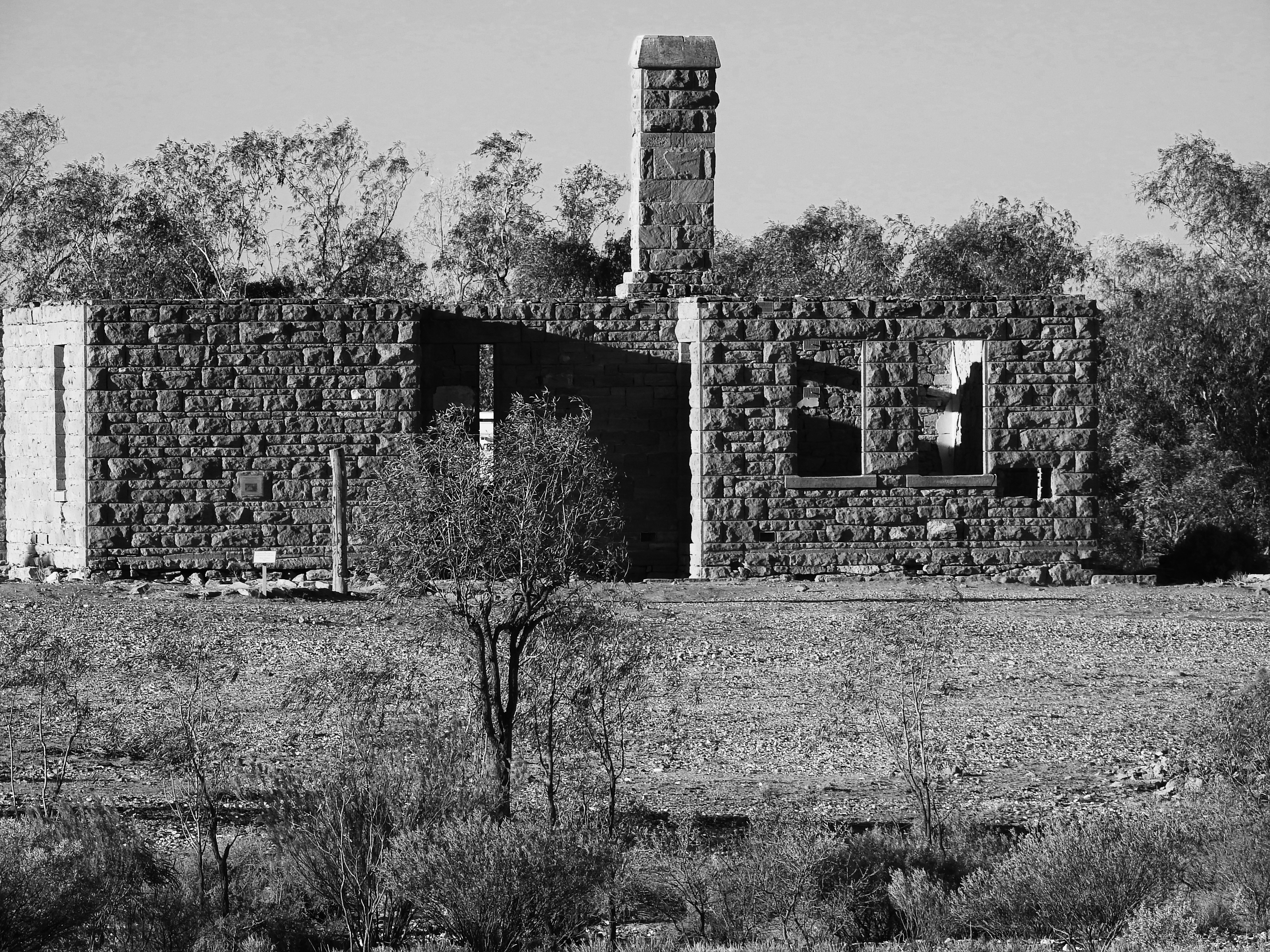
The township of Milparinka was first surveyed in 1881 and finally chartered in 1883, but its population peaked around this time as the “gold rush” was short-lived. However, the town continued to support a core group of residents and there were many sand stone buildings constructed from stone quarried locally.
Amongst these was the Police Barracks built in 1884 and later; the James Barnett designed Courthouse in 1896. James Barnett, the Architect for the Colony of New South Wales, designed many buildings, including the magnificent Post Office that stands proudly in Sydney’s Martin Place today.
By the 1930’s the police administration and court functions had moved north to the township of Tibooburra, or “The Granites” as it was referred to at the time and many of the old buildings fell into disrepair, some crumbling back to the earth either through lack of maintenance or vandalism.
But a community initiative in the 1980’s halted the destruction of the Courthouse and surrounding buildings, but it wasn’t until 2003 that the Milparinka Heritage and Tourism Association brought them back to life and re-opened the Courthouse as the local Historical Centre.
The Association is actively looking to preserve the couple of remaining buildings that are in disrepair and in early 2018 purchased the old Post Office with a view to bringing it “back to life”.
The one remaining business in town is the Albert Hotel, which has been closed at various times, but I’m pleased to say is once again serving cold beer and fine pub style meals to the passing tourists. Much the same as 130 years ago when George Blore built the pub…
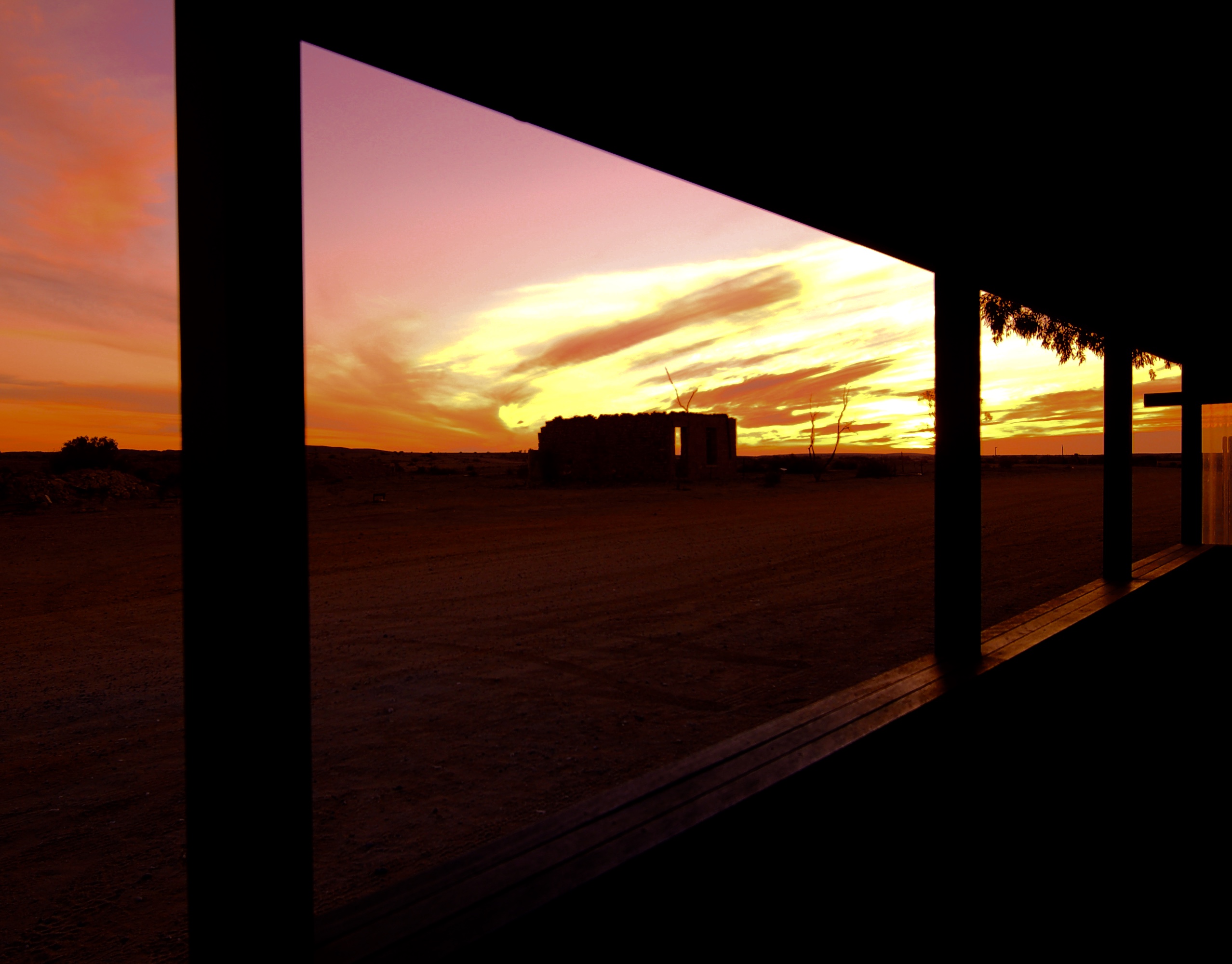
Sitting on the verandah of the Albert Hotel, beer in hand, is a great way to spend time reflecting on the beauty of this ancient land, its landscape and people, as the sun casts a golden hue over the surrounding Grey Ranges making way for an inky black sky that promises to showcase the “Milky Way” in all its glory…
So next time you are heading along the Silver City Highway and see the signpost to Milparinka, be sure to take time out to visit this “glimpse of the past” if only to quench your thirst as early travellers did…
Who knows, you might even hear “whispers from the past” as you walk around the old buildings, the sounds of laughter from long ago drifting on the breeze…
I’m confident if you scratch the surface of this town that time forgot you’ll be rewarded with something more valuable than just a nugget of gold; an experience that is golden…
Photo’s: Baz – The Landy, Milparinka, Outback Australia…
I’m camped by a favourite waterhole of ours along the Bogan River as I head towards Milparinka which is situated in the Corner Country in the far northwest of New South Wales…
Hey. three weeks in the outback, where a deep blue sky gently blends to the red earth on a faraway horizon, and the night sky is laden with stars – how good is that, hey…!
There is something very special about the Corner Country that has kept Janet and me coming back for as long as we can remember.
Perhaps it is the wide-open plains where the sunburnt land meets a deep blue sky on a far-away horizon, perhaps it is the golden sunsets as the sun slides below the western skyline, or maybe it is just the people and characters you meet out there…
In late May I will be acting caretaker at the Milparinka historical precinct and museum.
Milparinka is a tiny community located in far north-western New South Wales, about 40-kilometres south of Tibooburra and 300-kilometres north of Broken Hill. It is the oldest proclaimed township in the Corner Country, and is situated on the banks of the Evelyn Creek, named by Charles Sturt during his 1845 Inland Expedition.
Hey, be sure to drop into the museum and say g’day, if you’re out that way…!
Oh, don’t worry, if you can’t make it I’ll be sure to be capturing some of our spectacular outback in photo’s…
Photos: Baz – The Landy, Corner Country, Outback Australia…
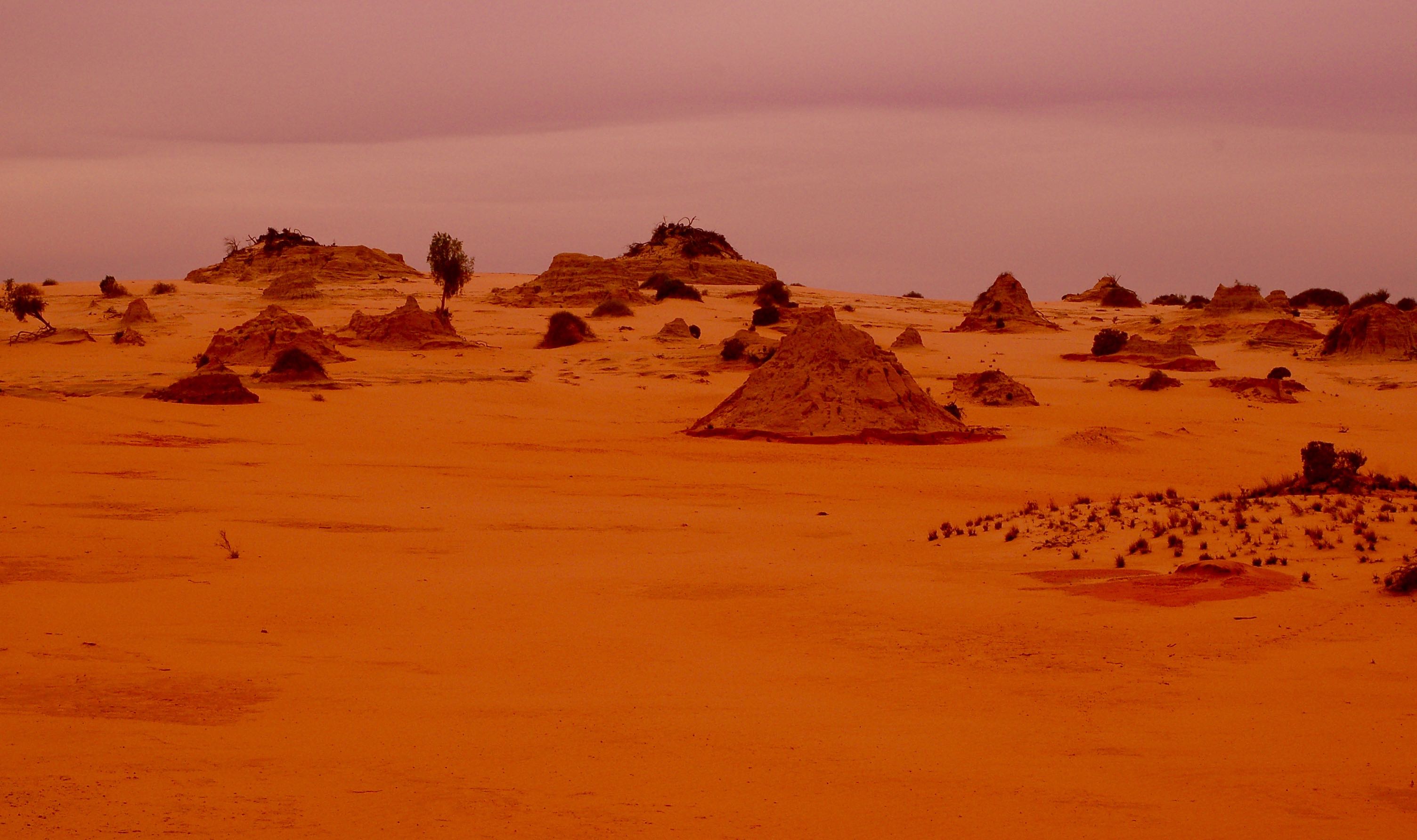
In the far west of New South Wales, some one thousand kilometres from Sydney, lies Lake Mungo and the Willandra Lakes World Heritage Area…
Now before you go strapping the kayak to the top of your vehicle or hitching the “tinnie” to the back of your four-wheel drive it is worth knowing that Lake Mungo has been dry for some 15,000 years.
But don’t be put off by that fact, this is a fabulous place to spend a few days exploring what is a very special place to three Aboriginal tribal groups, the Paakantji / Barkindji, Ngyiampaa and Mutthi people.
These people have walked this land for close to 50,000 years.
Yes, 50,000 years…!
To put some context to that, they only started building the pyramids about 5,000 years ago, and Christian’s celebrated the arrival of Jesus Christ just over 2,000 years ago.
And in more contemporary history of Australia, Captain Cook landed at Botany Bay less than 250 years ago.
Life would have been substantially different when the waters were teaming with fish and the land abundant with food sources. And remarkably, evidence of this era has been enshrined in the “Mungo Lunette” and uncovered by the moving sand dunes in this windswept land.
A Lunette is a crescent-shaped sand dune similar in outline to the first quarter of the Moon. The Mungo Lunette is also known as the “Walls of China”.
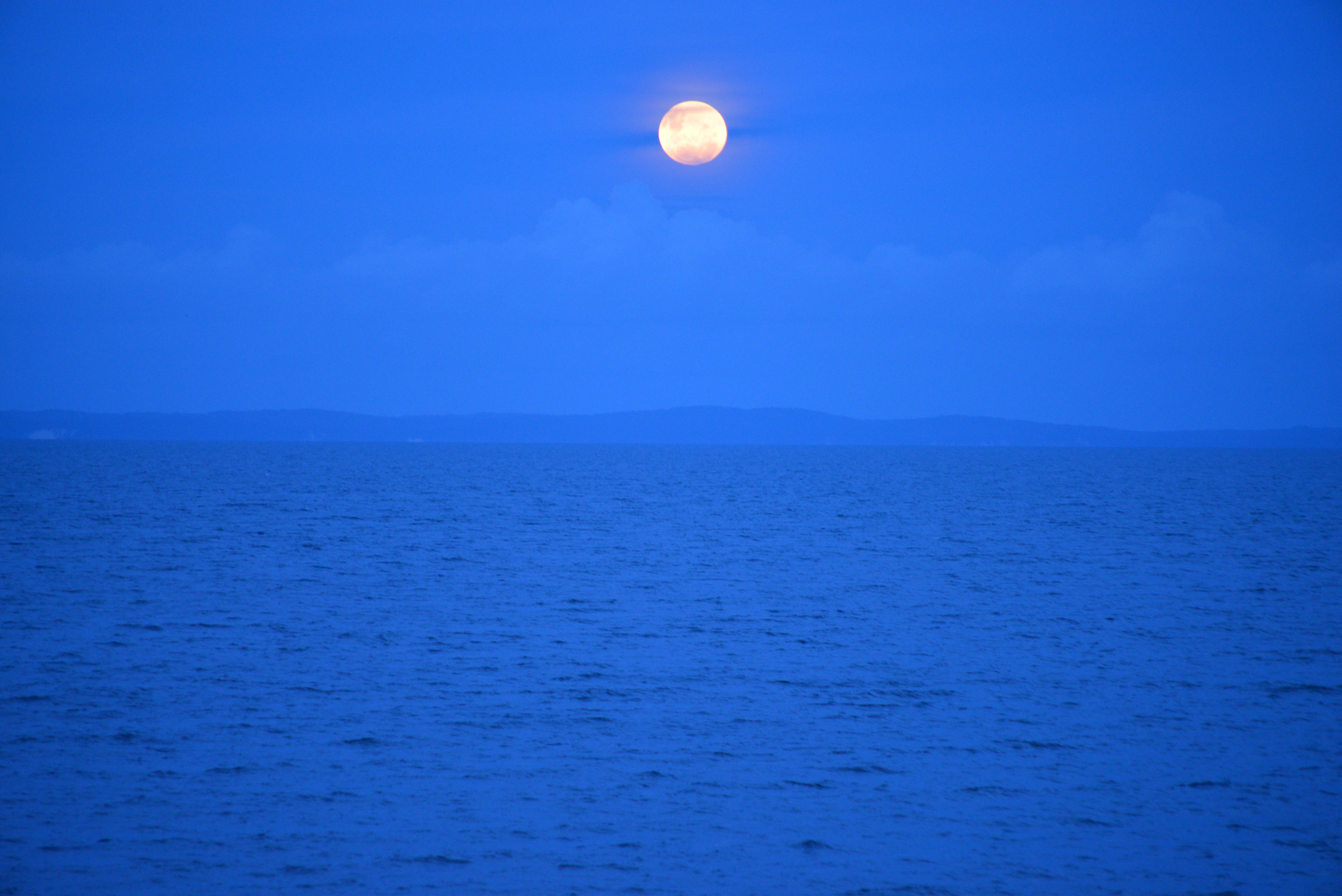
I visited the region recently with the hope of photographing the “Super Red Blue Moon” that rose in the skies on 31 January, the prospect of capturing a photograph of a remarkable event over the Walls of China proving irresistible to me.
The Walls of China is where the remains of “Mungo Lady” an aboriginal women of some 18 years of age was discovered in the late 1960s. Her discovery and subsequent removal from her “spiritual home” by archaeologists’ was not without controversy, especially for the aboriginal people from this region.
Mungo Woman was eventually returned home to rest in country by her people and similarly, Mungo Man, whose remains were removed from his resting place has also made the journey home to country.
Scientists’ estimated that Mungo Man walked this land over 40,000 years ago.
It was against this cultural backdrop that I stood alone at the Mungo Lunette, a number of camera’s at hand to capture this remarkable lunar event.
But it wasn’t too be as cloud cover “eclipsed” my view of the moon as it rose over this ancient land.
Looking to the west, the sky was ablaze as a fiery sun cast its final rays into a darkening night sky…
I closed my eyes and let my mind drift and wondered if the spirits of those who had walked this land were sitting around the glow of this eternal fire, breathing life to this place of Haunting Beauty…
Photo’s: Baz – The Landy, Mungo National Park, Outback Australia
Well I’ve left the “big smoke” behind and pointed myself westward towards Mungo National Park to watch the lunar eclipse in a couple of days.
But hey, with time on my side what better way to wile away that time than being camped beside the mighty Murrumbidgee River at Gundagai reading poems and short stories by one of Australia’s greatest story tellers, Henry Lawson.
I’m sure many are aware of a rare lunar phenomenon that is set to occur next week.
It is being billed as a “once-in-a-lifetime” lunar trifecta and Australian’s have one of the best vantage points around the globe to view what is being described as a “super red blue moon” as three lunar conditions converge.
Apparently, a super moon occurs when the moon reaches its closest point to earth and appears much larger than normal (some 30% they say). The red part happens during a lunar eclipse, and the blue moon is when there are two full moons in a month.
Some experts suggest that it is unlikely to see all three events converge again this century, although I have seen conflicting reports on this with suggestions there will be another one in 2028 – but given it last occurred in 1866 I’ll try and observe this one and leave it to the experts to argue over the timing of the next one.
I was pondering where to view it from away from the glare of city lights and decided on heading to the World Heritage listed Mungo National Park, south east of Broken Hill.
It has been at least two decades since I last visited the area so I am looking forward to it, although with daytime temperatures getting up to around the 45C mark I doubt I will linger there for too long afterwards. But it is a spectacular area, so I’ll play that one by ear and see how the weather is…
The phenomena is due to start on 31 January around 10:30pm (AEDT) and end just after 2:00AM (AEDT) on 1 February…
Australia is a remarkable country, with a remarkable history…
An island continent inhabited by our first nation people for ten’s of thousands of years, and more recently, through European settlement. At times, it can be an unforgiving place where water can be scarce.
Australian aboriginal people moved from water-hole to water-hole to survive in the harsh desert country relying on “dream-time stories” to guide them…
Stories told in song, carvings and engravings, and rock art.
For our early European explorers’ finding water was critical as they surveyed our vast sunburnt country. At times, it was a critical life and death situation and there are many tributes to these explorers’ dotted across Australia.
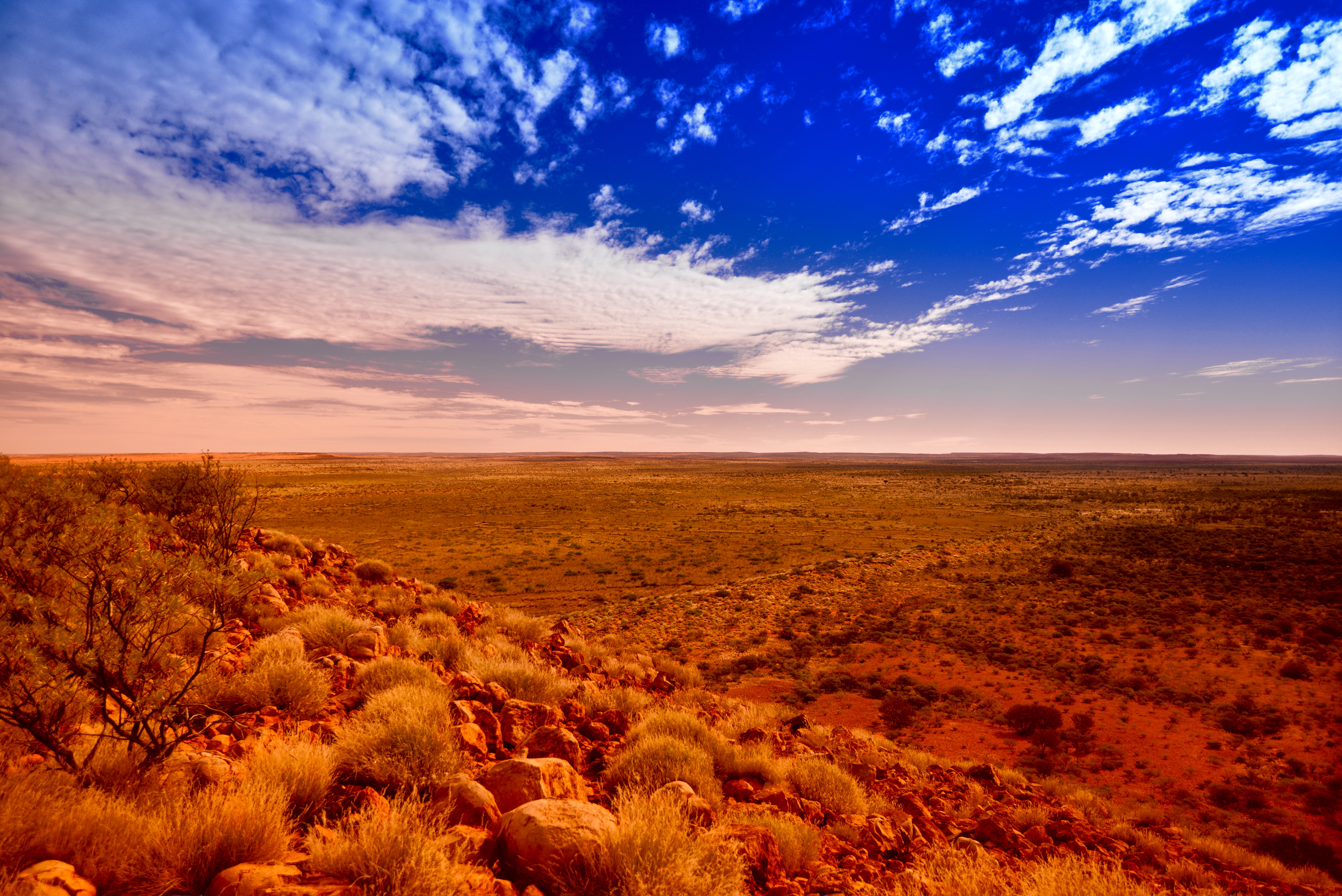
Two explorers, John and Alexander Forrest, both surveyors, travelled into the vast Western Australian desert region in 1874. One can only imagine what was in their thoughts as they stood atop Mt Allott looking back across the vast plains to Mt Worsnop in the distance…
Perhaps it was the need to find a water supply before thirst from the relentless heat of the desert claimed them.
Standing on Mt Allott I reflected on how you can only live in the moment you are in; the past is irrelevant and the future may never arrive – you can only survive one moment at a time…!
That’s a great way to live your life, one moment at a time. Hey, what do you reckon?
Yes, it seems I’m a couple of weeks late, but hey, I’m working on leisure time these days…
Janet and I are gearing up for plenty of adventure travel into the Australian Bush and Outback this year and we’ve dusted the cameras’ off to photograph our magnificent country.
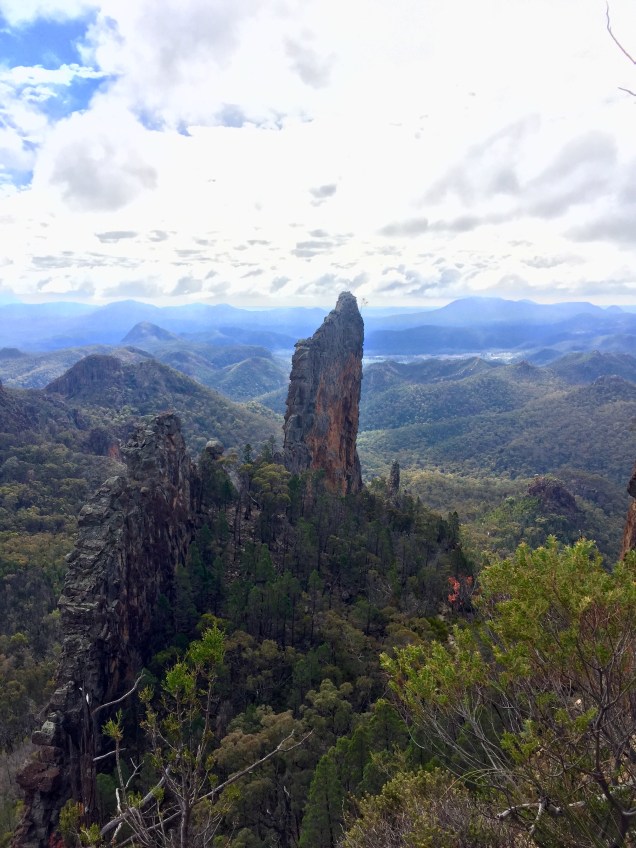
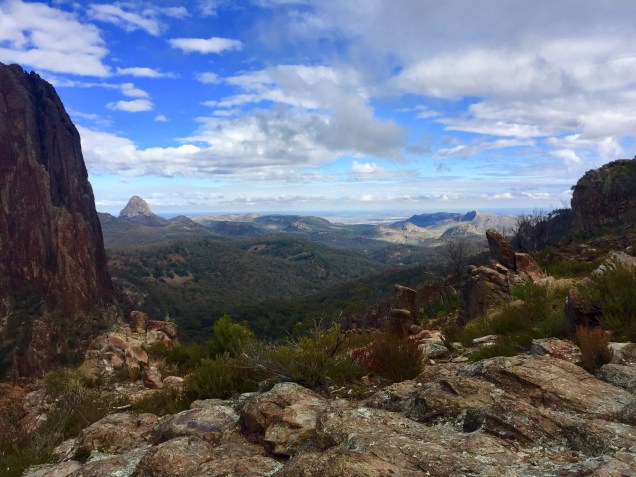 Hey, we’re Out & About getting the smell of the Aussie Bush into our nostrils.















































 Xplore